




Grand Canyon’s fame comes from the opportunity to observe geological layers of history seen there, similar to pages in an old book. It might even be the most famous of such geological records. The very thought of the Grand Canyon is what gets every geologist excited, and not because of any particular layer of history, but due to a complete lack of 1.3 billion years’ worth of Earth’s history!This is termed the Great Unconformity, which is similar to an entire missing chapter from the story told by the rocks. Normally, in the greater part of the canyons, there is a comparatively young layer of rocks formed during the Cambrian age located atop the ancient igneous and metamorphic rocks. The interval between the two types of rocks symbolises the missing chapter, which takes place within a much longer period compared to the existence of organisms and up to the present. It can be likened to a book missing several thousand pages in between, with only a few initial pages going straight to its final pages.The puzzle of a missing eraThe unconformity is not only a time gap, but also a visual representation of the ancient Earth lost through time. If an entire era never existed, then there has to have been erosion and weathering of the massive rock formations and removal before sedimentation occurred. Many decades have passed since scientists searched for the reasons behind the disappearance of a massive layer of rocks.For a long time, many experts believed that a “Snowball Earth” event, where global glaciers scoured the continents, was the primary culprit. However, recent scientific work is challenging that theory. In a 2022 study published in the Proceedings of the National Academy of Sciences (PNAS), researchers used specialised cooling data to suggest that the erosion happened in multiple pulses rather than one giant glacial event. This suggests the story is far more complex than a single “missing” billion years.
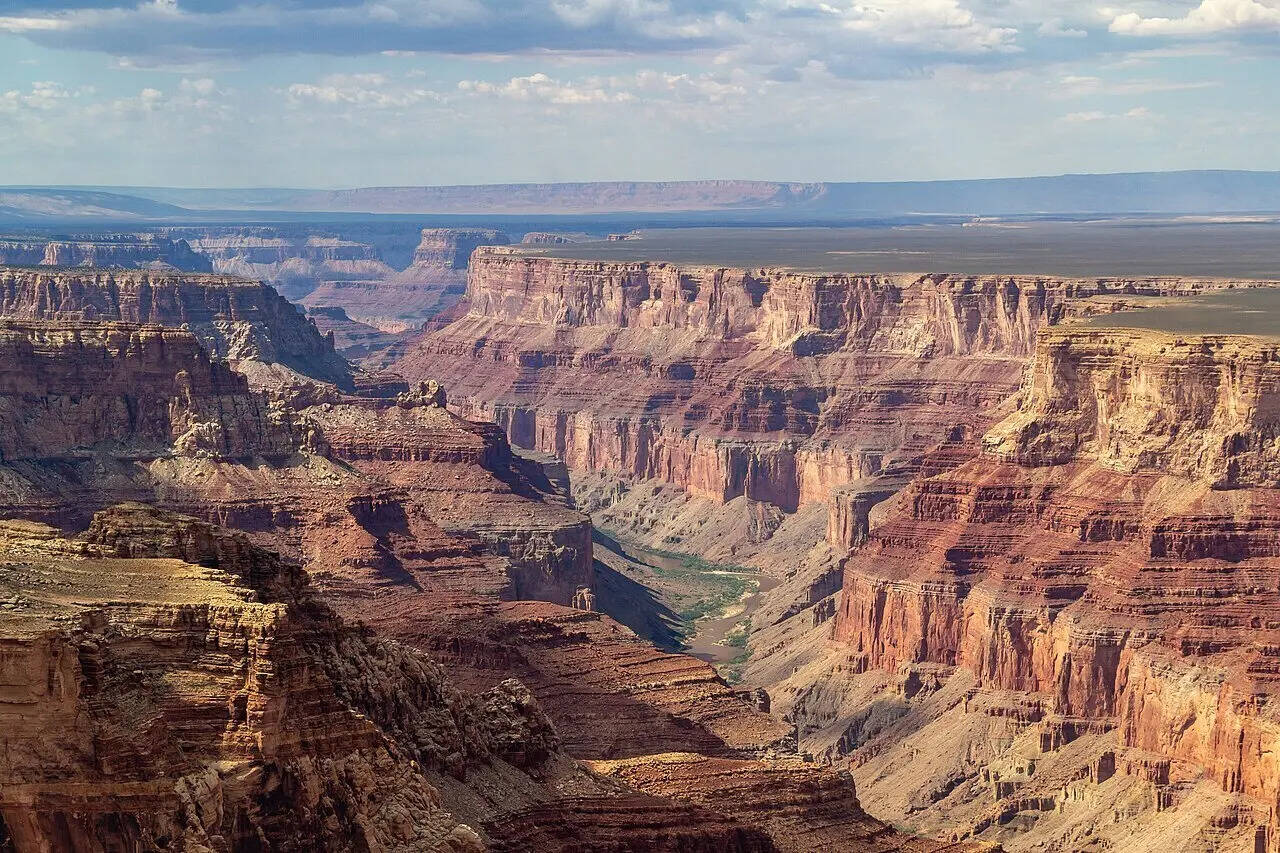
Recent studies challenge the “Snowball Earth” theory, suggesting erosion occurred in multiple pulses, possibly linked to supercontinent cycles and tectonic plate movement. This absence of time offers valuable insights into Earth’s past. Image Credits: Wikimedia Commons
Studies, conducted through 2026 and mentioned in the article Earth’s Missing Billion Years issued by the Lamont-Doherty Earth Observatory, show the connection between the disappearance of time and early geological processes. In the article, it is stated that the formation and destruction of the supercontinents in Earth’s history contributed to an extremely large uplift of rocks that had suffered billions of years of erosion. Unlike the catastrophe theory, the Great Unconformity may be regarded as the continuous process of reclaiming the Earth’s crust because of the movement of the tectonic plates.Reading the absence of timeThe key reason behind this phenomenon being so interesting for the scientific community is the realisation that it makes them rethink the way they look at geological research. One tends to consider geology to be the science of all the items that are stored in the rocks; yet, in this case, the Grand Canyon serves as one more example of absence being just as valuable as presence.This “hidden world” of missing time is what makes the canyon a true global wonder. It shows two landscapes simultaneously: the beautiful, visible layers that tourists photograph and the ghost of a deep-time topography that was worn away aeons ago. By studying the chemistry and temperature of the rocks that survived, scientists are finally beginning to reconstruct the billions of years that didn’t.Though the reasons for this erosion are still under debate, the sheer size of the gap has to be considered one of the most astounding pieces of information science has ever discovered. When you touch that billion-year-old boundary of the Great Unconformity with your hands, you come face to face with the fact that even mountains have an expiration date when it comes to geology. Sometimes, the greatest stories are those that no longer exist.