




We’re losing words. More than 300 a day in spoken word, or 120,000 a year, according to recent research.
Tech is the main reason — we’re texting over phone calls, using the self-check out lane, and ordering sugar off Instacart rather than asking a neighbor for a cup.
In an effort to understand the implications of this decades-long loss of words, I decided to stop talking for a day.
I am a yapper. Women speak an average of 10,000+ daily words, but between my chats with neighbors, check in with friends, and daily calls with my mother, I suspect my average is even higher. Sudden silence was going to be a struggle.
Would friends and strangers think I was rude? Would they not talk to me again?
Unlike a monastic vow of silence, I was able to text, email, Slack, use apps and social media messaging. And it was still a lot tougher than I thought it would be.
The day started like any other.
I live alone, so all I needed to do was stop muttering to myself. The hard part began once I left the house.
Yes, I normally say a friendly “good morning” to my doorman, the security guard underneath Lincoln Center and sometimes my cab driver.
Cue the facial expressions and hand gestures. Fortunately, a quick smile and frantic waving did a lot of the heavy lifting and then I was on the move.
As always, I ordered my extra large Dunkin’ Donuts iced coffee off the company’s app. Despite my use of tech, I usually still chat with the staff when I pick it up — but not today. I grabbed my coffee, waving and smiling so I didn’t seem rude, and walked out the door.
I felt guilty, but I’d talk to them tomorrow. By then, it was 7:55 a.m. and it was time to prepare for the shift ahead.
I always begin my workday sitting just outside the newsroom, doing research on some comfy green sofas and greeting colleagues as they come in. As part of our guidelines for this story, I needed to avoid telling people of my no talking rule.
But as colleagues filed past, I found myself stumped as I tried to just get away with the classic double thumbs up or a nod in response to questions I was asked.
Most of the reaction from passersby was, rightfully, concerned or confused and I felt like a big dope.
Fortunately, most of the conversations about work happen on Slack.
But I did need to speak for our morning meeting, where I outline the stories I’m working on. I tried to keep my word count to a minimum, but it was like playing disjointed Mad Libs. Usually I would weigh in when other people discussed some fun celebrity news or a trend, but today I sat silently.
After the meeting, I returned to my Monk-like, stoic attitude — before I ran into another complication. Everyone in the office was sneezing (yes, it’s still cold season) and the urge to say “bless you” was inordinately strong.
But I was stronger.
I felt impolite, but that wasn’t the only impact. Not talking to people changes the way we are perceived, experts say.
“Your voice enables people to understand your intentions more clearly than text alone, leads those who listen to us to perceive us as more thoughtful and intelligent compared to simply reading what we have to say and also connects us more deeply to other people,” Nicholas Epley, a behavioral scientist and professor at the University of Chicago Booth School of Business, explained in an email after my experiment.
That’s something I don’t think about when using the Sweetgreen app to pick up a salad for lunch or ordering a wrap from Starbucks.
I go to collect my food from the counter or shelf, where my name is written on the order awaiting me. Today I brought my chicken salad wrap from home and ate it quickly at my desk. Normally, I’d call Mom and Dad to check in with them and gab about the day from the office patio. Not talking to them left me feeling lonely and worried.
Former U.S. Surgeon General Vivek Murthy says loneliness has real consequences to public health. His 2023 report found that the impact of being socially disconnected is the equivalent of smoking 15 cigarettes a day.
That’s true regardless of who we talk to in a day.
The next couple of hours flew by as I wrote about Valley Fever and dust storms, sleep aids and marijuana.
I couldn’t talk but I had music. Listening to music all day put me in a near-trance-like state. My writing always flows better when I am focused and typing to the beat of some groovy tunes.
When the press conference of the Artemis II astronauts’ appearance at the White House finished shortly before 3 p.m., I took off my headphones and someone sneezed again.
“Bless you!” I exclaimed. My eyes widened as I realized I spoke out loud.
“You really can’t help yourself,” one colleague, who knew about my vow of silence, messaged me.
It’s no surprise the “bless you” got me.
“Every exchange, from a long heart-to-heart to a quick ‘bless you,’ is a small act of coordination that knits us into the fabric of the people and places around us,” Robert Hawkins, an assistant professor of linguistics at Stanford University, told me when I explained my experiences later. “Spoken conversation is unusually well-suited to that work.”
Mid-afternoon, another colleague asked who in the newsroom wanted a cup of tea (yes, there are many British people in the New York office of The Indy). Determined not to speak again, I vigorously nodded.
He called me a “woman of few words,” but I got my tea.
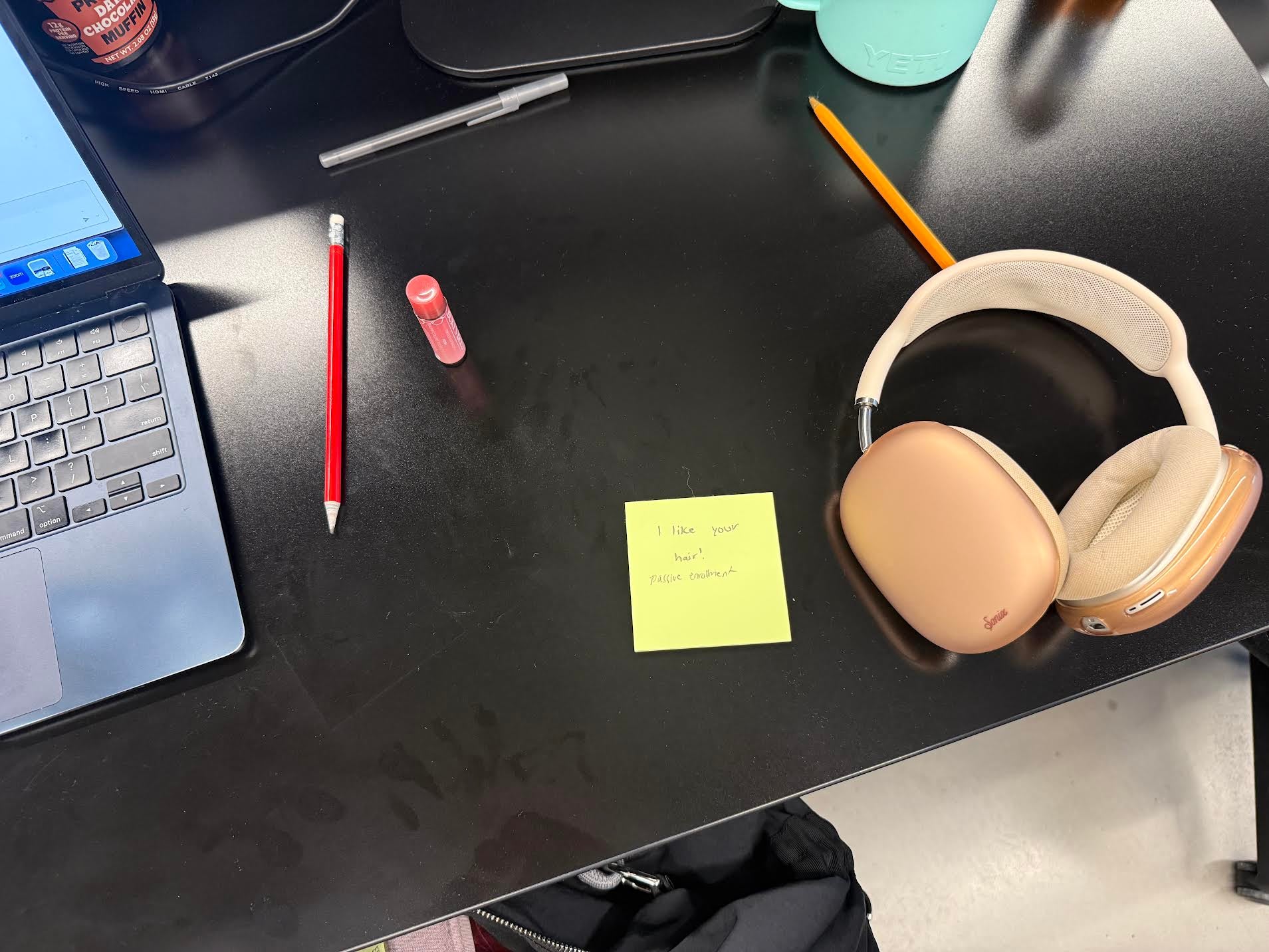
At 4 p.m., it was time for a meeting about healthcare that lasted for nearly an hour. I joined the video call on mute and wrote down a note about enrollment on a lime-colored Post-it. I’d have to ask any additional questions on Slack.
Another colleague started to walk by me and I noticed she had dyed her hair a shade blonder.
I wrote, “I like your hair!” on the Post-it, and held it up to her line of sight with a flourish, victorious that I’d been able to share my compliment without speaking.
But after the meeting, my colleagues started talking about life insurance and I made a joke.
Doh!
Yet another slip up.
For the rest of the work day, it was pretty easy to hold it in, until the newsroom started a big minutes-long group discussion about Cats the musical on Broadway.
I felt like an outsider looking in. I smiled and practiced active listening.
But I couldn’t tell them about my idea for an all-meow rendition – a devastating blow.
A colleague and I walked out of the office together shortly after 6 p.m. and she turned to head to the bathroom. Wanting to say goodbye, I stomped my feet and she turned around and laughed. I waved.
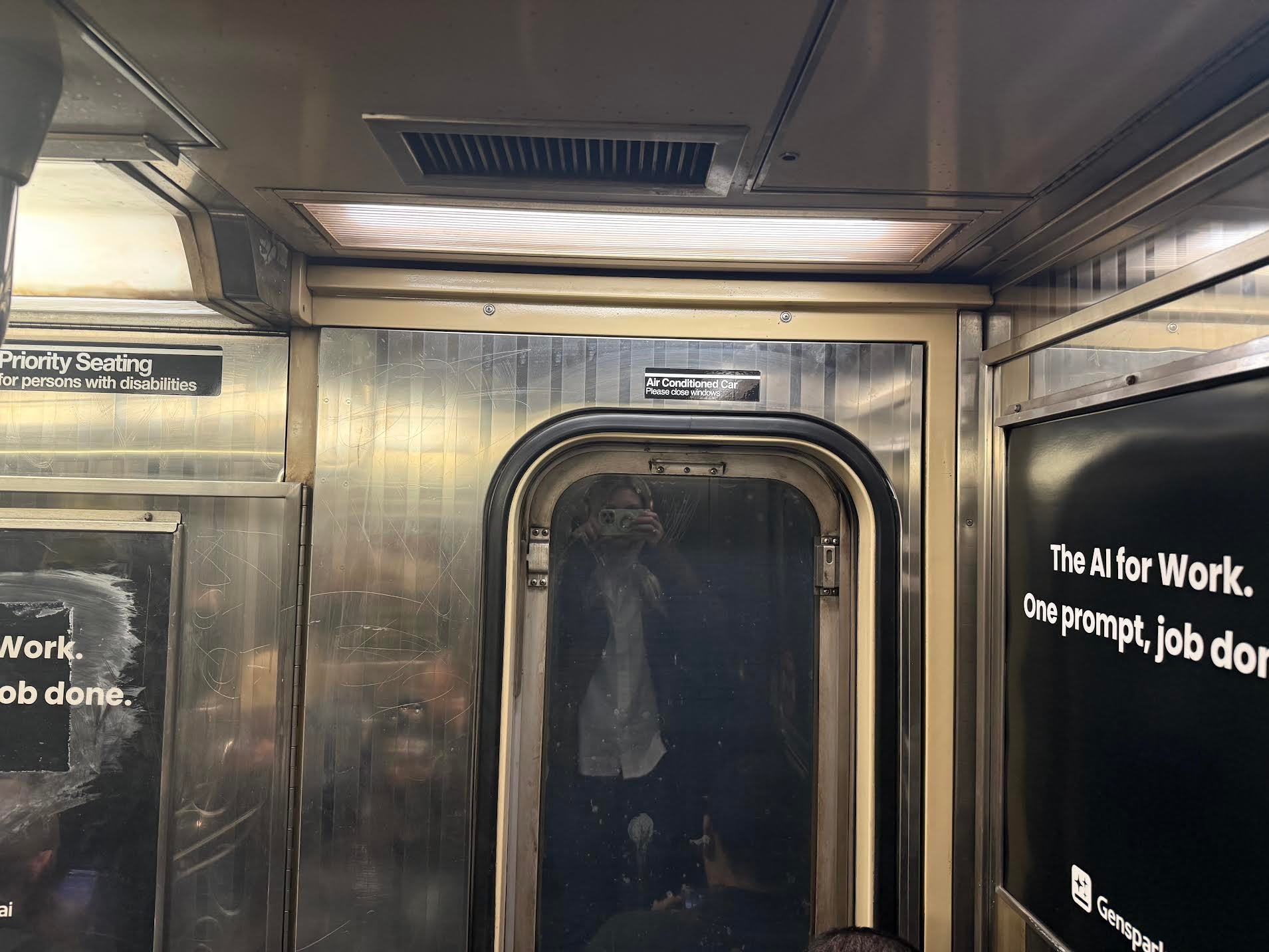
Unlike in the morning, the train home was packed. It was rush hour and, unable to say excuse me, I loomed over a girl near the door. At 6’0” tall, it’s not that hard to do, but it’s a reminder of how fewer words can make us seem more disrespectful to the strangers around us.
I usually call Mom on the way home, but not today. Instead, Panjabi MC’s “Mundian to Bach Ke” played loudly in my headphones.

And just like that – quoth Carrie Bradshaw – the day was over. What had I gained by losing my words?
I found I could say more of what I meant throughout the day by writing and texting.
You can take more care with your words when you have time to write them out.
Of course, many Americans living with disabilities are not able to speak. As a member of the disability community, I thought a lot about how difficult that must be.
For me, my day of silence made it obvious that feeling and being heard is incredibly important to our well-being.
I had read about it in studies on community and mental health, but living it made it crystal clear.
The magic lies in the effect of two-way communication, telling people exactly what they mean in person and eliciting a physical response.
That’s lost in tech talk or on the phone.
And that’s why the new study’s findings are alarming – it isn’t just about the words lost.
The decline suggests that “something more structural is shifting in how our society gathers and talks,” Hawkins, the professor from Stanford University, told me.
The new study’s data doesn’t separate which conversations are lost, whether it’s strangers or close friends or big or small talks.
“Whatever the mix, a cumulative drop of that magnitude thins out the ambient social connection that makes daily life feel inhabited,” warned Hawkins.
“And we’re not noticing it, because conversational coordination runs in the background, below conscious attention,” he said.
Paying attention to it may help us save it, one “bless you” at a time.