




Imagine such an event wherein the performance is centred around individuals breathing in “laughing gas,” stumbling about, and providing entertainment to the audience members. In the middle of the 1800s, gas parties were a part of travelling shows wherein nitrous oxide made volunteers euphoric and lightheaded amidst the spectators’ cheers. However, on a chilly winter night in 1844, a dentist by the name of Horace Wells made a discovery that had not been seen before. It involved observing a man consuming gas, stumbling, and bumping into a sturdy bench with his leg, but he continued laughing despite being unaware that he had injured himself.It was from there that Wells conjured up a wild idea. If a whiff of the gas could alleviate the agony of a simple injury to the shin bone, perhaps it could also ease the pain of visiting the dentist. At the time, surgeries were harrowing experiences, with patients tied down to the operating table as they screamed out in pain. Wells took matters into his hands, and he became the first person to test his theory on himself. He had his tooth removed by a colleague the following day as he experienced the aftereffects of the gas, feeling no pain at all.From carnival entertainment to medical innovationIt was no coincidence that such an incredible discovery was made by a man known for entertaining crowds at carnivals. This shift represented a monumental change in the way that physicians viewed human pain. Up until that point, pain had been considered an inevitable part of any surgery. As per a Cureus journal article, Wells was the first physician to appreciate the therapeutic value of nitrous oxide, recognising that the gas impacted the central nervous system, thereby reducing sensations.Since Wells was convinced that he had found the key to solving the problem of pain-free surgery, he arranged a public demonstration of his findings at Harvard Medical School in Boston. However, his demonstration was rather unsuccessful. As he tried applying the agent on a human volunteer, the latter started screaming in pain, possibly due to a wrong dosage or an unexpected occurrence. The audience, made up of medical students, laughed in contempt and called the discovery “humbug.” Nonetheless, no matter how unsuccessful the public demonstration proved to be, Wells managed to create a precedent that could not be overturned anymore. The use of anaesthesia and, more specifically, ether and chloroform, would soon become a regular practice all over the globe.
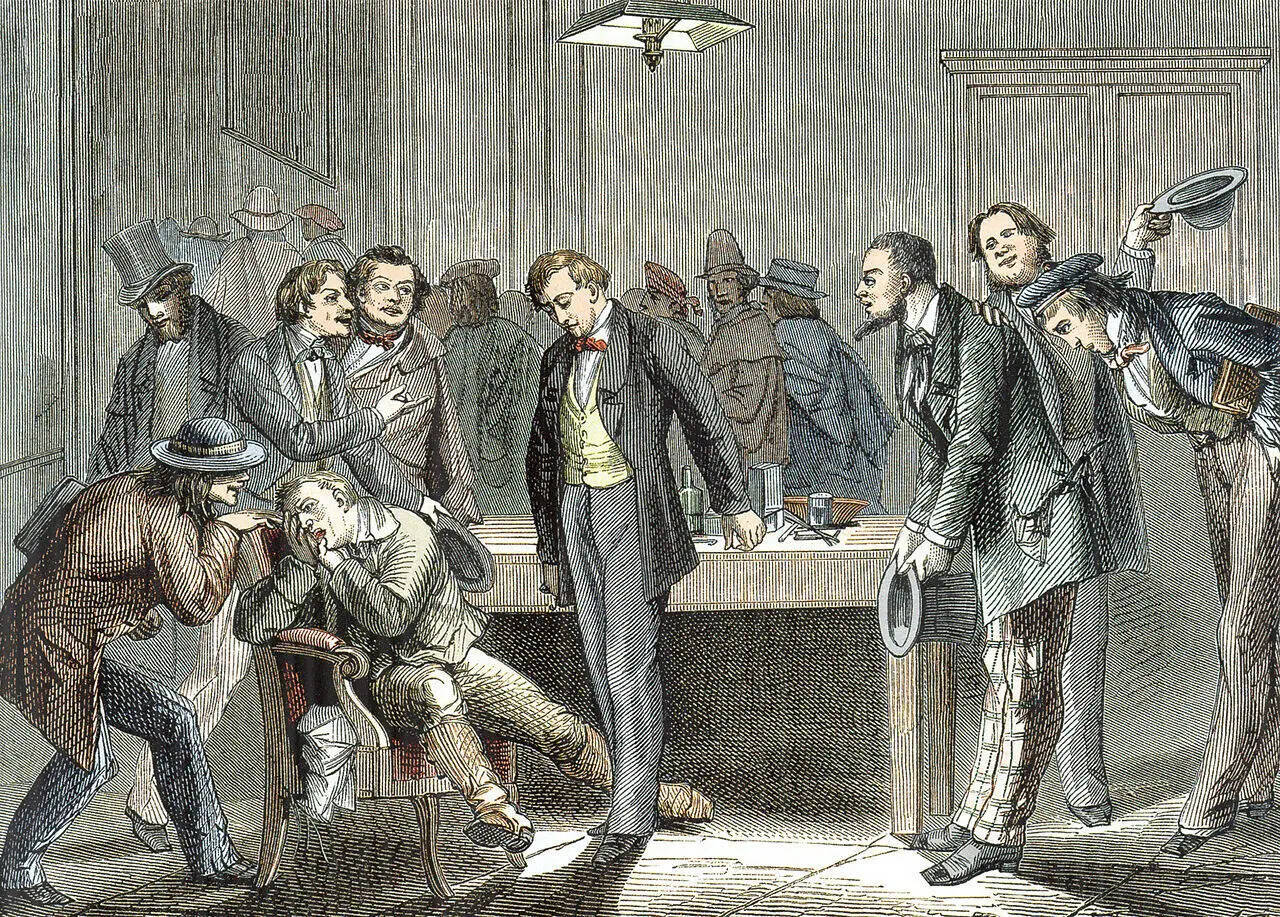
He tested it on himself, experiencing a painless tooth extraction. Though his public demonstration failed, Wells pioneered pain relief in dentistry and surgery, a legacy still felt today. Image Credits: via Wikimedia Commons
The lasting contribution of the laughing gas discovererDespite the fact that ether eventually took a prominent position in the history of surgical operations, nitrous oxide retained its place in dentistry and minor medical procedures. Due to quick action and fast effect disappearance, the substance made an ideal “sedative” for those afraid of going to a dentist. According to Mini-Review: A Brief History of Nitrous Oxide (N2O) Use in Neuropsychiatry, the substance still attracts the attention of modern psychologists.Horace Wells’ story highlights how some of man’s greatest achievements don’t always come out of the laboratory setting. Sometimes, they are born out of the simple observation of an individual who saw the value in something trivial. Wells found a connection between joy and pain relief and capitalised on this knowledge. While his struggle for recognition during his lifetime may not have been fruitful, he is now honoured as a man who shed light in the dark world of surgery.The next time that you notice a dentist picking up a blue mask, or hear the soft hiss of a gas tank, remember the man sitting in the loud theatre who saw something amazing in a joke that no one else could see. It is an incredible illustration of what compassion and keen eyesight can accomplish together.