




DHAKA: Millions of young Bangladeshis will vote for the first time on Thursday in a landmark election to determine the country’s leadership following a 2024 student-led uprising that ended former prime minister Sheikh Hasina’s autocratic rule.
Young people aged 18 to 27 make up 44% of the country’s 129 million voters, many of whom say they never voted during Hasina’s 15-year iron-fisted tenure.
Elections under the ousted prime minister’s rule were marred by allegations of widespread rigging and bans on opposition parties.
Faijullah Wasif, 33, a university official preparing to cast his first ballot, said he didn’t vote while Hasina was in power because he felt it wouldn’t make a difference.
“It was mainly because of fear and anxiety that I didn’t go,” he said. “I did not even feel interested.”
The demographic bulge of younger voters has forced parties to recalibrate their campaigns and messages.
The digital battleground has become central to the campaign, and parties have invested heavily in online outreach, from Facebook videos to TikTok reels.
‘Excited’
This election, Hasina’s former ruling Awami League has been barred.
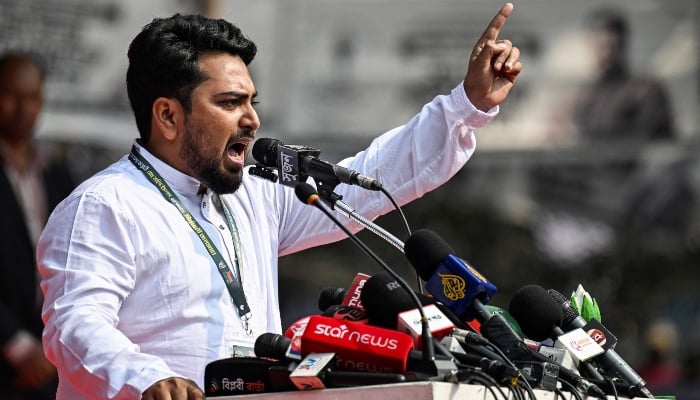
Instead, the parties once crushed under her rule are running — the Bangladesh Nationalist Party (BNP) and its allies, and a coalition led by Jamaat-e-Islami, the country’s largest religious party.
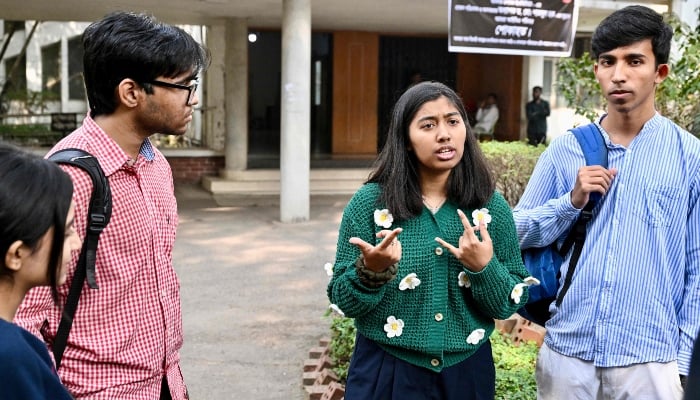
Ashfah Binte Latif, 21, a student at Dhaka University, said her parents had told her stories of past elections, pre-Hasina, when polling day was celebrated like a festival.
“Now that we have managed to change the system, I am very excited,” she said.
The National Citizen Party (NCP), formed by the student leaders who spearheaded the uprising, have allied with Jamaat-e-Islami.
Latif said she expected more from the young student leaders, but she is still eager for change.
“We expected young people to lead us — and in many ways, they did,” she said. “If they fail, it’s a failure for all of the young.”
The spark that ignited the 2024 unrest started on university campuses by students opposed to a quota system in the civil service, which they said excluded them from jobs.
‘Respect’
A year and a half later, Bangladesh’s economy remains fragile, and graduates still struggle to land their first job.
Election expert Md Abdul Alim, a former member of Bangladesh’s election reform commission, said he expected a strong youth turnout.
“These young voters will carry this sense of deprivation with them to the polls, and they will vote,” he said.
Of around 2,000 candidates vying for the 350 seats — some 1,400 standing for the first time — more than 600 are aged 44 or below, according to statistics from the electoral commission.
Wasif, the university official, believes the fresh faces will benefit Bangladesh.
“Our trust in young people is very strong, and our hopes are high,” Wasif said.
“Since young people brought about this change, I believe that it is through them that Bangladesh’s political culture will undergo a radical transformation.”
Latif hopes it will usher in a more democratic leadership.
“A government that won’t see dissenting voices as enemies, but will respect them,” Latif said.