




Last Updated:
Lunar Eclipse will take place on March 3, 2026 from 03:02 PM to 06:47 PM.
A lunar eclipse transforms the Moon into a haunting, copper-red orb, a phenomenon often called a “Blood Moon.” This happens when Earth slides between the Sun and Moon, casting a shadow that filters sunlight through our planet’s dusty, thick atmosphere.
Alignment Of Three Bodies: A total lunar eclipse occurs only during a Full Moon when the Sun, Earth, and Moon align perfectly. Earth blocks direct sunlight from reaching the lunar surface, placing the Moon entirely within the darkest part of its shadow, the umbra.
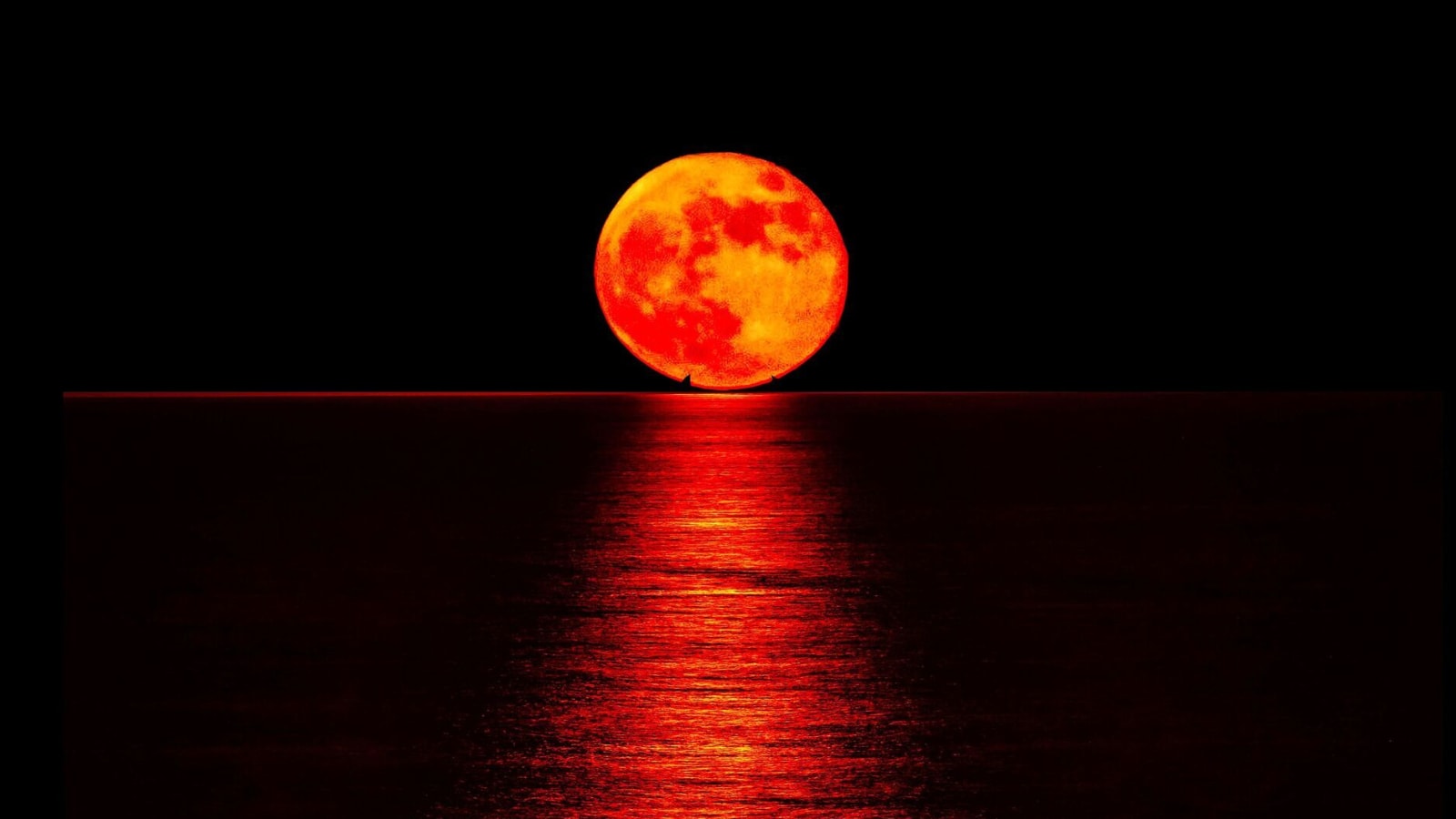
Role Of Earth’s Atmosphere: If Earth had no atmosphere, the Moon would go completely black during an eclipse. However, our atmosphere acts like a giant lens, bending and filtering sunlight around the edges of the planet and redirecting it toward the darkened lunar surface.
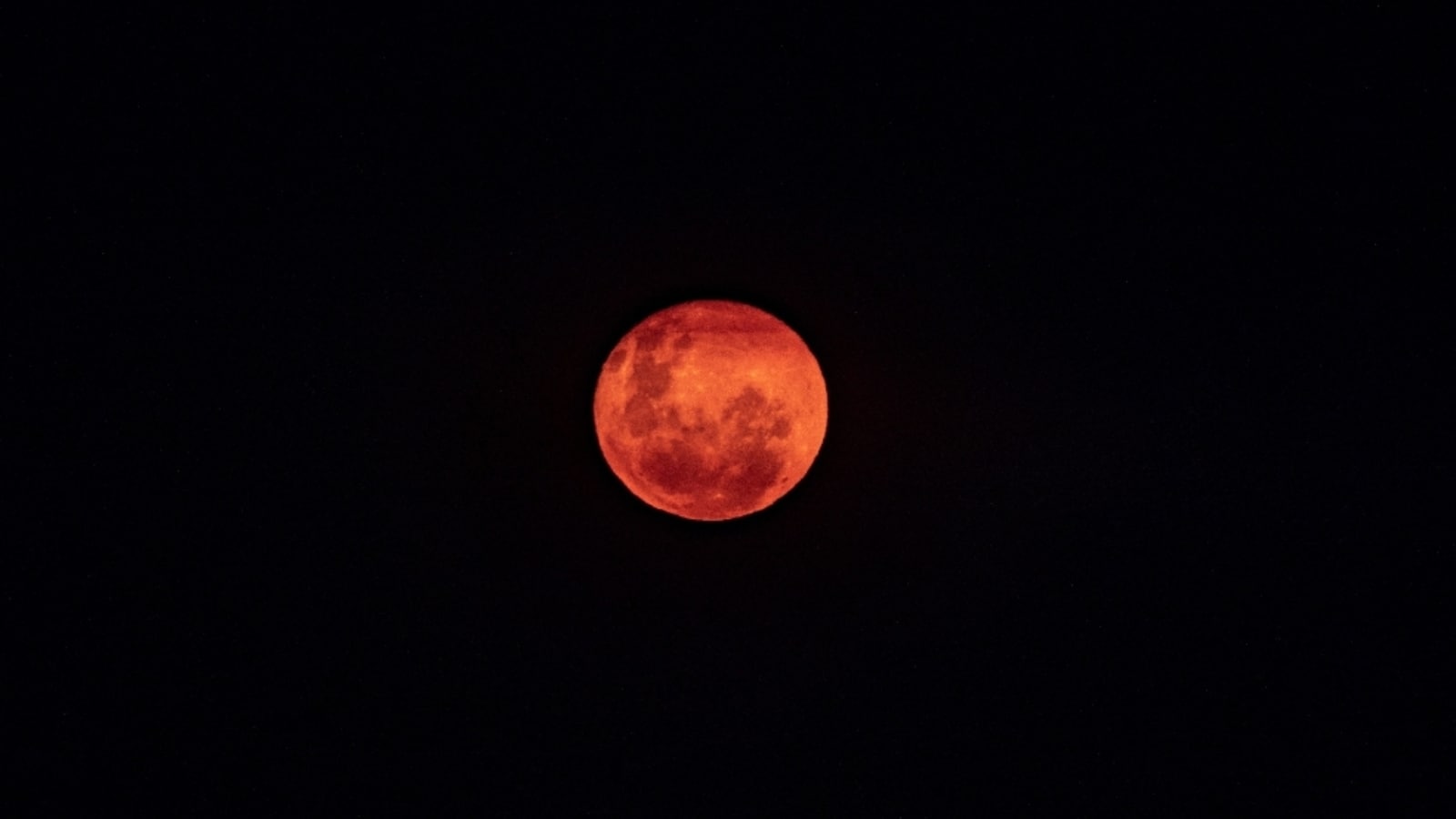
Understanding Rayleigh Scattering: As sunlight travels through Earth’s atmosphere, shorter wavelengths of light—like blue and violet—are scattered away by gas molecules. This is the same scientific principle that makes the sky look blue during the day and the sun look orange at sunset.
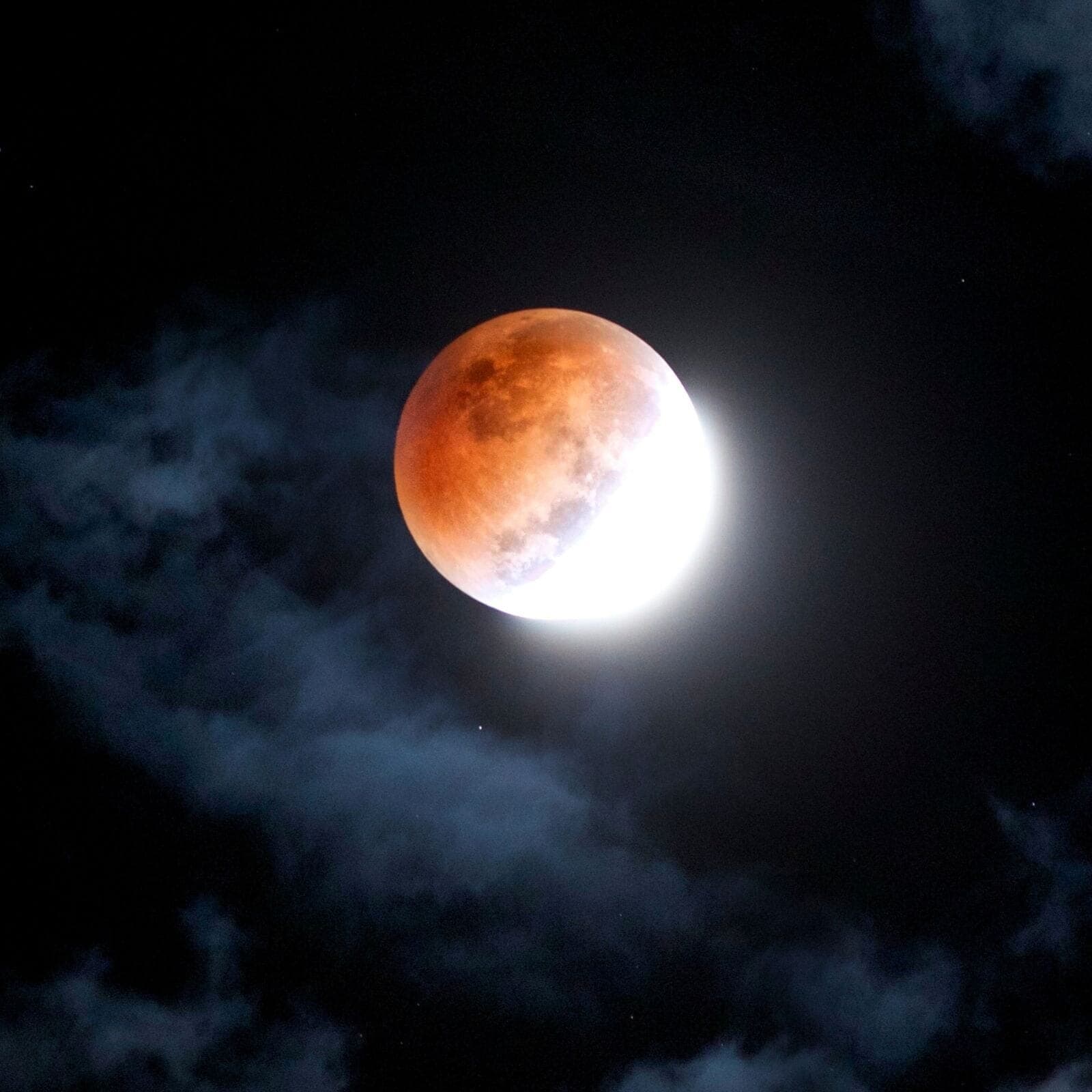
Dominance Of Long Wavelengths: While blue light is scattered, longer wavelengths like red and orange pass through the atmosphere more easily. These “surviving” red light waves are bent inward toward the Moon, providing the eerie crimson glow that characterizes a total lunar eclipse event.
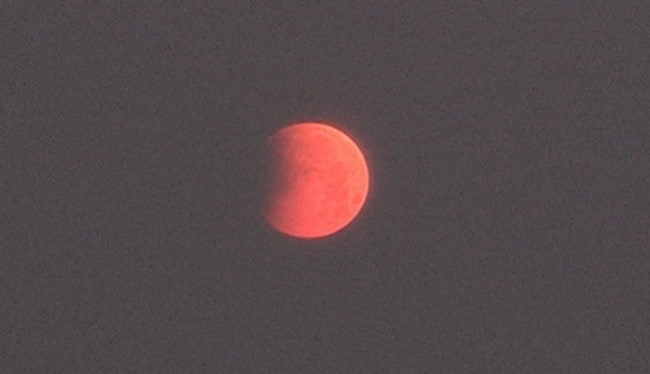
The Global Sunset Effect: You can imagine the red glow as the light from every sunrise and sunset happening on Earth at that exact moment. This ring of filtered light is projected onto the Moon, making it a mirror for Earth’s atmospheric colour profile.
Next Photogallery