




While the initial burst of New Year’s fitness enthusiasm often wanes as the months progress, new research offers a refreshing perspective: maintaining health and fitness doesn’t necessarily demand a rigorous gym schedule.
Instead, short, vigorous bursts of activity – often dubbed “exercise snacking” – can be remarkably effective.
A study conducted by researchers in China, drawing on data from 96,408 participants in the UK Biobank study, explored the link between vigorous exercise and health outcomes over a seven-year period.
The findings were compelling, comparing activity levels against the likelihood of mortality or developing eight common health conditions, including heart disease, type 2 diabetes, liver disease, and dementia.
The study revealed that people who incorporated more vigorous exercise into their routines experienced a significantly lower risk across all diseases. Notably, their risk of dementia was reduced by 63 per cent compared to those who engaged in no vigorous activity.
The researchers said that these benefits persisted even when the time spent exercising intensely was modest.
This concept of integrating brief, high-intensity movements into daily life is what fitness experts refer to as “exercise snacking”.
We spoke to some to delve deeper into what this entails and how it can be seamlessly woven into our everyday routines.
“The idea is that you can break up your day with little snacks of activity, rather than just a ‘main meal’ (main workout), to keep your body limber, stop it from getting stiff and to get rid of any excess energy,” explains Monty Simmons, a London-based personal trainer and founder of Move with Monty.
He suggests the core idea is to “basically take yourself away from your desk and move for five or 10 minutes”.
Darren Sealy, coach and co-founder of Flow State Fit Club, concurs, describing it as a “mini workout”.
“[It] will raise your heart rate and boost your cardio and metabolic conditioning,” Sealy says.
He adds that “the effects of these short bursts of activity, which are usually no more than five minutes to 10 minutes at a time, can really compound throughout the week if you do them regularly”.
Beyond the significant disease prevention highlighted by the research, exercise snacking offers a host of immediate physical benefits.
“In terms of physical benefits, exercise snacking is good for reducing feelings of stiffness and pain, and, depending on the exercises that you choose, it can also be useful for counteracting slouching at your desk and can help improve your posture,” Simmons notes.
He also points out its value in getting “a bit of cardio in there to get your heart rate up and get a bit of heart rate variability throughout the day”, and that it “can also increase your daily calorie burn just because you’re doing a bit more activity, which really accumulates over the week”.

Integrating exercise snacking into a busy schedule is more straightforward than it might seem. For those working from home, Simmons advises simply stepping away from the desk, setting a five or 10-minute timer, and performing three or four chosen exercises.
In an office environment, where overt exercise might feel awkward, he suggests more subtle approaches: “Grab yourself a coffee, go for a walk and maybe stretch out your thighs or do some more subtle exercises instead.”
Consistency is key, and Sealy recommends picking a set time each day. “If you do a short burst of activity at the same time every day then you’re building a habit in your brain, so you know that each morning you are going to do your five-minute exercise snack, for example, which helps you build consistency,” he explains.
Simmons outlines three main types of movement ideal for daily exercise snacking. The first, his personal favourite, is stretching, which helps “reduce stiffness and increase blood flow”.
Secondly, cardio activities like “taking the stairs, getting off the bus early, walking fast, doing some star jumps, jogging on the spot or going for a little jog around the block” are highly effective.
Finally, incorporating strength exercises such as “front lunges, push ups or sit ups” can be beneficial. He suggests mixing and matching these categories.
For practical application, here are a few exercises to consider.
Standing back bends are recommended by Simmons for desk-bound individuals. “You basically stand up, have your feet shoulder-width apart and have your fingers interlaced in front of you. You reach them up and overhead and look up at the ceiling, and then just lean back a little bit,” he instructs.
This provides “a really nice stretch in your abs, and a bit of activation of your upper back muscles, and that can be great for just reversing that slouched, crunched-over sitting posture”.
Another beneficial movement is the good morning. “For a good morning, you stand up with your feet shoulder-width apart and put your hands behind your head and stand tall, looking forward,” Simmons explains. “Then you sit your hips back, keeping your knees only a little bit bent, but mostly straight, and you lean forward so that your chest points to the floor. You should feel the stretch in your hamstrings and the activation of your back muscles.”
This exercise is excellent for waking up the back and activating the posterior chain, which often suffers from prolonged sitting.
Finally, bodyweight exercises offer a versatile option. “Bodyweight exercises are great because you don’t need any equipment for them,” Sealy points out.
He advises keeping it simple: “pick one upper body, one lower body, and one core exercise, and then find a quiet place to do them”.
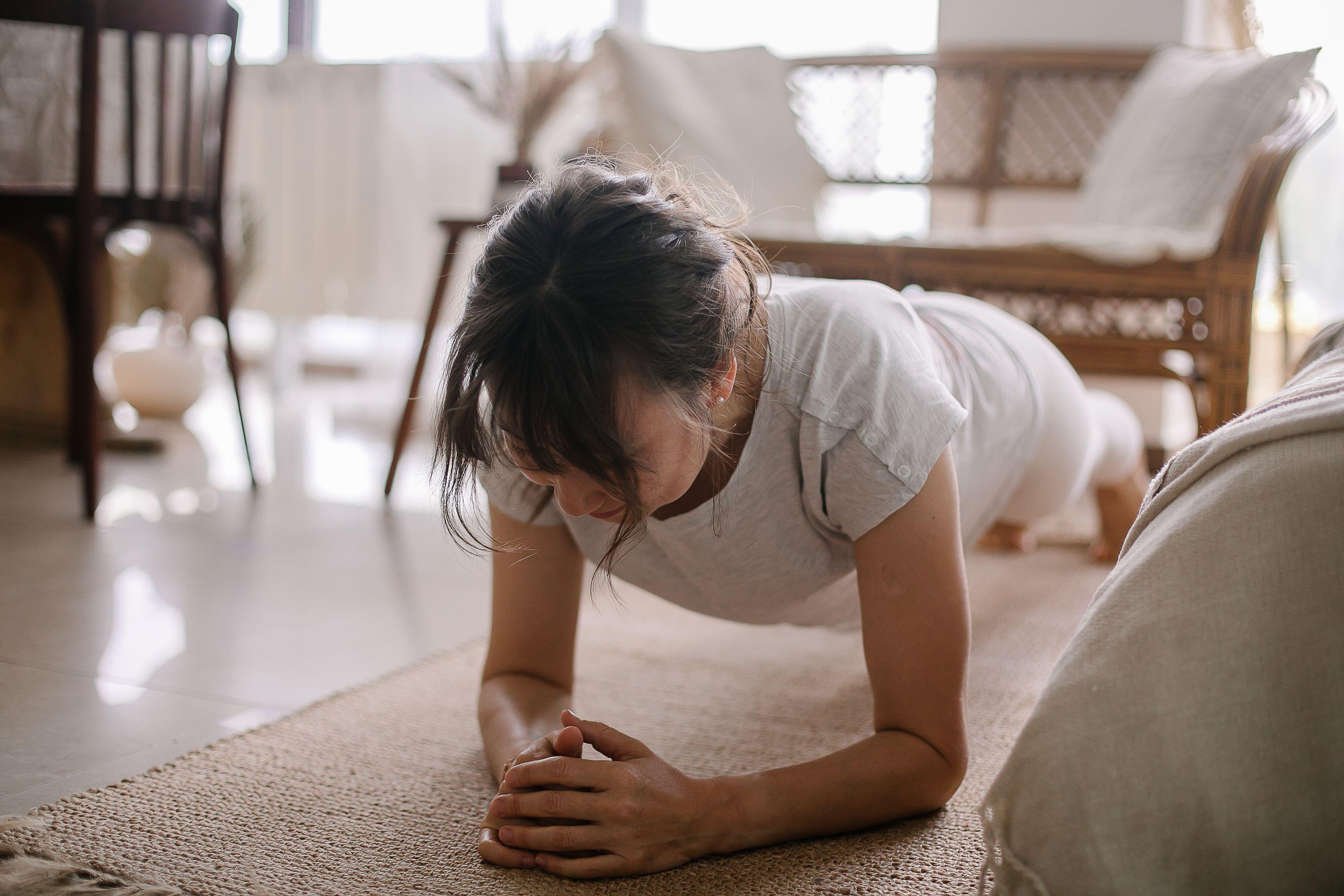
A routine could involve planks, squats, and push-ups, starting with 30 seconds per exercise and repeating the circuit three times, gradually increasing duration and consistency.
“Eventually you could have a quick five-minute bodyweight workout routine that’s optimising your upper, lower and midsection, and will be ticking a lot of boxes,” Sealy concludes.
Embracing exercise snacking offers a realistic and scientifically supported path to improved health, proving that even small, consistent efforts can yield significant long-term benefits.