




“I’ve got a lot of mum friends who say, ‘I want to get divorced so we can live like you…’”
Lauretta Gavin is talking about her living situation, which, in the UK at least, is considered fairly unique. She’s a single mum residing with her 16-year-old daughter, Florence – so far, so standard – but the pair share their home with Lauretta’s sister, Sharon, and her 13-year-old son, Carter. The sisters have been cohabiting, and co-parenting, for the past 12 years.
The arrangement was initially a product of circumstance. Sharon was a new mum who was going through a divorce while struggling with an autoimmune disease.
“I was really poorly – I couldn’t cope on my own,” recalls Sharon. The move was out of necessity, adds Lauretta: “She needed somewhere to live, she was very unwell and she had a small baby; she moved in with me so that I could help her and look after her.”
However, as Sharon’s health improved and they found their feet, settling into life as a quartet, they realised there were numerous benefits to this unconventional arrangement. Financially, it’s been hugely advantageous, while the cousins have gone from being only children to developing a strong sibling dynamic. There’s another adult to consult, too, whenever one sister is unsure of a parenting decision they’ve made.
“It got better and better and better, and then, before we knew it, we were like, ‘Oh my God, this is so good!’,” says Sharon. “We have such a lovely home, and the kids are so much fun. It became this really lovely family unit.” They may not have planned it, “but as a Plan B, it’s bloody good,” she adds.
Perhaps best of all, the sisters are aligned on their parenting styles and have a “low-conflict home” as a result. “With a husband and wife, there are agendas; there’s things going on between them,” says Sharon. “That doesn’t happen in a sister relationship. There are no games. It’s very, very simple and straightforward.”
The setup makes more sense for the Gavins than it does for most; they’ve always been incredibly close, feeling more like twins than regular siblings. The pair even work together, running a wellness brand that incorporates retreats, mushroom coffee and a podcast.
But they’re not the only ones choosing to raise children outside of the standard nuclear family model. Though the idea can feel counter-cultural in Britain, an increasing number of single mothers in China are teaming up to cut costs and offer each other support. Social media posts from women looking for like-minded parents are on the up at the same time as divorce rates are soaring, the latter more than tripling from 0.96 divorces for every 1,000 people in 2000 to 3.10 in 2020. Between 2022 and 2023 alone, divorces jumped by 25 per cent.
There are an estimated 30 million single mothers in China, and they get custody of the children in around 80 per cent of family breakdowns. Experts have observed a noticeable rise in women seeking out alternative support networks and living arrangements as a result, reports The Guardian.
There are no games. It’s very, very simple and straightforward
Sharon Gavin
For example, one post on social media platform Rednote reads: “I’m hoping to find another single mom to share an apartment with, so we can take care of each other. If our children are around the same age, that would be even better – they can be companions. Those raising kids alone know how tough it is; sometimes you’re so busy you barely have time to eat.”
Jiang Mengyue, 31, now lives with her three-year-old daughter alongside another single mum and daughter pairing after answering an ad on social media. Mengyue commends the arrangement for similar reasons to those cited by the Gavin sisters: “This kind of relationship feels purer and simpler than marriage.”
Elsewhere, tools have sprung up to forge connections and help parents create this new type of blended family. In the US, for example, CoAbode is a housesharing service that matches single mothers who want to combine households. It offers a simple solution to a growing problem: single-earner households with children have more than doubled in the States, while housing costs have increased by more than 1,000 per cent since 1970.
The benefits are wide-ranging, enabling women to share costs between two disposable incomes and offer day-to-day support with child-rearing. There are numerous success stories: Heather and Carrie in Florida met and moved in together with their kids after reading about the CoAbode concept in a magazine. “It’s a match made in heaven for us,” says Heather. “Our kids get along great. Emotionally, it’s been great to have someone that’s going through the same experience that you are… My new roommate and I sit up at night after the kids fall asleep and laugh and joke about some of the trials and tribulations we go through, and don’t feel so alone.”
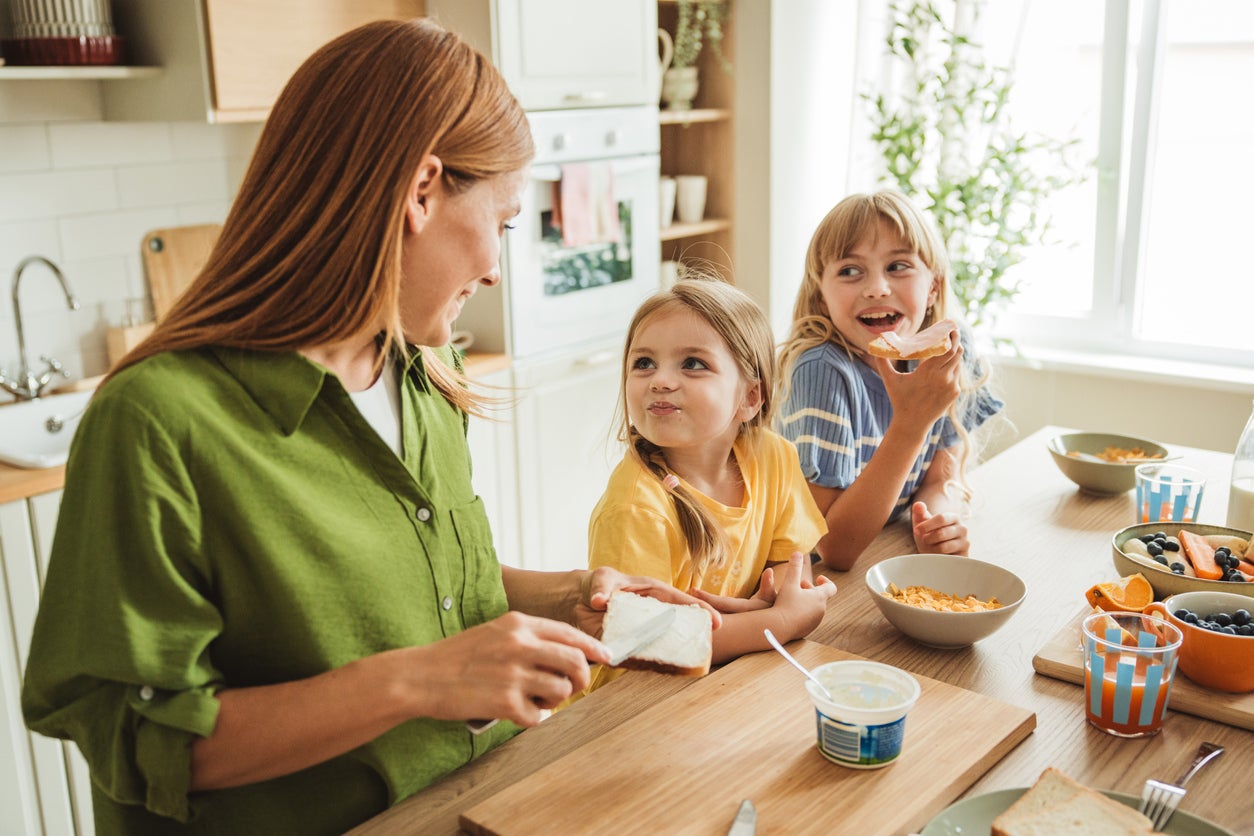
Meanwhile, Shawn in Washington DC highlights the value of having another child in the house alongside her own after moving in with Darcie, saying: “Because our sons are both only children, it’s been good for them to have brotherly attention and learn that they are not the centre of the universe.” And then there’s the co-parenting help: “Recently, Darcie picked up my son from school, fed and bathed him and put him to bed. And we trade off like that constantly, which makes life less stressful for both of us.”
This “it takes a village” mentality is something that’s been emulated in a more casual capacity by Brooke Maddison, a writer and editor who now lives in Brisbane. Her son was born in London before she and her ex moved to Australia, where Brooke hails from originally. By the time their child was six, the couple had separated. “I had some old friends, but I initially didn’t have a lot of community around me,” she says. “Then I found it happened really organically when my son started school.”
There were a lot of other parents around who were either doing it solo or who were queer or part of non-traditional family structures. They tended to gravitate towards each other. “We built up this informal community before we realised what we were doing,” explains Brooke. “And it was like, OK, what can we do intentionally to perhaps welcome other people in and go out of our way to support each other?”
On a day-to-day level, support can be ad hoc – perhaps someone needs to work late and asks a fellow parent to do school pick-up and provide dinner – or scheduled in. Brooke has previously hosted an open invitation weekly dinner for parents and kids: “It’s with that intention of being community,” she says. “I’ll cook up a massive batch of something, and then even be sending people home with tupperware containers of extra food so they’ve got an easy dinner for the next night.”
We built up this informal community before we realised what we were doing
Brooke Maddison
On the flipside, Brooke doesn’t drive; now, she has a strong network of fellow parents who can take her grocery shopping or give her a lift in an emergency.
This quid pro quo arrangement has even evolved into taking annual group holidays together. Not only does it mean there are other adults to have a drink with and chat to once the kids have gone to bed of an evening, but sharing transport and accommodation also reduces the price significantly.
Brooke recommends proactively building a community of like-minded parents for anybody, but particularly those who are raising children alone. “Sometimes it’s just having someone to talk to – if you need to call someone in the middle of the night, or if you’ve had a really tough day with the kids and need to vent,” she says. “Sometimes a friend will ring me up for a chat, and we’ll just talk about some of the difficulties that we’re facing and really support each other emotionally.”
We also need to expand our idea of what a family “should” look like in 2026, she argues, and not get stuck in perpetually heteronormative narratives that insist parents must be comprised of a mother and father in a romantic relationship.
“Broadly in society, that is still the expectation of how people live; we don’t see alternatives modelled that much,” she says. “But I think things are changing.”
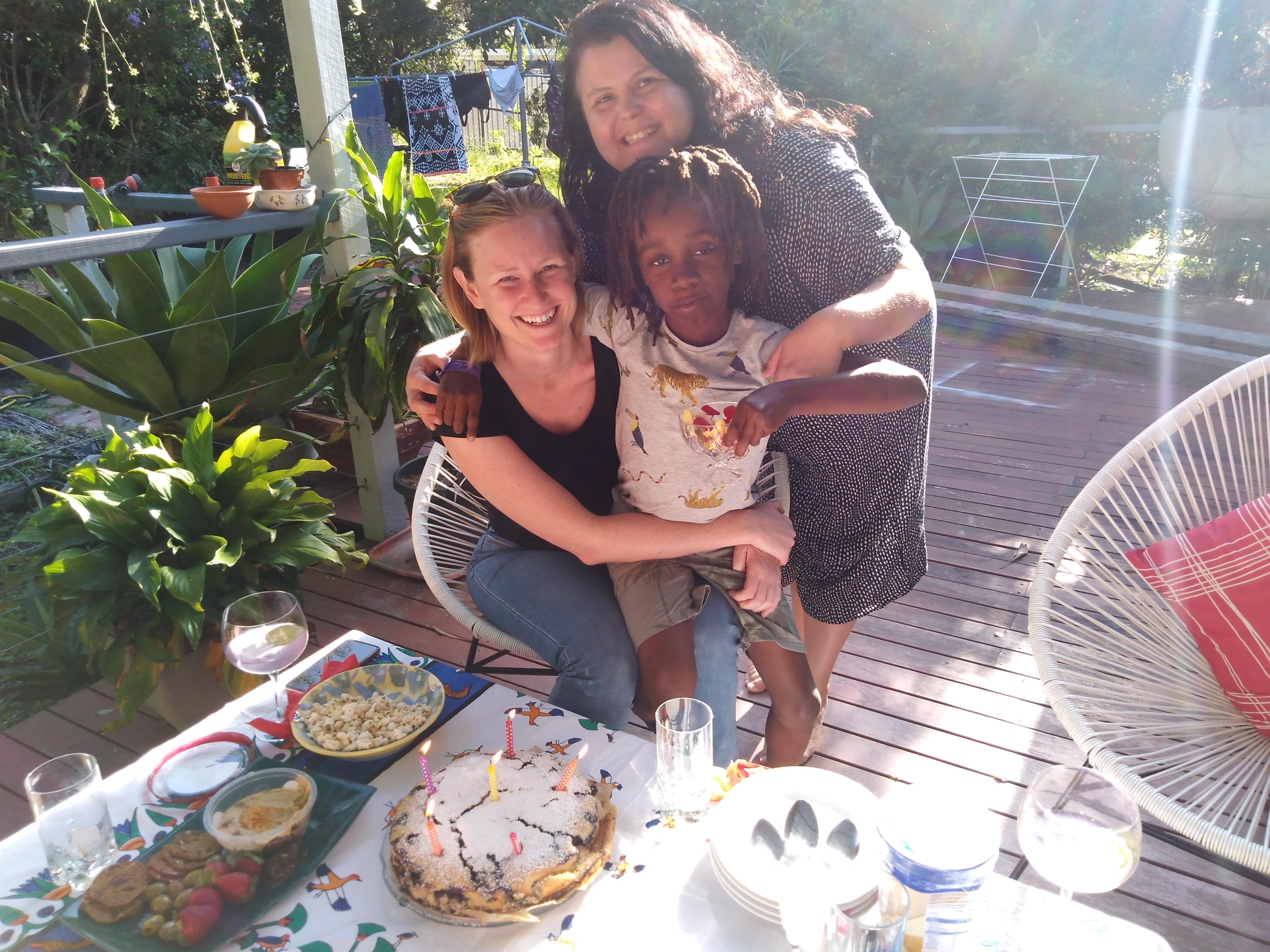
Brooke is right: things are starting to change. Several fertility networks have sprung up for people who want to have a baby and are seeking “platonic co-parents” to partner up with. There’s Pollen Tree, CoParents.co.uk and The CoParenting Agency, for example, all of which match prospective co-parents with one another. Modamily, meanwhile, is an online community that also enables people keen to “date with purpose” – those whose express intention is to start a family – to find one another.
Perhaps we need to broaden our understanding of what a family looks like in the modern world. Statistically, the nuclear family is becoming increasingly outdated; around one in four families with dependent children in the UK (totalling two million) are headed up by a single parent, according to data from single-parent charity Gingerbread. Some 89 per cent of these are single-mother families.
And, in Lauretta’s opinion, we’ve long put far too much emphasis on romantic love when it comes to child-rearing. “There’s so much focus on, ‘you need to find the one’. That comes from the messages that we’re fed by movies, by films, by books,” she says.
“There’s not enough attention on the love of a friendship, particularly female friendship. That love is often dismissed or undervalued – but it’s just as powerful.”