Move over James Bond. Spies are making the headlines this week, but the truth proves stranger than fiction. A bizarre attempt is underway to swap agents between the United States, Israel and the Soviet Union, with suspected moles at the centre of the intrigue. Years later, after the Cold War’s end, espionage anxieties resurface as the US demands Russia halt spying operations following the exposure of a senior CIA mole.
In Britain, newly released files reveal a wartime Nazi spy network operating on home soil – and a cunning MI5 counter-operation to neutralise the threat. On the battlefield, President George H W Bush declares victory in Kuwait after just 100 hours of ground war, Nato fires its first shots in anger in Bosnia, and armed men seize Crimea in a move that foreshadows later conflict in Ukraine.
In Scotland, meanwhile, a sheep named Dolly triggers an existential reckoning over the future of human cloning.
From covert operations to open warfare, and from intelligence files to genetic frontiers, all are captured on the front pages of The Independent.
26 February 1988 – East and West in unusual spy swap talks
The United States, Israel and the Soviet Union are drawn into complex negotiations over a proposed Cold War spy exchange, involving alleged agents held on both sides of the divide. Reports suggest the deal could expose a long-suspected Soviet mole inside a senior Israeli military research establishment, though officials refuse to comment publicly. The episode highlights the murky diplomacy and quiet bargaining that continued even as East-West tensions began to ease in the late Cold War.
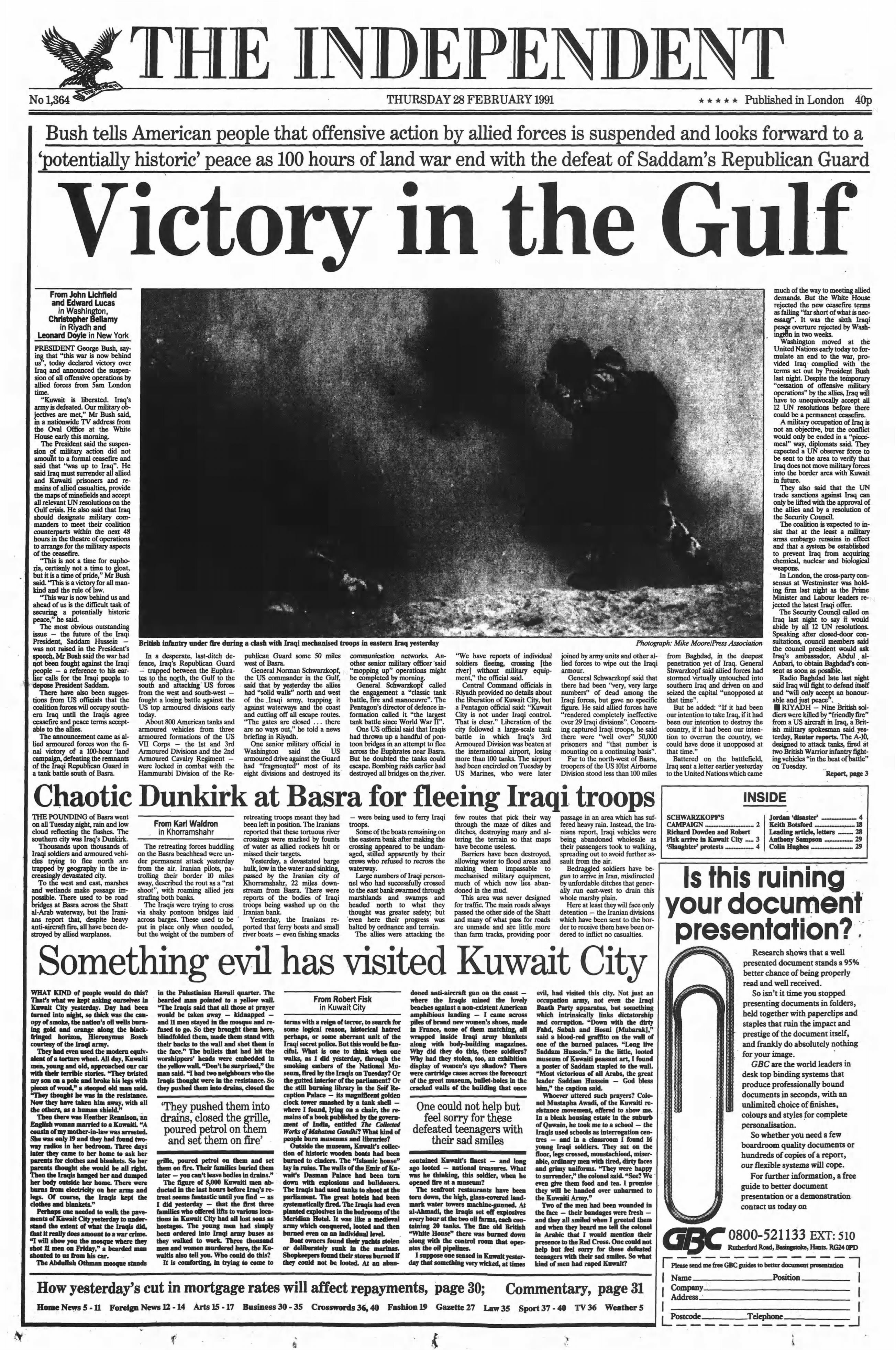
28 February 1991 – Bush declares victory in the Gulf
President George H W Bush announces the suspension of offensive operations after just 100 hours of ground war, declaring that “Kuwait is liberated” and Iraq’s army defeated. Coalition forces drive Saddam Hussein’s troops from Kuwait, bringing the Gulf War to a swift military conclusion. Yet the future of Saddam himself remains unresolved, and he stays in power in Baghdad for more than a decade before being overthrown during the US-led invasion of Iraq in 2003.
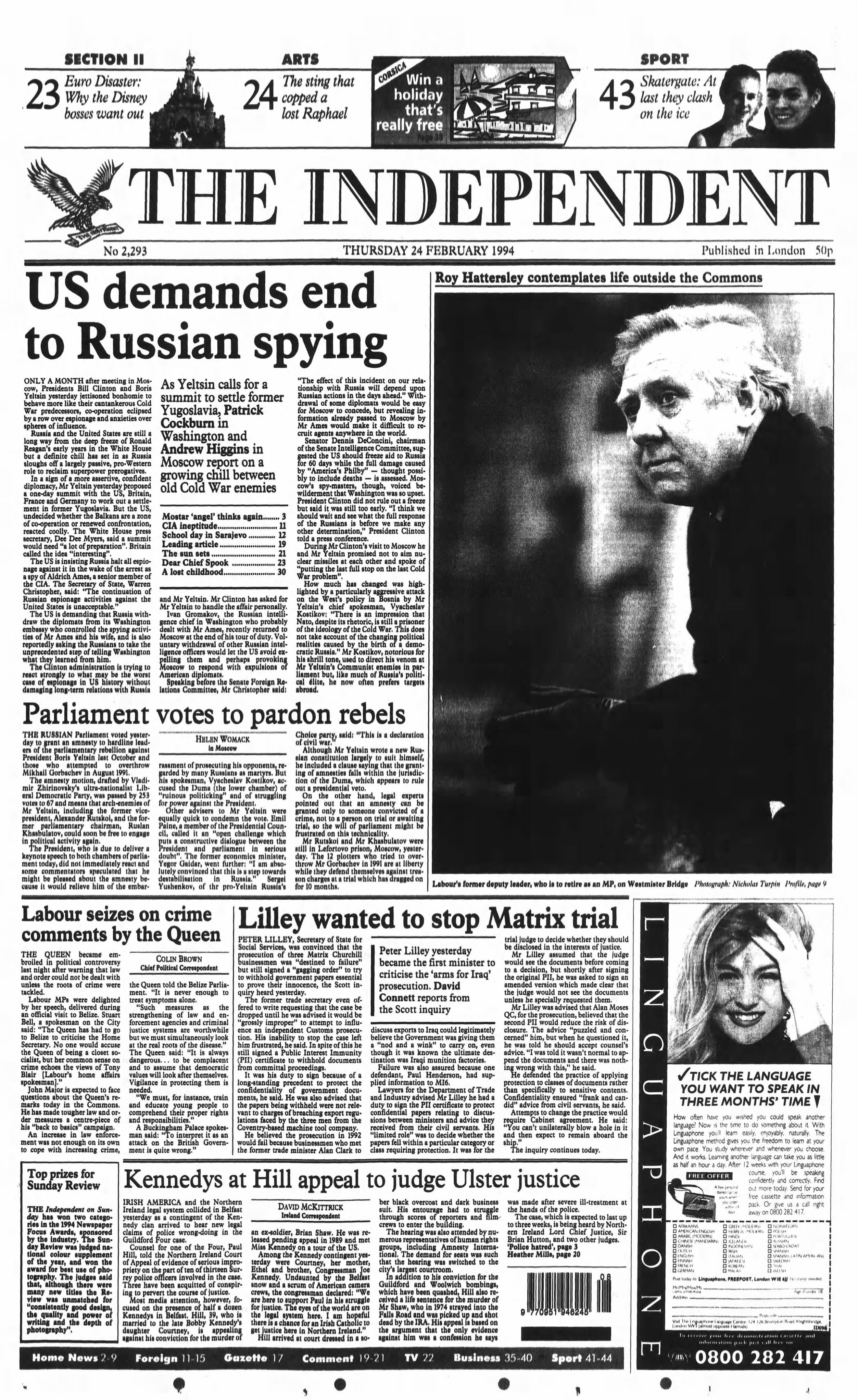
24 February 1994 – US demands Russia halt spying after Ames arrest
Washington presses Moscow to curb espionage activities following the arrest of CIA officer Aldrich Ames, accused of passing secrets to the Soviets and later Russia in one of the most damaging intelligence breaches in US history. The dispute strains relations between President Bill Clinton and Boris Yeltsin just weeks after talks aimed at closer cooperation. Despite the row, both sides seek to contain the fallout as the post-Cold War relationship continues to take shape.
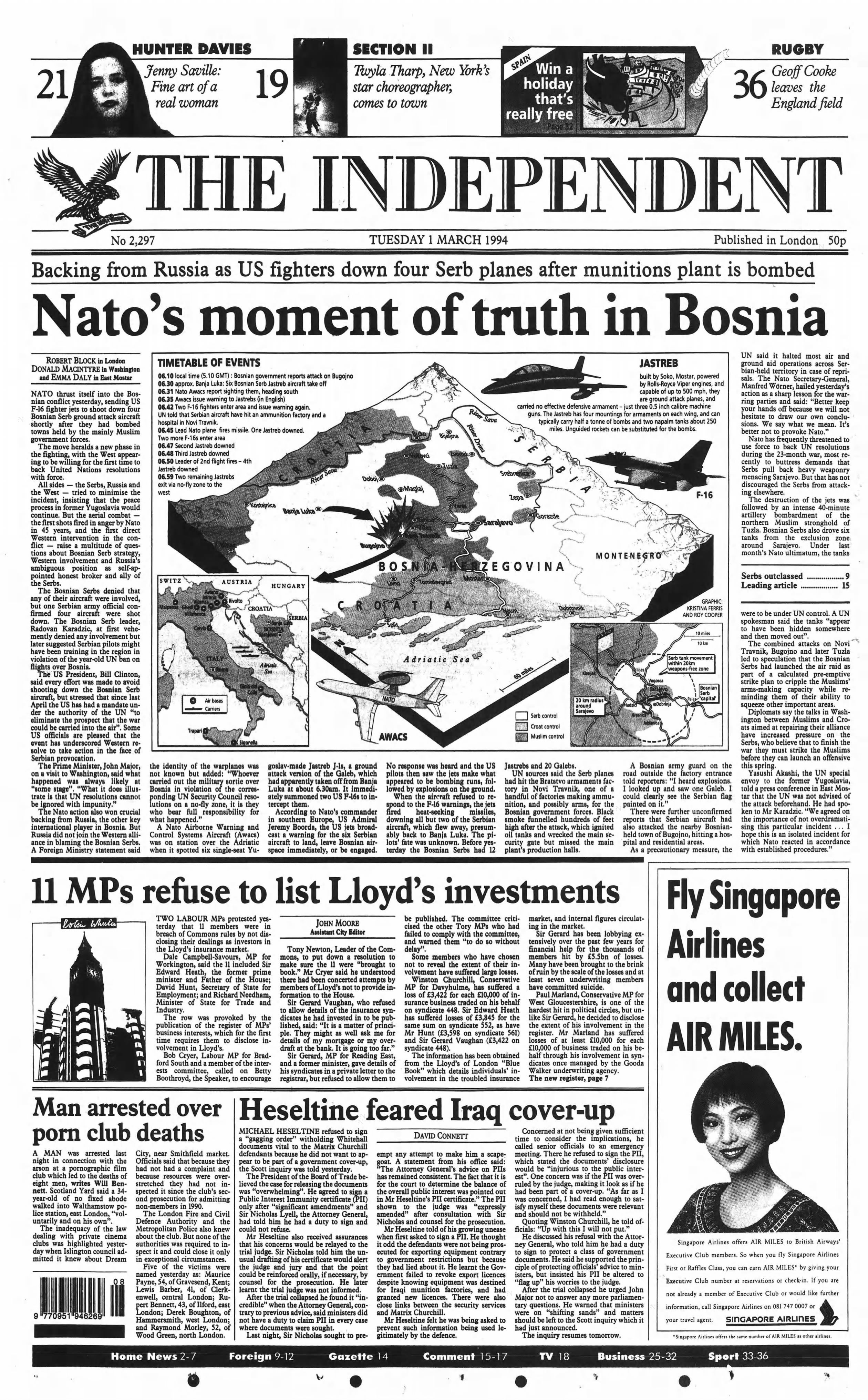
1 March 1994 – Nato downs Serb jets in first combat action
US F-16 fighter jets shoot down four Serb aircraft after they bomb towns held by Bosniak government forces, marking the first time in its 45-year history that Nato fires shots in anger. The action signals a decisive shift, as Western powers prepare to enforce UN resolutions with military force in the Bosnian conflict. Although Russia and other parties move to play down the incident to protect fragile peace efforts, the intervention opens a new and more assertive phase of international involvement in the war.
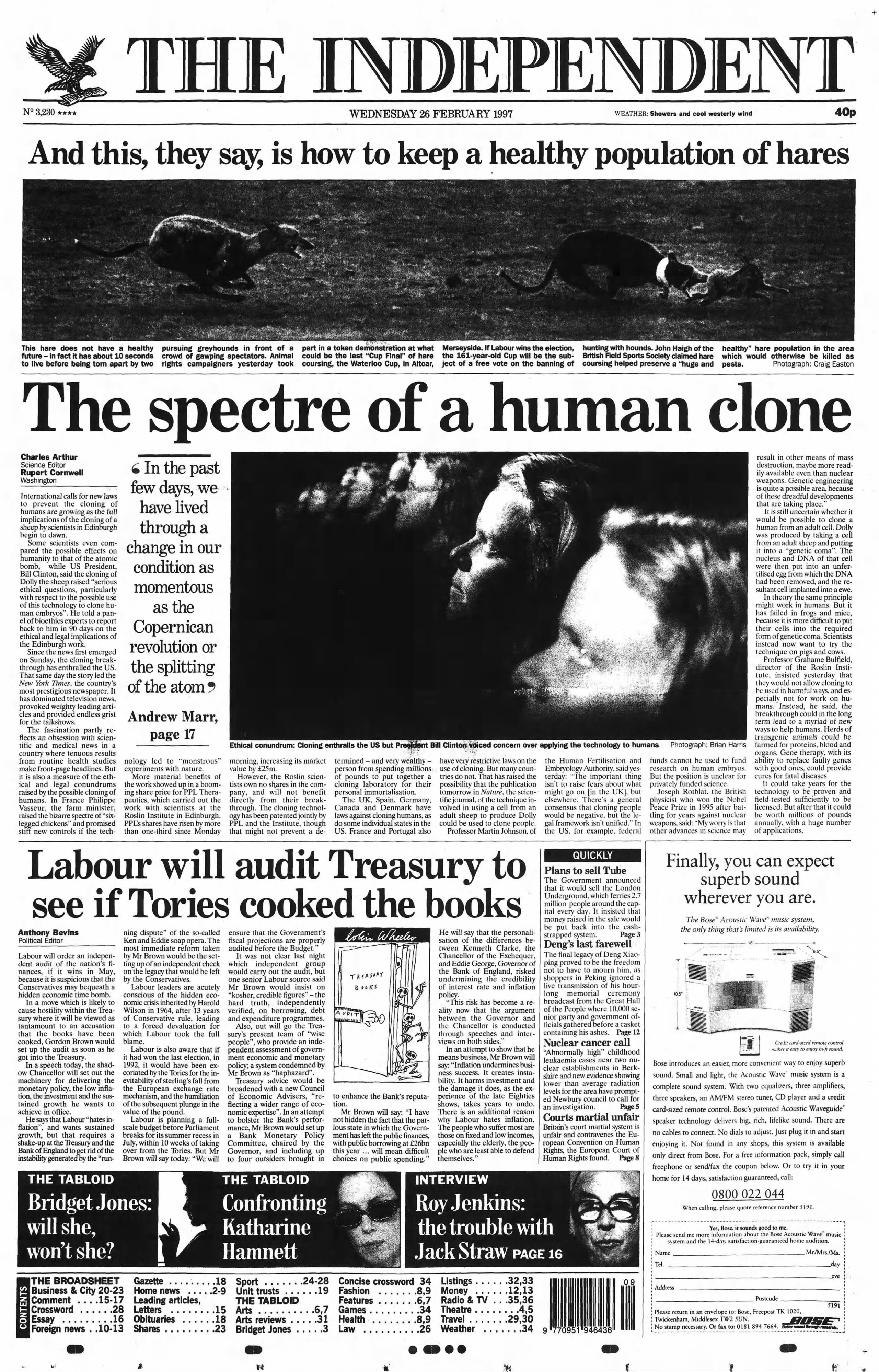
26 February 1997 – Dolly the sheep prompts cloning fears
The cloning of Dolly the sheep by scientists in Edinburgh triggers urgent international debate over the prospect of human cloning. Political leaders and bioethicists call for new laws, with US president Bill Clinton warning of “serious ethical questions” and commissioning a rapid review of the implications. The Independent’s Andrew Marr writes: “In the past few days, we have lived through a change in our condition as momentous as the Copernican revolution or splitting the atom.” Indeed, the breakthrough goes on to fuel years of global debate over genetic ethics and fears of so-called “designer” babies.
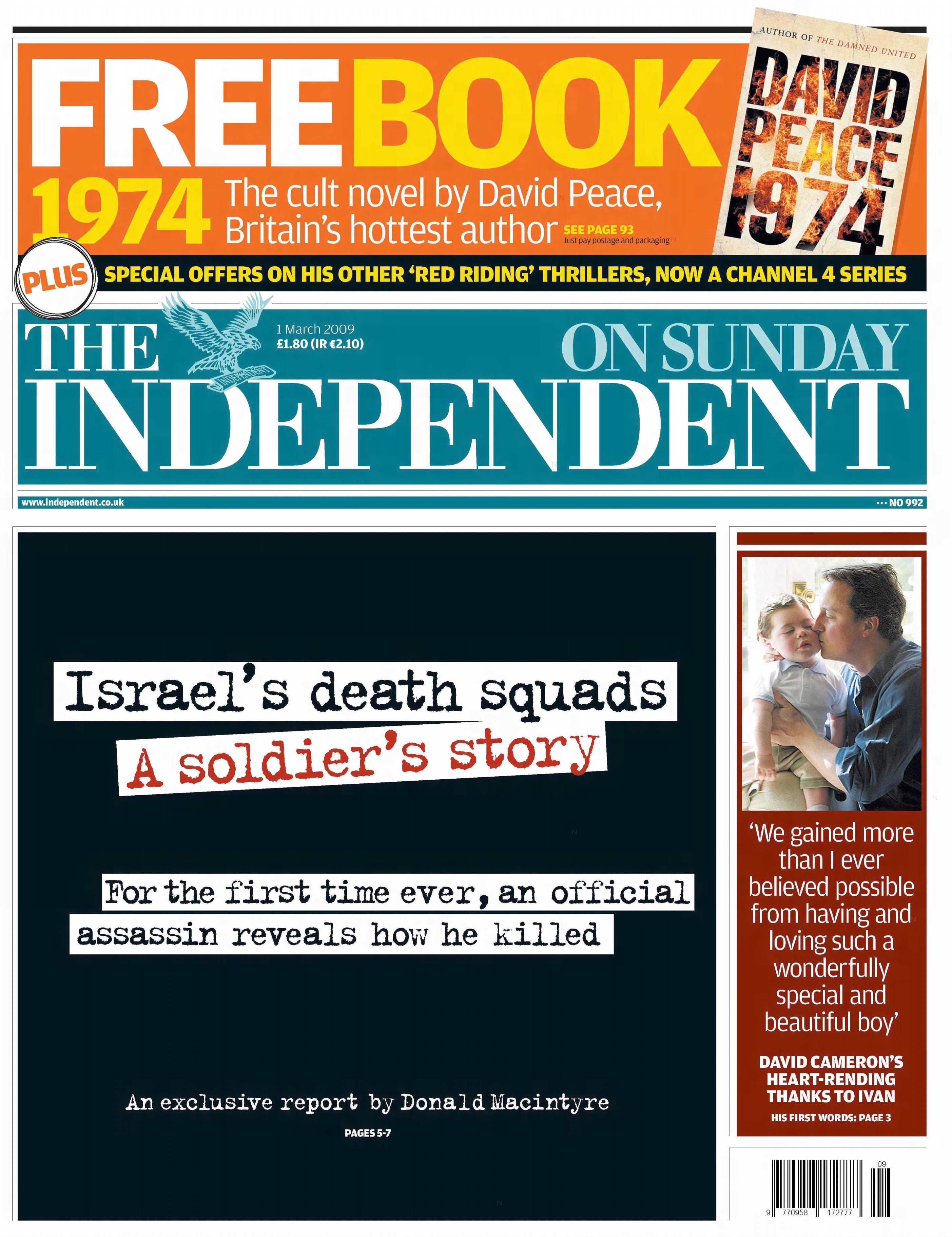
1 March 2009 – Ex-soldier reveals details of Israeli ‘death squads’
A former Israeli soldier breaks his silence in an interview describing the military’s policy of targeted assassinations, recounting a botched ambush that killed both militants and Palestinian bystanders. His testimony, given to the group Breaking the Silence and reported by The Independent on Sunday, challenges the army’s official account and raises renewed debate over the IDF’s tactic of targeted strikes against Palestinians.
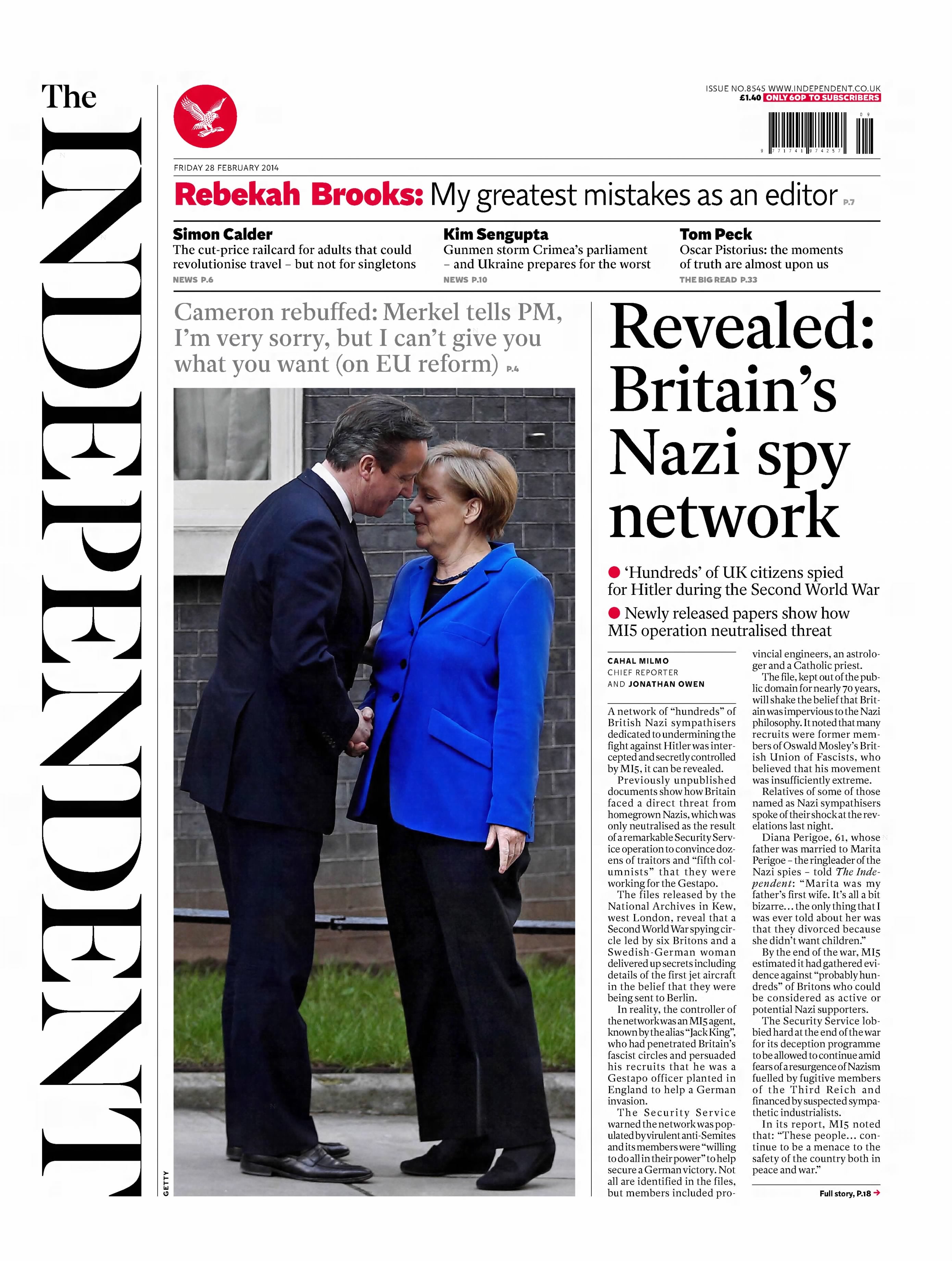
28 February 2014 – Files reveal wartime Nazi spy ring in Britain
Documents newly released by the National Archives reveal that hundreds of British citizens spied for Nazi Germany during the Second World War, as MI5 mounted a remarkable counter-operation to neutralise the threat. Security Service officers persuaded dozens of would-be traitors that they were communicating with the Gestapo, while in reality controlling and monitoring the network. The files detail how a circle led by six Britons and a Swedish-German woman passed military secrets, including information on early jet aircraft, believing they were sending intelligence to the Nazis.
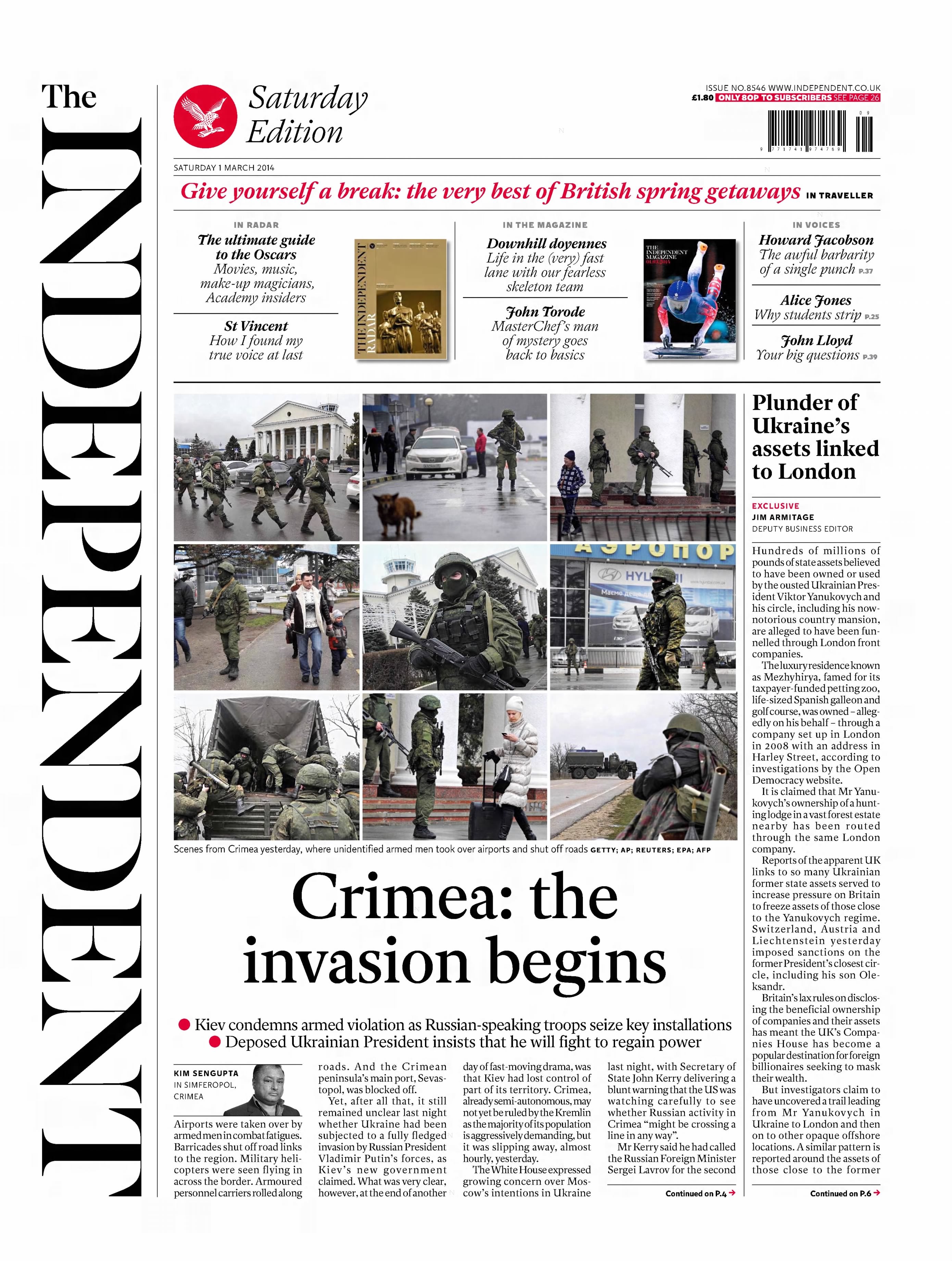
1 March 2014 – Crimea invasion begins
Armed personnel in combat fatigues take control of airports, government buildings and military positions across Crimea, as Kyiv condemns what it calls an armed violation of Ukrainian sovereignty. Roadblocks are erected, helicopters cross the border and armoured vehicles appear on the peninsula, while the deposed president Viktor Yanukovych insists he remains Ukraine’s legitimate leader. The takeover precedes Russia’s formal annexation of Crimea weeks later, a move that reshapes European security and sets the stage for years of conflict.
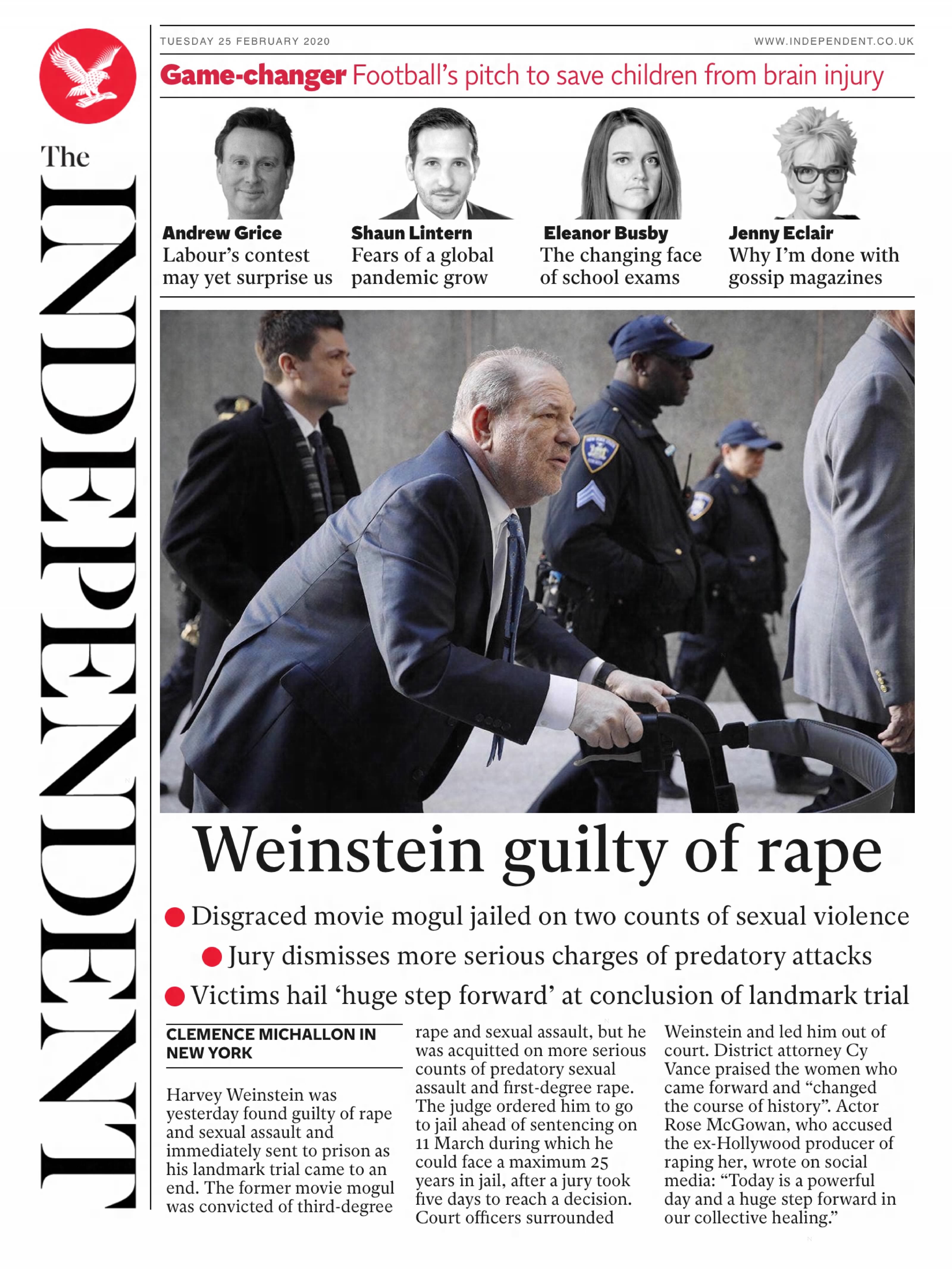
25 February 2020 – Weinstein found guilty in landmark trial
Former film producer Harvey Weinstein is convicted in New York on two counts of sexual assault and rape, marking a pivotal moment in the #MeToo era. The jury acquits him of more serious predatory sexual assault charges, but the verdict is hailed by accusers as a significant step toward accountability in the entertainment industry. It is Weinstein’s first criminal conviction, and he is later sentenced to 23 years in prison.