




British singer Rita Ora has opened up about why she chose to freeze her eggs while she was still in her 20s.
The 35-year-old television personality, known for hits such as “Hot Right Now” and “I Will Never Let You Down”, had two rounds of egg freezing when she was 24 and 27.
Speaking to Women’s Health UK, the singer said: “(Back then), a doctor told me it was a really good time to preserve the best-quality (eggs).
“It was actually the best advice, because now I’m in my mid-30s and I have a lot of friends really trying to figure it out. It will just be more of an expansion when the time comes.”
Mr Wael Saab, senior medical director and fertility consultant at The Centre for Reproductive and Genetic Health (CRGH), has shared what exactly is involved in the egg-freezing process and some important factors to consider before beginning the process.
What is involved in the egg-freezing process?
“When a lady comes in to freeze her eggs, the first thing that we do is take a medical history to make sure she is fit and healthy and to see if she has any contraindications that could impact the treatment,” explains Saab.
“Then we check the ovarian reserve to see how many eggs are still left in the ovaries, which gives us an idea about how to stimulate the ovaries.”
Patients will then have injections to stimulate the ovaries that go under the skin of the stomach for a period of 10 to 12 days, he explains.
“During that time, we monitor the response to that hormonal treatment every other day,” says Saab. “This process involves around three to four scans.”
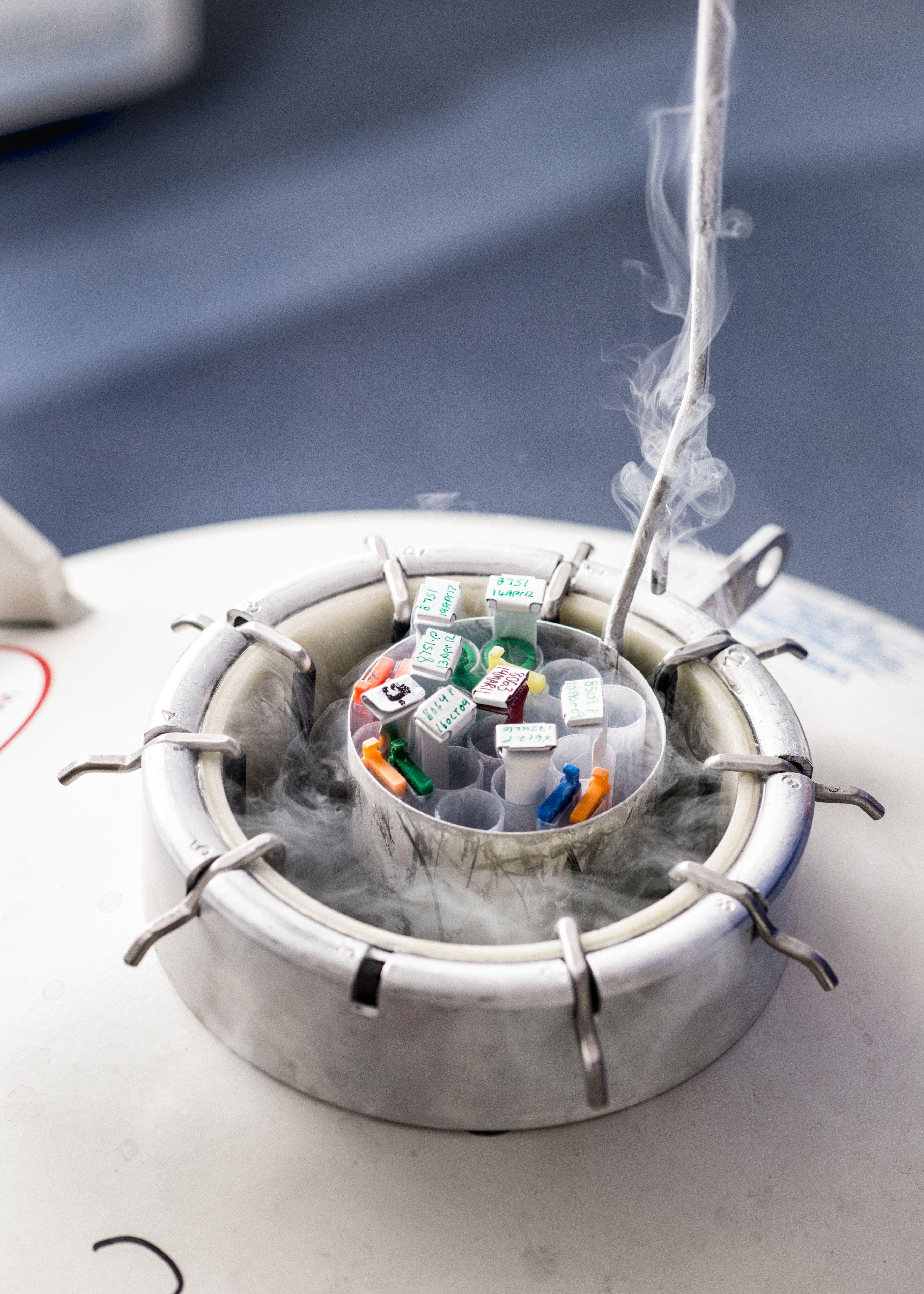
“When we are satisfied with how the follicles are growing or how the response to the stimulation is happening, we will then give a particular injection, called ‘trigger shock’, and around 36-38 hours later, we will retrieve the eggs.
“We try to mimic nature, so we try to take the eggs out roughly around day 13 or 14 of the cycle.”
The fertility consultant adds that the egg-retrieval process usually takes 15 minutes and is done under sedation.
“During this procedure, a needle will cross through the vagina to the ovaries to collect the eggs,” he explains. “Patients will then stay in the clinic to rest for around half an hour after the procedure, and we let them know how many eggs have been collected before they go home.”
Is any preparation required for this procedure?
“Before the treatment starts, we advise the women to make sure they are leading a healthy lifestyle,” says Saab. “For example, we ask people to try and avoid alcohol and caffeine, to take their vitamins and to optimise BMI if possible. It’s also important to try and reduce stress during this time.”
How long can eggs be stored for?
“Different countries have different regulations, but in the UK, eggs are frozen for 55 years, and that can be renewed 10 years at a time,” says Saab. “For decades, women were asked to plan their lives around fertility but now egg freezing has flipped so fertility can now be adapted around a woman’s life.”
However, Saab emphasises that egg freezing is a back-up plan.
“When they decide they are ready to have a baby, if they are in a stable heterosexual relationship, they will first try naturally,” says Saab. “But if trying naturally did not work, or if they are in a position in their life where they don’t have a partner, or want to use donor sperm, then the eggs will be defrosted and inseminated with sperm to create an embryo which can be used for transfer.
“Some of those eggs might not survive defrosting, but once an egg survives defrosting, we expect [it] to behave similarly to a fresh egg.”
When is the optimal time to freeze your eggs?
“Unfortunately, time is not forgiving when it comes to fertility because as ladies get older, the quantity and the quality (quality of the number of chromosomes) of eggs both begin to deteriorate,” notes Saab. “So, in general, the optimal time to freeze eggs is somewhere around 35/36 or younger.
“Age is the most important factor because when they come back to use their eggs to get pregnant or to have fertility treatment, it is the age of the eggs at the time of egg freezing that dictates the success rate, rather than the chronological age of the person using those eggs at that time.”
What is the success rate of egg freezing?
“The success rate differs between clinics, but the probability of a frozen egg translating into a baby when it was frozen at the age of 35 or younger is around 7-8 per cent,” says Saab.
The Human Fertilisation and Embryology Authority (HFEA) advises patients to look at success rates for fresh IVF cycles with patients using their own eggs in their age band.
How much does it cost?
“There’s usually a specific fixed cost for egg freezing that includes the cost of the medications, the scans, the screenings, and a fee that patients will pay for keeping those eggs in the freezer year after year,” says Saab.
According to the HFEA’s website, the average cost of having your eggs collected and frozen is £3,350, with medication being an added £500-£1,500. Storage costs are extra and tend to be between £125 and £350 per year.
The HFEA’S website also states that thawing eggs and transferring them to the womb costs an average of £2,500 – so it estimates that the whole process for egg freezing and thawing costs an average of £7,000-£8,000.
What risks are involved?
“The most common thing that people feel during the treatment is a bit bloated and little bit of fatigue, but there are also some hormonal and surgical risks,” says Saab. “These risks include blood clotting, no response to the treatment, infection, bleeding and/or ovarian hyper-stimulation.”
What are the most common myths about egg freezing?
“I have been doing this for 20 years, and the most common misconception is many people think that freezing your eggs might affect the age of menopause,” says Saab. “Many people have asked me, if I freeze 20 eggs, will I end up having menopause 20 months earlier? And the answer is no.
“Many people also ask whether the procedure will change the natural course of their fertility, which is also a misconception. We always stress that egg freezing is a back-up plan, as many people don’t even need to use them in the future.”