




At the start of the year, I open a new note in my phone’s app, ready to begin a list of everything I’ll read over the next 12 months. It’s a little tradition that I’ve stuck to since 2018; while some readers prefer sites like Goodreads or apps like Storygraph, I enjoy the organised chaos of my slightly unwieldy inventories.
In 2025, I managed to read 95 books, starting off with Nathan Hill’s Wellness and ending with Great Black Hope by Rob Franklin. That’s a new record for me – scrolling back through the archives shows that I’ve previously tended to get through around 70 titles annually. This also makes me something of an anomaly. According to research from YouGov released last year, the average Brit read or listened to just three books over a 12-month period. 40 per cent of the respondents hadn’t read a single one in the past year. And we’re not exactly raising a new generation of readers, either. In 2025, children’s reading enjoyment fell to the lowest recorded level in the UK.
I’m well aware that talking about how many books you get through can come across as a bit smug, a not-so-humblebrag (look at me and my massive literary intellect!). I’m also aware that reading is something that brings a lot of joy to a lot of people, yet it can often fall off our list of priorities, for a whole host of totally understandable reasons: work and childcare spring to mind, along with the steady erosion of our attention span thanks to the allure of social media and short-form content. Then there’s the systematic closure of libraries after years of funding cuts.
And yet reading can do us so much good. Studies have found that this hobby can improve our focus, reduce stress levels, and essentially act like a workout for the brain, supercharging memory and concentration and slowing down cognitive decline. It’s also perhaps the best tool we have for boosting empathy. As the historian and The Rest is History co-host Dominic Sandbrook put it in a recent piece for The Independent, “you meet new people, have extraordinary experiences, and crucially, get a taste of what it might be like to be somebody else”. He has just launched a new podcast, The Book Club, with the precise aim of getting more people to share in the enjoyment of some of the world’s greatest stories.
For many of us, the start of the year feels like a good time to try and jumpstart a dormant reading habit. And if you vowed to make 2026 the year you read more, you’re probably in good company: we are now in the second month of the National Year of Reading, a huge campaign for kids and adults alike that is designed to make us feel energised and excited about books, tackling the downturn in reading enjoyment in the UK in the process. If your resolve has started to flounder now that we’ve left January and its stringent ethos of self-improvement behind, I hope I can provide some pointers.
First, though, a few caveats. I don’t have kids or pets, and therefore don’t have the caring responsibilities that come with them; I know I have more free time and get much more uninterrupted sleep than the parents I’m acquainted with. I also don’t drive, and I live in a region with spotty public transport, which – the glamour! – means I spend a lot of time on buses (rubbish for getting from A to B quickly, great for reading).
On that note, perhaps the most straightforward piece of advice I have is this: always bring a book with you. That way, when you’re faced with small pockets of dead time that might otherwise be sacrificed to scrolling on your phone – the wait between trains, for example, or the 10-minute lag between the time you arranged to meet your friend for coffee and the time they actually turn up – you’ll have something to focus on.
If you don’t fancy toting around an immaculate hardback, or the massive wedge of Hilary Mantel historical fiction that you’ve been trying to vanquish, make that your “home book” and designate a smaller paperback as your “bag book” when you’re out and about. Maybe go for one of those very slim, very chic novels in translation, like Daunt’s lovely reissues of the Italian writer Natalia Ginzburg’s novellas. I’m an advocate of having multiple books on the go at once – a bit like having a few perfumes that match your moods.
It’s not just your literary taste that’s deeply personal; getting to grips with exactly how you most enjoy the process of reading is important, too. Maybe you need to put your phone in another room to avoid distraction, or you want to find a playlist that works with the book you’ve got on the go (some contemporary authors, such as David Nicholls and Diana Evans, often share Spotify lists of the songs that inspired them while writing). Perhaps you like the satisfying sense of forward momentum that comes with the “percentage read” tracker on an e-book.
Getting to grips with exactly how you most enjoy the process of reading is important, too
A confession: I have never really hit it off with audiobooks. My mind tends to wander to other places while I’m listening; I find it hard to concentrate on a narrative, or keep characters in my head, when I’m not faced with words on a page. But for many of my friends, they’ve been a game-changer, allowing them to plough through a story while on the move or emptying the dishwasher. Some of them like to mix mediums, using a hard copy at home, then switching to audio while driving.
As I am prone to getting trapped by indecision, trying to always have a decent idea of which book I’m planning to pick up next helps me sustain momentum. My next few reads sit on my bedside table rather than my bookshelves, so I can jump straight from one to another without wasting too much time pondering my next move.
This, I reckon, is particularly crucial for readers who are trying to return to the habit; keeping up the impetus is important. If you’ve just found an author you’re obsessed with, order something from their back catalogue, a book they’ve cited as a touchstone, or, if it’s a writer from a particular period, try something by one of their peers (or rivals). It can take you down some wonderful and unexpected reading routes. Did I ever expect to become obsessed with mid-century female authors like Elizabeth Taylor (not the one you’re thinking of) and Dorothy Whipple? No. Am I very glad that I ended up down that particular literary rabbit hole? Absolutely.
It’s also worth bearing in mind that you’re unlikely to read at a completely steady pace throughout the year. You could have a bumper month in, say, July, when you’re spending a disproportionate amount of time lying prone on a sun lounger, then see your reading rate tail off in the autumn, when your work responsibilities pile up once more. And if you do end up in a slump, switching to a genre you don’t normally dabble in can provide a palate cleanser; Mick Herron’s detective novel Down Cemetery Road rescued me from the reading doldrums last year.
Reading can sometimes feel like a very solitary hobby, but building a community around it can be a real joy. When I moved back to my home city a few years ago, joining a book club didn’t just expose me to titles and authors I would never have picked up of my own volition; it also introduced me to a load of new friends. It’s also well worth tracking down an independent book shop where you can really trust the booksellers’ recommendations (I know that if a new release has the seal of approval from the wonderful West Kirby Bookshop on the Wirral, then it’s probably worth trying).
Reading goals aren’t everything (I think it’s much more important to read at a pace you enjoy than to dash through short novels purely to push your numbers up, which feels like an extension of the self-optimising hustle culture that keeps infecting our downtime). But if you’re a certain type of person, they can be very motivating. This year, I’m aiming for a solid 100. Will I make it into triple figures? We’ll have to check in next January.
‘I bought a Kindle and it changed everything’
Victoria Harper
About a year ago, I realised I had almost completely stopped reading for pleasure. For most of my life, I had inhaled books. There was a brief breakup when my children were small, but they’re teenagers now, so I could hardly blame them for the untouched pile of novels gathering dust beside my bed.
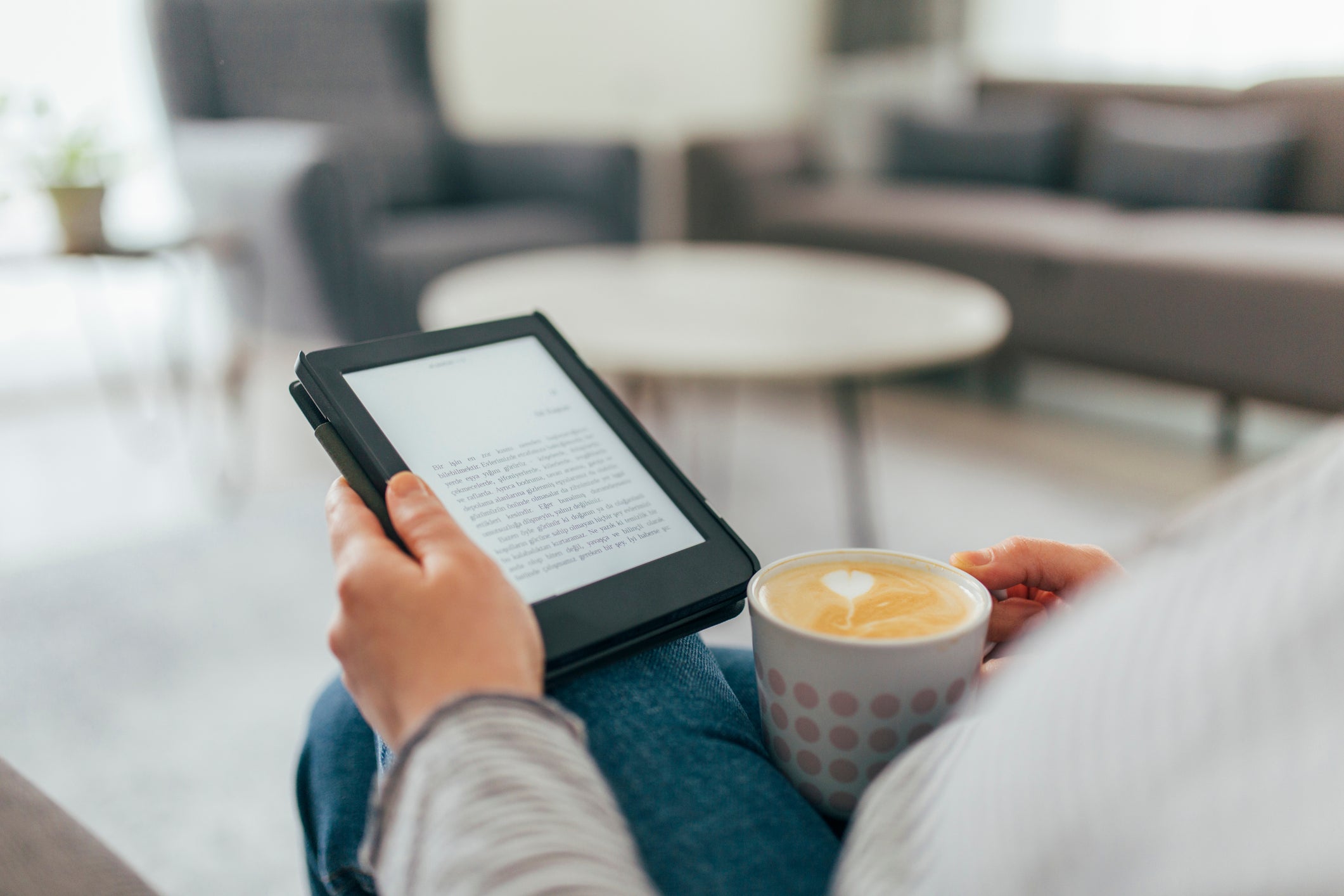
How did I go from someone who regularly binged on books in one or two sittings, to someone who barely opened one? Concentration shot by scrolling? Sure. Eyes struggling with teeny-tiny print? Absolutely. General life overwhelm, plus a job that requires making sense of a head-spinning news cycle all day? Yes, all of the above – but what was the solution?
When a friend told me to get a Kindle, I said absolutely not. I spent all day staring at screens; the last thing I wanted was to take one to bed. And I loved actual, real books. But, as she pointed out, loving them doesn’t count for much if you don’t actually read them.
So I gave in. I bought a Paperwhite Kindle – no blue light, no squinting – and, after a few early panics about losing my place, I took back control of my reading life. From Demon Copperhead to Colm Tóibín’s Long Island, and my absolute favourite read of the year, Hello Beautiful by Ann Napolitano, I’m back in my reading groove.
Better still, driven by the need to know what those characters are up to and how their stories end, I’m going to bed earlier and my sleep has improved as an unintended but very welcome side-effect. My imagination is fired, but my mind is calm and distracted from any whirring anxieties. Only by turning my reading brain back on have I been able to truly switch off. It has been life-changing.