




Sophie Richards says she felt ignored by doctors for years, despite being “bed-bound” for two weeks of every month – until she was diagnosed with endometriosis and changed her diet.
The women’s health practitioner and host of The Finally Found Podcast says she felt like she was “screaming at doctors” that something was seriously wrong, but she was continuously told it was “just IBS or just painful periods – it’s ‘part of being a woman’”.
She’d experience “agonising pain”, brain fog, nausea, fatigue and extremely heavy, 10-day long periods, until she was diagnosed at 21.
Now 29, Richards says it wasn’t that doctors didn’t want to help, they just didn’t have answers.
Endometriosis UK estimates that 10 per cent of women suffer from the chronic condition – where tissues similar to the uterine lining grow outside the uterus – but it takes approximately eight years on average from the first GP visit to get a diagnosis.
There is currently no cure for endometriosis, and Cardiff-based Richards was told there was nothing more they could do to alleviate her symptoms, except a hysterectomy – “That this was my life, and I just thought, ‘there is no way I can carry on in this agonising pain’.”
She says the pain was at its worst at two points each month – “In the middle of my cycle and then just before my period, the luteal phase, were absolutely excruciating. For at least two weeks of the month, I was bed-bound.”
One thing Richards had noticed, though, was that her symptoms often got worse after certain meals. “I started to do a little bit more digging and some research, and saw this link between inflammation and endometriosis,” Richards says. So she underwent a course to become a women’s health practitioner to learn more, began to eliminate inflammatory foods from her diet and shared her progress on Instagram.
“I was really sceptical. I thought, ‘How on earth are lifestyle changes going to help when I’ve had four surgeries (including two for egg freezing) and they’re all telling me nothing’s going to work. But I just thought, you know what? What’s the harm?”
Previously, she ate what she considers a normal diet for someone of university age, “with no nutritional background or information”.
She says: “I thought what was healthy was a vegetable lasagne instead of a meat lasagne – it was very processed, I was eating lots of protein bars. I grew up thinking calories were bad, so anything that had ‘low calorie’ and ‘low fat’ I thought was a green sign.
“In my mind, I was eating healthy food, but the reality was very, very different.”
So Richards began implementing little daily habits and immediately started to feel better. “My periods are a little bit lighter, which was crazy because I used to flood through all my pads and tampons, and I wasn’t flooding anymore.”
Now she has published her debut book, The Anti-Inflammatory 30-Day Reset, an accumulation of everything she learnt, as well as expert knowledge and recipes, split into six “pillars” of an anti-inflammatory lifestyle: food, gut health, detoxification, sleep, stress and movement.
Food was the biggest change she made. “There were some meals that I would eat and, straight after it, I’d be doubled over [with] a big swollen belly, and just didn’t understand why.
“Looking back, it was more heavily processed foods. Basically, the more complicated the ingredients were, the more artificial the chemical sweeteners, the worse the symptoms were.
“Artificial carbohydrates were my biggest problem. Things like white pasta, very processed breads…”
She says one recipe in the book – grain-free seeded bread – is “actually the only bread I can have that doesn’t make me feel awful and it’s because it’s full of healthy, whole food ingredients rather than processed stuff.
“I used to eat gluten and it would swell me up,” she adds. “I’d have this huge kind of migraine after it. So processed foods, gluten and dairy, I’d say, were the three key things.” So all her recipes are free from UPFs (ultra-processed food), gluten and dairy – think chicken karahi with quinoa, pistachio-crusted cod, or Spanish tortilla and romesco dip.
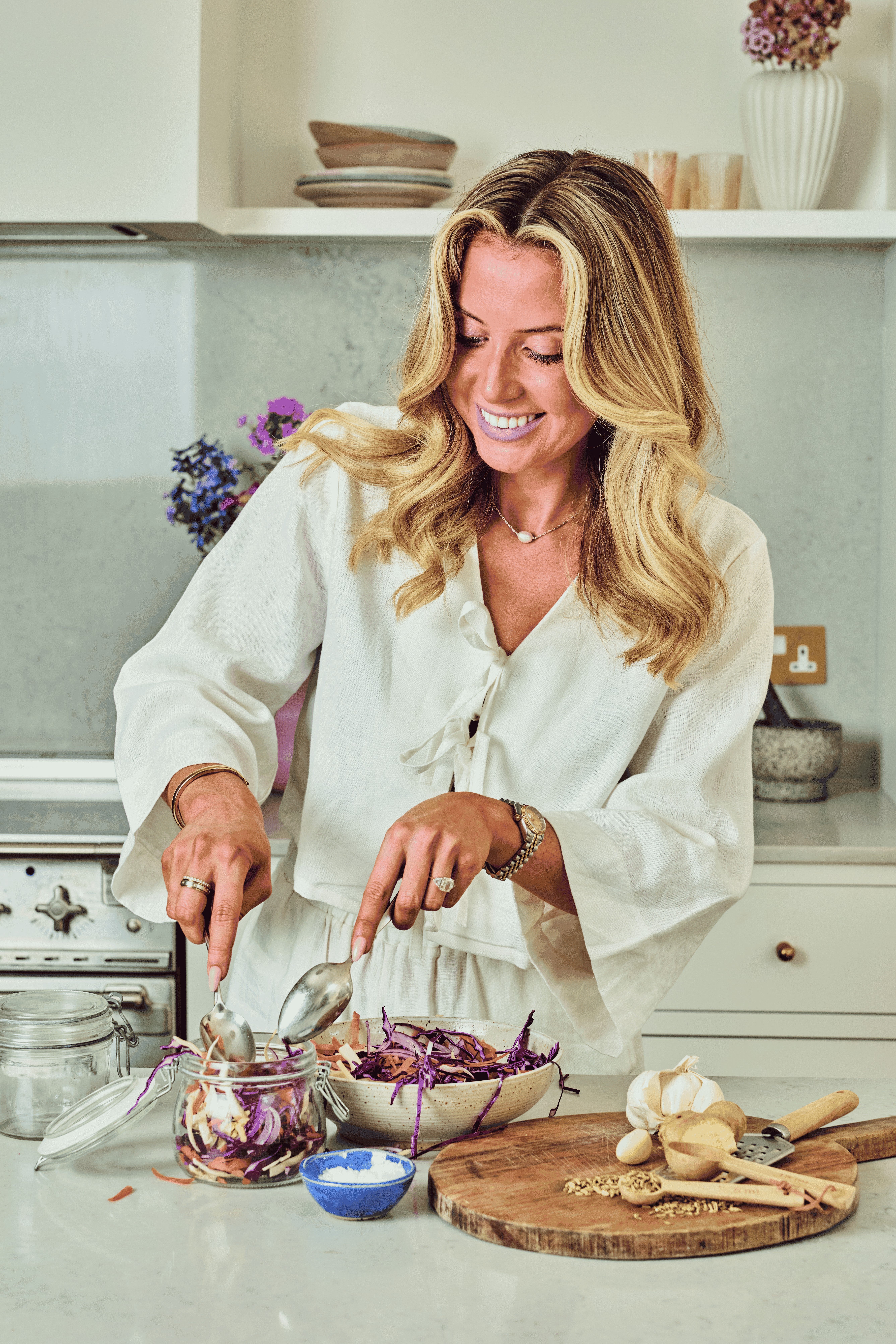
“I do have one piece of red meat a week, and I try my best to make sure it’s as high quality as possible… because anaemia is something a lot of people with endometriosis struggle with, and I know I can struggle with it from time to time because of that blood loss.” So you’ll find smoky chorizo beef and Greek-style lamb chops with roasted veg, among her recipes too.
While changing her diet helped Richards almost immediately, she knows, “we’re all unique, we’re all individuals”, not everyone with endometriosis has the same symptoms and inflammation is a complicated topic we don’t even fully understand yet.
“But, from what we do know, it’s very clear that there are different points in the cycle that are more inflammatory. And it is really clear that some foods can cause inflammation over others. The general consensus is [to] move to a whole food way of eating.
“When something doesn’t have a label, it’s a good sign. So I always think; meat, fish, fruit, veg, nuts, seeds, grains, legumes. When you move to that way of eating, you lower inflammation. Fibre is so important to the gut, it helps with hormones and helps with inflammation.”
So what’s Richards’ advice for battling a sugar or junk food craving?
“First of all, remember it’s totally normal – these foods are built to make you feel addicted to them. Also, off the back of Christmas, when you have that high blood sugar going on, you tend to crave more as well.”
But if you’re able to balance your blood sugar by eating meals high in protein, fats and “nature’s carbohydrates”, “and when you understand the ‘why’ behind something, you’re able to sit with the craving a little bit more.
“The more sugar you eat, typically, the more you will crave it. Now I don’t eat any rubbish, and I don’t crave any rubbish because I’ve been eating this way for so long.”
But that doesn’t mean no sweet treats – her healthy recipes include chocolate chip macadamia cookies and sticky toffee pudding. “It’s not about giving up anything. It’s just about making those healthier swaps. There are plenty of sweet treats that don’t take you on that roller coaster of cravings.”
Living an anti-inflammatory lifestyle has helped Richards’ mood dramatically improve, too. “I didn’t even realise I was struggling until I’d almost come out of the fog. I wasn’t feeling down all the time.”
Of course, the condition is still there – but it doesn’t take over her life in the same way. “I have endometriosis but because I’m not feeling the symptoms of it anymore – I can live with anything if it’s not affecting me.”
‘The Anti-Inflammatory 30-Day Reset’ by Sophie Richards (Michael Joseph, £22).
High-protein scotch eggs (grain-free)
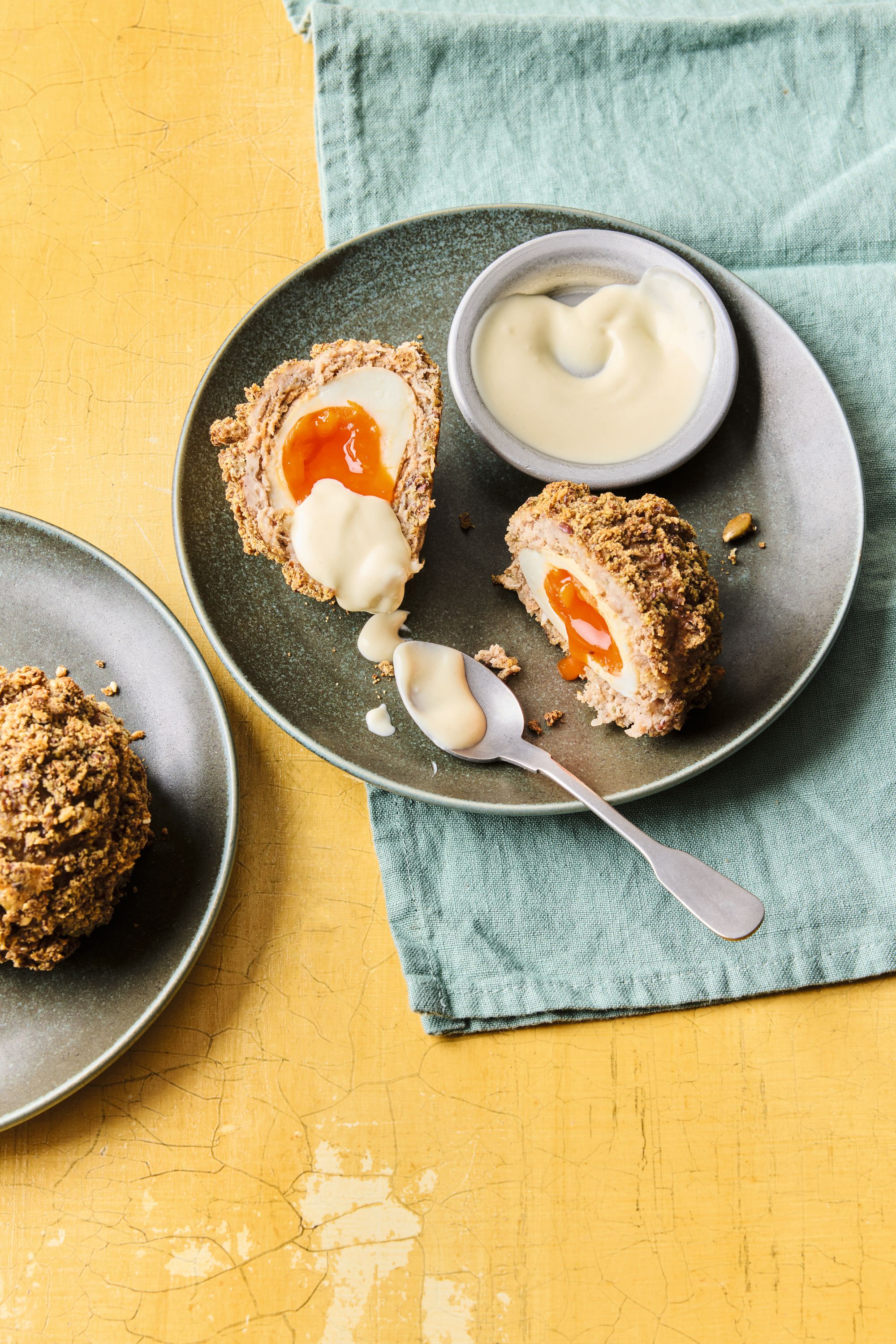
“These fancy high-protein Scotch eggs elevate a classic recipe with an even better mushroom and walnut paste, which isn’t just tastier than the original, but also adds depth, fibre and a touch of umami,” says Richards.
“Coated in crumbled seeded bread, they’re crisp, and have a satisfying crunch while staying gluten-free – the dream! Served with a tangy mustard mayo, these are perfect for a tasty, nutrient-dense lunch or snack.”
Makes: 4
Ingredients:
5 eggs
1 tbsp olive oil
100g chestnut mushrooms, finely chopped
40g walnuts, toasted and finely chopped
1 clove of garlic, minced
1 tsp dried thyme
1 tsp tamari
1 tsp freshly ground black pepper
400g high-quality gluten-free sausage meat
A pinch of cayenne pepper (optional for an extra kick)
1 tsp dried sage or rosemary
½ tsp garlic powder
Sea salt, to taste
1 beaten egg
Method:
1. Preheat the oven to 200C (fan).
2. Boil the kettle. Put 4 of the eggs in a saucepan and cover with boiling water. Simmer over a medium heat for 6 minutes. Remove from the heat, drain, and run under cold water. Leave to cool before peeling.
2. To make the mushroom and walnut paste, heat the olive oil in a pan over a medium heat. Sauté mushrooms, walnuts, garlic, thyme, tamari and ½ teaspoon of black pepper for 5 minutes until softened. Blend into a rough paste and let cool. In a bowl, mix the sausage meat with sage or rosemary, garlic powder, cayenne (optional), salt and another ½ teaspoon of black pepper. Divide into 4 equal portions.
3. Flatten each portion of sausage meat and spread with a thin layer of mushroom paste, then wrap it around a peeled egg, ensuring it is fully enclosed.
4. Beat the remaining egg, dip each sausage-wrapped egg into it, then roll in the crumbled seeded bread (or chosen coating).
5. Bake for 20-25 minutes, turning halfway through. They will take slightly less time if cooking in an air fryer. Once cool, store in an airtight container in the fridge for up to 5 days. Reheat in an air fryer or oven for crispiness.
6. Mustard mayo: Mix 3 tbsp of mayonnaise with 1 tsp of Dijon mustard and a squeeze of lemon juice for a tangy dipping sauce.
Nutitional information (per scotch egg): calories 679Kcals, net carbohydrates 11.4g, fibre 6.1g, fat 52g, protein 36.9g.
Thai salmon cakes with rainbow crunch salad (high protein, high omega-3, freezer friendly)
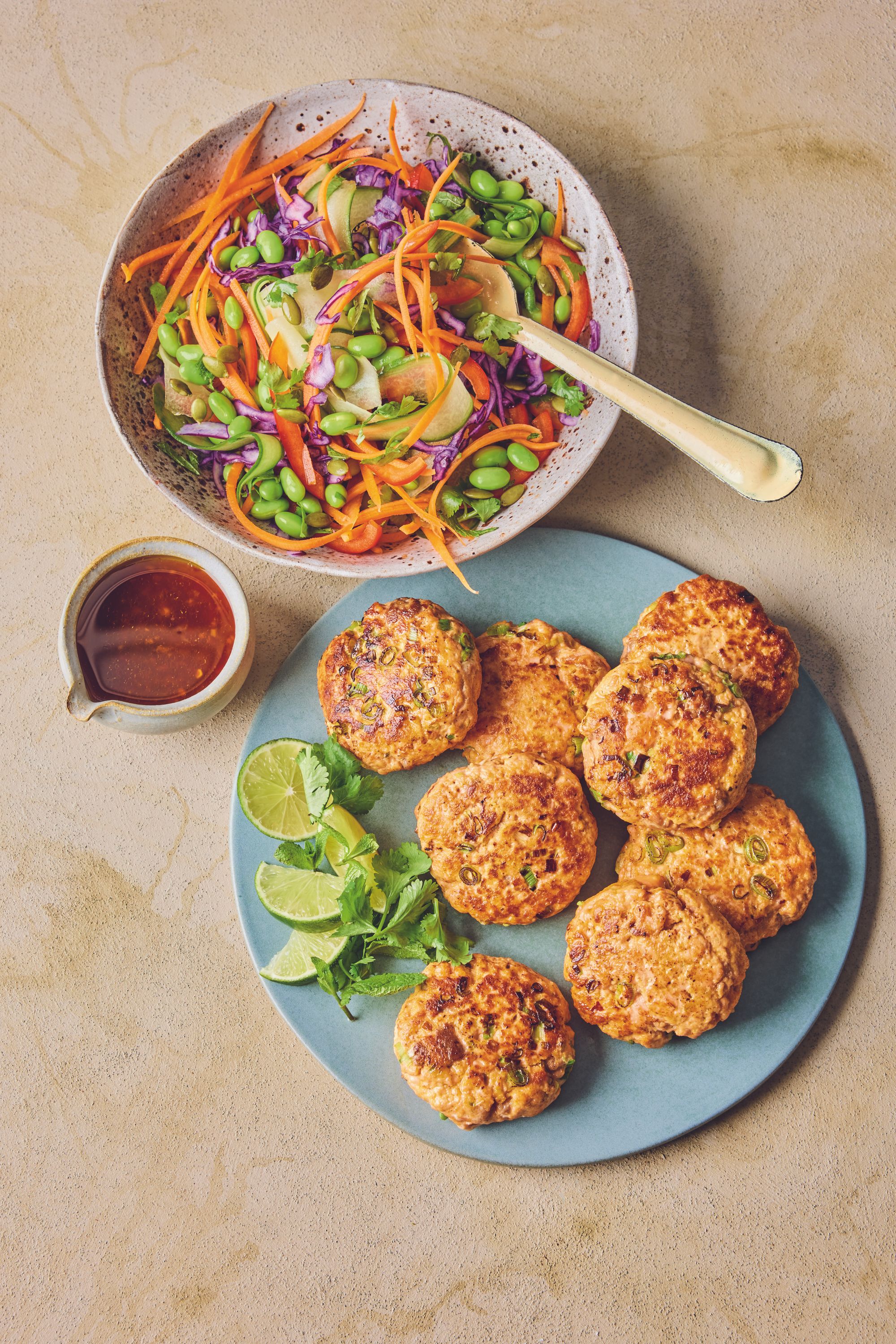
“These speedy Thai salmon cakes are filled to the brim with flavour, protein and healthy fats, ideal for lunch or dinner (I snack on them too!),” says Richards.
“Served with a crunchy rainbow salad and a zingy dressing, you can prep these cakes well in advance and keep them in the fridge or freezer for a quick and easy meal throughout the week. It’s a recipe I know you’ll have on rinse and repeat.”
Serves: 4
Ingredients:
500g fresh salmon fillets, skin removed
1 egg
½ a bunch of spring onions, roughly chopped, including greens
2 tbsp Thai red curry paste
1 tsp lemongrass paste
Zest of 1 lime
Juice of ½ a lime
1 tbsp fish sauce
Sea salt and freshly ground black pepper
1-2 tbsp coconut flour or gram flour (if needed)
Olive oil
For the salad:
1 carrot, cut into ribbons
½ red pepper, finely sliced
¼ red cabbage, finely shredded
½ cucumber, cut into ribbons
100g edamame
1 tbsp pumpkin seeds
A handful of fresh mint
A handful of fresh coriander
Coriander oil
For the dressing:
1 tbsp sweet chilli sauce
1 tsp tamari
Juice of ½ lime
1 tsp olive oil
Method:
1. Place the salmon, egg, spring onions, Thai paste, lemongrass paste, lime zest and juice, fish sauce and seasoning in a food processor and pulse in single bursts until the mix starts to come together. Don’t over-blend – you want to retain some texture rather than create a purée. If the mix is too wet, add a little of your chosen flour.
2. Divide the mixture into 8 patties. Place on a tray and chill for 10-15 minutes in the fridge to allow them time to firm up.
3. When ready to cook, heat a little olive oil in a sauté pan, add the fish cakes and cook on each side for 4-5 minutes, until golden.
4. While these are cooking, mix all of the salad ingredients in a large bowl. Mix the dressing ingredients in a small jug, then drizzle over the salad.
5. Place two salmon cakes on each plate with a generous portion of salad.
Nutritional information (per serving): calories 523Kcals, net carbohydrates 10.9g, fibre 5.2g, fat 35.5g, protein 38.1g.
Salted caramel swirl brownies (rich, indulgent, vegetarian and grain-free)
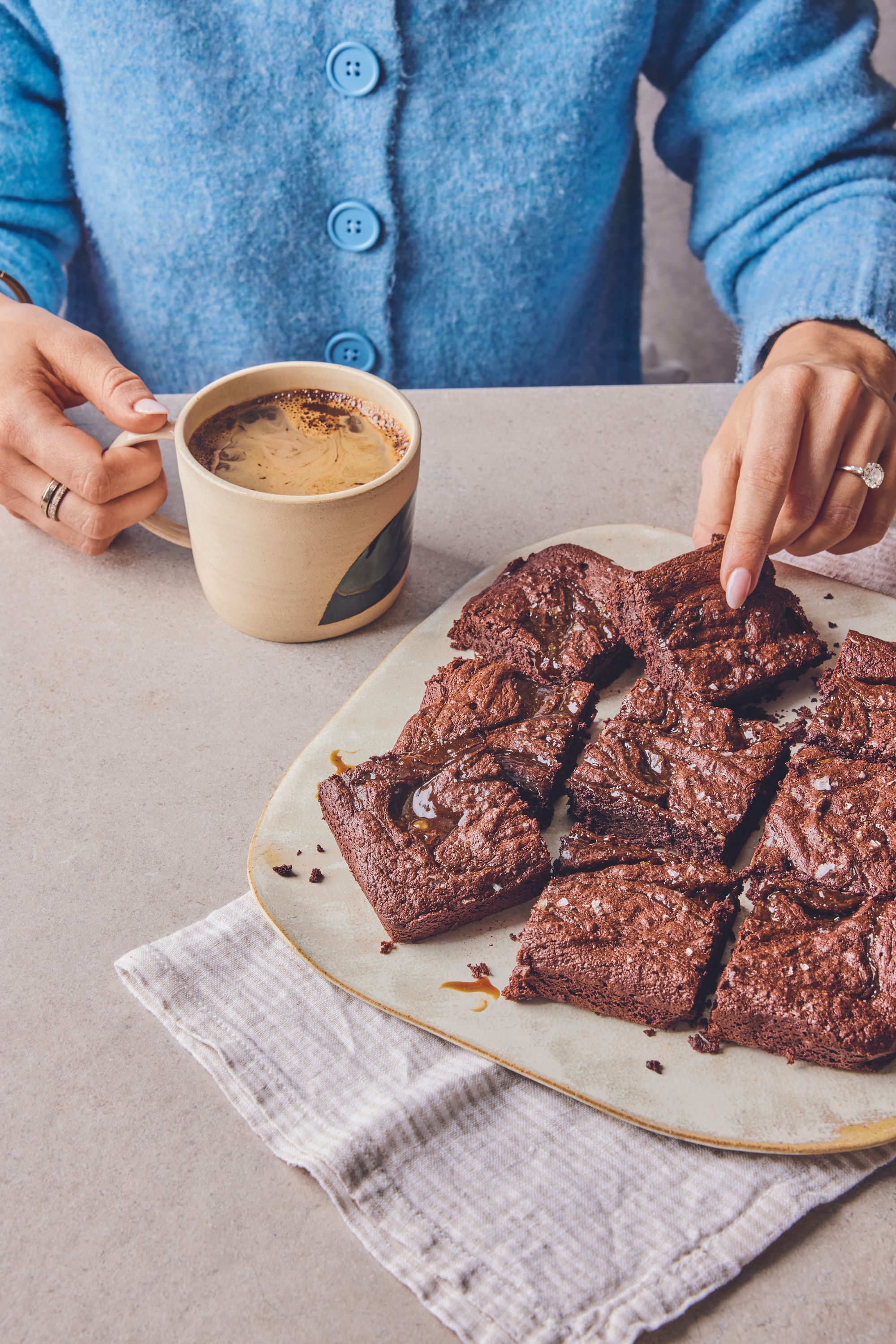
“These are the best brownies you will ever taste, so stop what you’re doing and get cooking immediately!” says Richards.
“These fudgy, chocolatey brownies are a perfect balance of dark chocolate richness and salted caramel sweetness. The swirls of homemade caramel add a gooey texture that pairs perfectly with the deep, intense cocoa flavour. Incredible for dessert lovers looking for a grain-free treat without sacrificing on taste or texture.”
Makes: 9
Ingredients:
150g 85% dark chocolate
100g coconut oil
100g coconut sugar
2 medium eggs
1 tsp vanilla paste
65g almond flour
30g cocoa powder
½ tsp gluten-free baking powder
½ tsp sea salt, plus extra for garnish
For the caramel sauce (use 2-3 tbsp for brownies):
100ml coconut cream
50g coconut sugar
1 tbsp maple syrup or date syrup
½ tsp sea salt
½ tsp vanilla paste
Method:
1. Make the caramel sauce: Heat the coconut cream, coconut sugar, maple syrup and sea salt in a small saucepan over a low/medium heat. Stirring continuously to prevent it sticking or burning, let it simmer gently on a low/medium heat for 5-7 minutes until it starts to thicken. Remove from the heat and stir in the vanilla paste. Let it cool slightly.
2. Pour into a bowl or jar and place in the fridge, ideally for at least 2-3 hours to allow it to set to a soft consistency. The sauce can be stored in the fridge for up to 1 week.
3. Make the brownies: Preheat the oven to 180C (fan) and line a 20cm square baking tin with parchment paper. Melt the dark chocolate and coconut oil together in a heatproof bowl over simmering water (or microwave in short bursts). Stir until smooth.
4. In a separate bowl, whisk together the coconut sugar, eggs and vanilla until light and fluffy. Once the coconut oil and chocolate are melted, stir into the egg mixture until fully combined.
5. Sift in the almond flour, cocoa powder, baking powder and sea salt, and fold gently until just combined.
6. Pour into your lined tin and smooth the surface until it is evenly spread. Drizzle the caramel sauce in little dollops randomly over the cake batter, then use a knife or skewer to swirl the sauce into the batter. Sprinkle with extra sea salt flakes for an added salty kick.
7. Bake in the oven for 18-22 minutes. It is best if it has a very slight wobble in the centre, so you get a gooey brownie. Allow to cool for at least 15 minutes (unless you like to eat it hot) before slicing it into 9 pieces.
8. Serve hot or cold. If hot, they are delicious with a dollop of coconut yogurt and a drizzle of caramel sauce. Store in an airtight container for 3-4 days, or in the fridge for a fudgier texture.
Nutritional information (per serving): calories 328Kcals, net carbohydrates 12.5g, fibre 3.9g, fat 29.73g, protein 5.8g.