




Last Updated:
Long before he captured, fortified and built some of the most formidable strongholds in India, Shivaji Maharaj’s story began in a rugged hill fort overlooking the Sahyadri ranges.




Chhatrapati Shivaji Maharaj Jayanti: Did You Know The Maratha Warrior Was Born In This Mighty Hill Fort?
Every year on February 19, the rugged hills of Maharashtra echo with the sounds of “Jai Bhavani, Jai Shivaji.” On this day, Chhatrapati Shivaji Maharaj Jayanti is celebrated across India, in honour of the visionary who redefined the geopolitical landscape of 17th-century India. While his military genius is legendary, the story begins at a singular, formidable location: Shivneri Fort.
Shivneri Fort
Watching over the town of Junnar in Pune district is the Shivneri Fort. Like a sentinel, it guards the city and its people and is a famous tourist spot in the area, thronged by thousands for its indelible connection with Maratha history. After all, this is the fort where Chhatrapati Shivaji Maharaj was born.
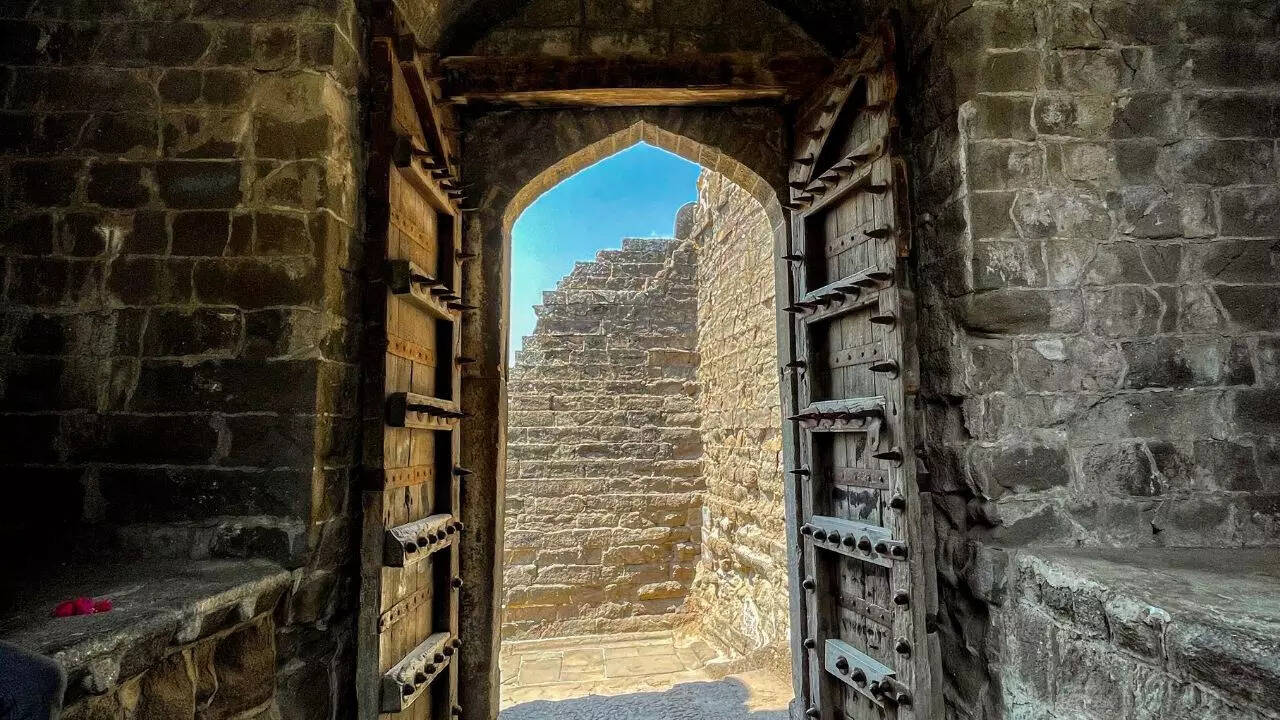
Born as Shivaji Raje Bhonsle on February 19, 1630, to Shahaji Bhonsle, a Maratha general, and Jijabai, Shivaji took his first breath inside the virtually impregnable walls of Shivneri Fort. Surrounded by cliffs on all four sides, it was well-protected, a fitting sanctuary for the birth of a future king.
Reports suggest that the fort is named after Goddess Shivai, who the locals worshipped and to whom Jijabai prayed for a son. Today, visitors can still see the Shiv Janmasthan, the room where he was born, and a statue of a young Shivaji with his mother, inside Jijabai’s palace. The fort’s seven massive gates and its rock-cut water cisterns, known as Ganga-Jamuna, remain an example of the advanced engineering of the era.
Chhatrapati Shivaji Maharaj: The Master Architect Of Fortifications
If Shivneri gave him life, it was the hundreds of other forts that gave him power. Shivaji Maharaj understood that in the Deccan’s rocky terrain, a fort was akin to a “mother” who protected the kingdom. He both captured and built forts that are now UNESCO World Heritage Sites.
Rajgad Fort: The First Capital
For over 25 years, Rajgad (The King of Forts) served as the capital of the Maratha Empire. Shivaji didn’t just inherit this; he significantly expanded it. With a diameter of nearly 40 km at its base, its layout—featuring three machis (plateaus) and a central balekilla (citadel)—made it a nightmare for besieging armies.
Pratapgad Fort: The Symbol of Valor
Built in 1656 to command the banks of the Nira and Koyna rivers, Pratapgad is famous for the historic encounter between Shivaji and Afzal Khan. The fort’s design, featuring double lines of defense and high walls on the Sahyadri ridges, showcased his ability to use nature as a force multiplier.
Raigad Fort: The Throne of Swarajya
Eventually, the capital of the Maratha Empire shifted to Raigad. Built by Hiroji Indulkar under Shivaji’s vision, this fort was designed to be the ultimate seat of power. It sits 820 meters above sea level, and during its prime, it was accessible by only one path and it was here that Shivaji was formally crowned Chhatrapati in 1674.
Sindhudurg: The Ocean Sentinel
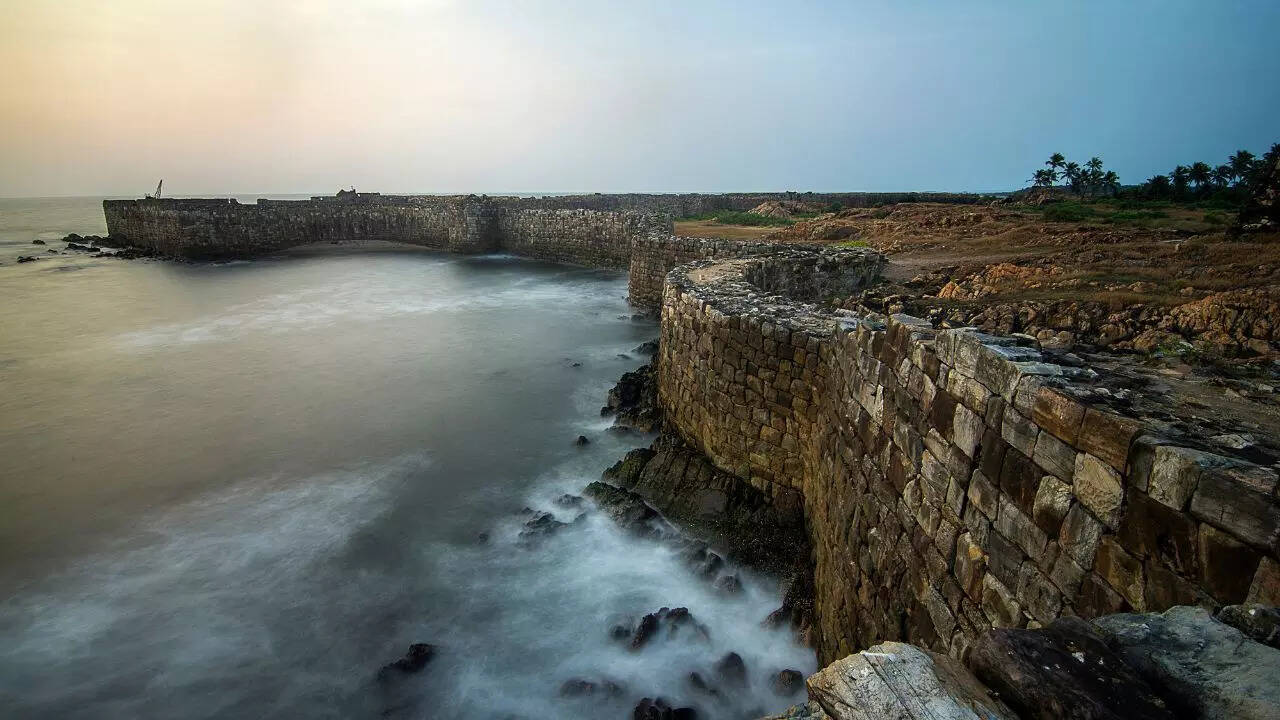
Shivaji’s genius wasn’t limited to the mountains. Recognising the threat of foreign colonial powers (the British, Portuguese, and Dutch) and the Siddis, he built Sindhudurg in the Arabian Sea. Legend has it that over 4,000 pounds of lead were used in the foundation to withstand the lashing waves. It stands today as a reminder that he was the forefather of what today is the Indian Navy.
By the end of his reign, Shivaji Maharaj controlled over 300 forts, either newly built, expanded or strategically strengthened. Each one reflected careful planning, using geography as an ally and architecture as a weapon.
February 17, 2026, 20:23 IST