




At 6am on a quiet Sunday morning 20 years ago today, Scotland became the first UK nation to ban smoking in enclosed public spaces. It was a landmark moment in public health policy, and new research shows just how much has changed since.
Exposure to secondhand tobacco smoke has fallen by 96 per cent in Scotland since the legislation came into force on March 26 2006. But our new study, published in the journal Tobacco Induced Diseases, reveals that nearly one in four people are still being exposed to tobacco smoke in settings the law does not fully cover. This raises the question of what it will take to finish what the ban started.
The Smoking, Health and Social Care (Scotland) Act 2005 made it illegal to smoke inside bars, restaurants, public transport and almost all workplaces. While there had been much lobbying for exemptions for bars on the basis of size, existing ventilation, or whether or not they also sold food, the law, when it was finally introduced, was comprehensive and simple.
Despite the scale of the change, adoption was rapid and without much dispute. It is now inconceivable that we could ever return to a time when people had to breathe high concentrations of a known carcinogen as they chatted in bars, ate dinner or sat at their workplace desk.
We should take time today to celebrate the impact of the smoking ban. Scotland led the way in the UK and showed it could be done. It also generated extensive evidence through a seven-study evaluation programme that covered everything from hospital admissions for heart attack (reduced by 17% after legislation), to air quality in bars (improved by 86 per cent), to qualitative work examining changes in behaviour, attitudes and social norms.
That detailed and extensive evidence would go on to influence tobacco control policy decisions around the globe for years to come.
Our new analysis examines how Scotland’s exposure to secondhand tobacco smoke has changed in the 20 years since the smoking ban. We used the annual Scottish Health Survey, which gathers data from about 6,000 people across the country, and includes a group of participants who provide a sample of saliva. From this saliva, it is possible to determine the amount of nicotine that someone has inhaled in the past couple of days.
About the authors
Sean Semple is a Professor at the Institute for Social Marketing, University of Stirling, Scotland. Rachel O’Donnell is an Associate Professor, University of Stirling, Scotland. This article is republished from The Conversation under a Creative Commons license. Read the original article.
Our analysis shows that adult non-smokers now inhale 96 per cent less nicotine than they did before the ban. Scotland has switched from a nation where seven out of eight non-smokers inhaled other people’s smoke, to a country where three out of four breathe no measurable secondhand tobacco smoke today.
And the progress hasn’t been limited to the settings where the law applies. Our study also provides an analysis of a survey question included since 2012, when people were asked about whether they permit smoking inside their own home. The percentage of homes where smoking is allowed has more than halved in a little over a decade – from 25 per cent to under 10 per cent in 2024.
We’ve made fantastic progress in tackling secondhand smoke exposure in such a short space of time, and it is tempting to see this as a problem solved. But dig deeper and there is a sting in the tail.
The data we present shows that nearly one in four adult non-smokers still breathe secondhand tobacco smoke, and that this figure has been relatively static in the past decade. Workers in many sectors still report they are exposed to other people’s smoke – from those serving in outdoor hospitality settings, to the healthcare workers who provide assistance to people in their own homes.
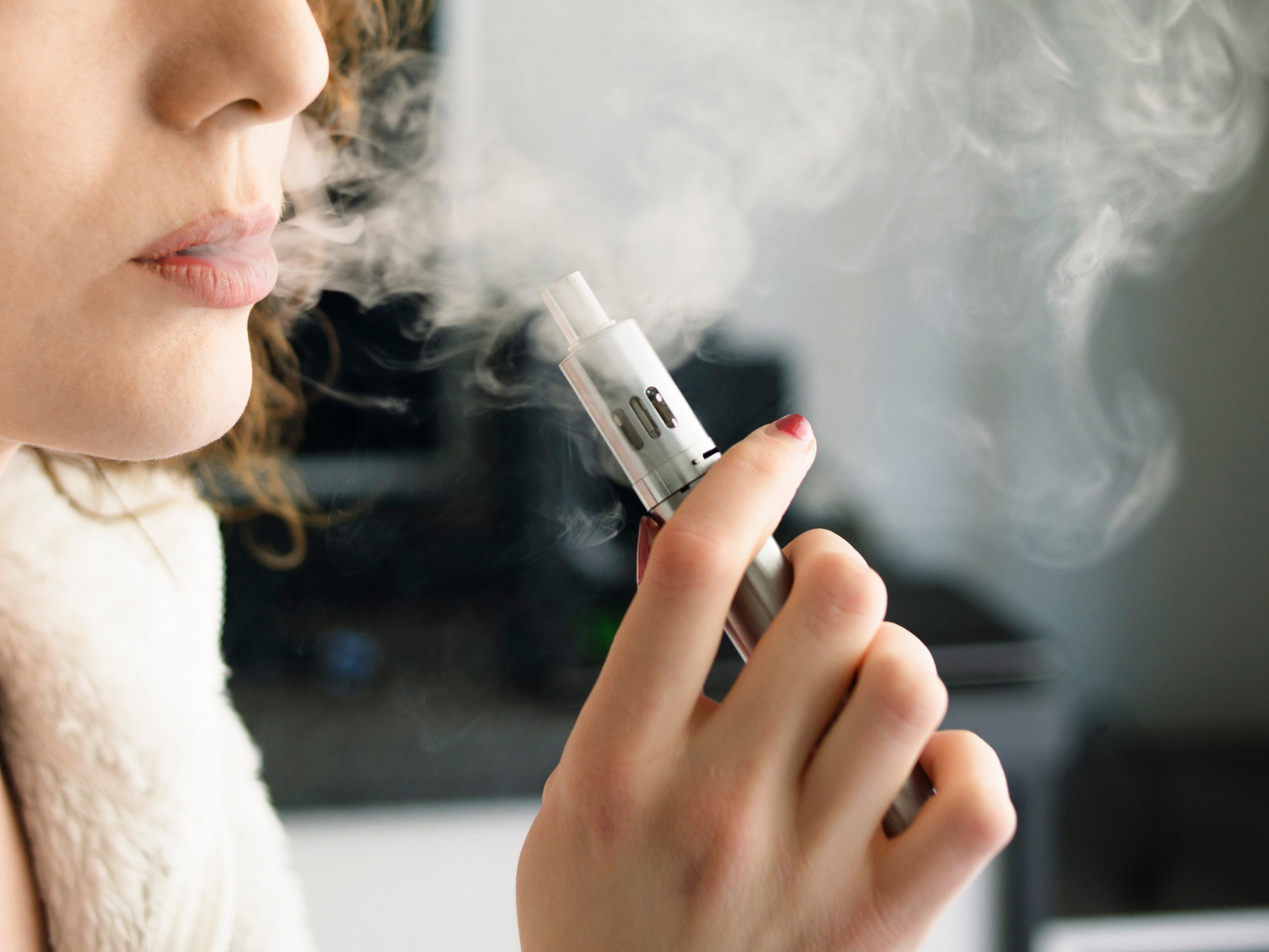
And as our study reports, we still have about one in ten homes where smoking takes place indoors. While we’ve seen major progress and reductions in that figure, the change also masks a growing inequality. When we look at smoking in the home by deprivation, we see that more than a fifth of households in the most deprived postcodes allow smoking indoors compared with just 2 per cent in the most affluent areas – that inequality gap has doubled since 2012.
Unfinished business
So where next? The tobacco and vapes bill is progressing through the parliament and will provide new powers to extend smoke-free spaces to other settings in the UK.
Consultation on how to use these powers has already started, with options to provide protection in a whole range of outdoor and indoor spaces including playgrounds, at school entrances and in outdoor hospitality settings.
Tackling secondhand smoke in the remaining workplaces and homes where exposure continues to take place is a priority.
As we celebrate 20 years of smoke-free enclosed public spaces in Scotland, it is worth reflecting that the benefits have been extensive. For you it may be that you avoided a hospital admission for a heart attack or stroke, or your child didn’t need that GP appointment for their asthma or glue ear (a common ear infection in children).
Or perhaps it was just the simple joy of not having to wash your hair to get rid of the stink of smoke when you come home from a night out. Whatever your reason, it is little wonder that smoke-free spaces are viewed as one of the most important public health achievements of the first part of the 21st century.