




The largest public companies in the U.S. are currently switching CEOs at a record pace, with many favoring younger and less experienced appointees over older heads, according to new research.
Roughly one in nine corporate CEOs were replaced at 1,500 of the biggest publicly-traded businesses over the course of 2025, the highest rate of turnover since 2010 when the economy was recovering from the previous year’s financial crash, The Wall Street Journal reports.
Citing analysis from a report by the executive-recruiting firm Spencer Stuart, the newspaper notes that, in the final quarter of last year alone, companies with a combined market capitalization of $1.3 trillion put new faces in charge, with Verizon and Yum Brands, which owns KFC, Pizza Hut and Taco Bell, among those opting for new executive leadership.
That trend has continued into 2026, with Walmart, Procter & Gamble and Lululemon among the companies that have moved quickly to make a change at the top this year.
Already in February, Disney, HP, and PayPal moved to unveil new bosses on the same day – announcements that were swiftly followed by the news that Greg Foran would be taking over the hot seat at the grocery giant Kroger.
Businesses currently seeking new CEOs this quarter, or resigned to losing their existing executives, have a combined value of $2.2 trillion, the WSJ reports.
Spencer Stuart’s findings suggest that incumbent CEOs are stepping down sooner than in the past and that their replacements are younger than before, with the average age at 54, down from 56 a year previously.
More than 80 percent of the 168 people appointed to chief executive positions in 2025 were first-timers who had no prior experience running public companies or major stand-alone enterprises. Two-thirds of that total had never even served on a corporate board.
An emblematic example of the trend towards youth is Paul Shoukry, the recently appointed head of the financial services firm Raymond James, who is 42, while his predecessor, Paul Reilly, was 55 when he first took the job in 2010.

Get a free fractional share worth up to £100.
Capital at risk.
Terms and conditions apply.
Go to website
ADVERTISEMENT
Get a free fractional share worth up to £100.
Capital at risk.
Terms and conditions apply.
Go to website
ADVERTISEMENT
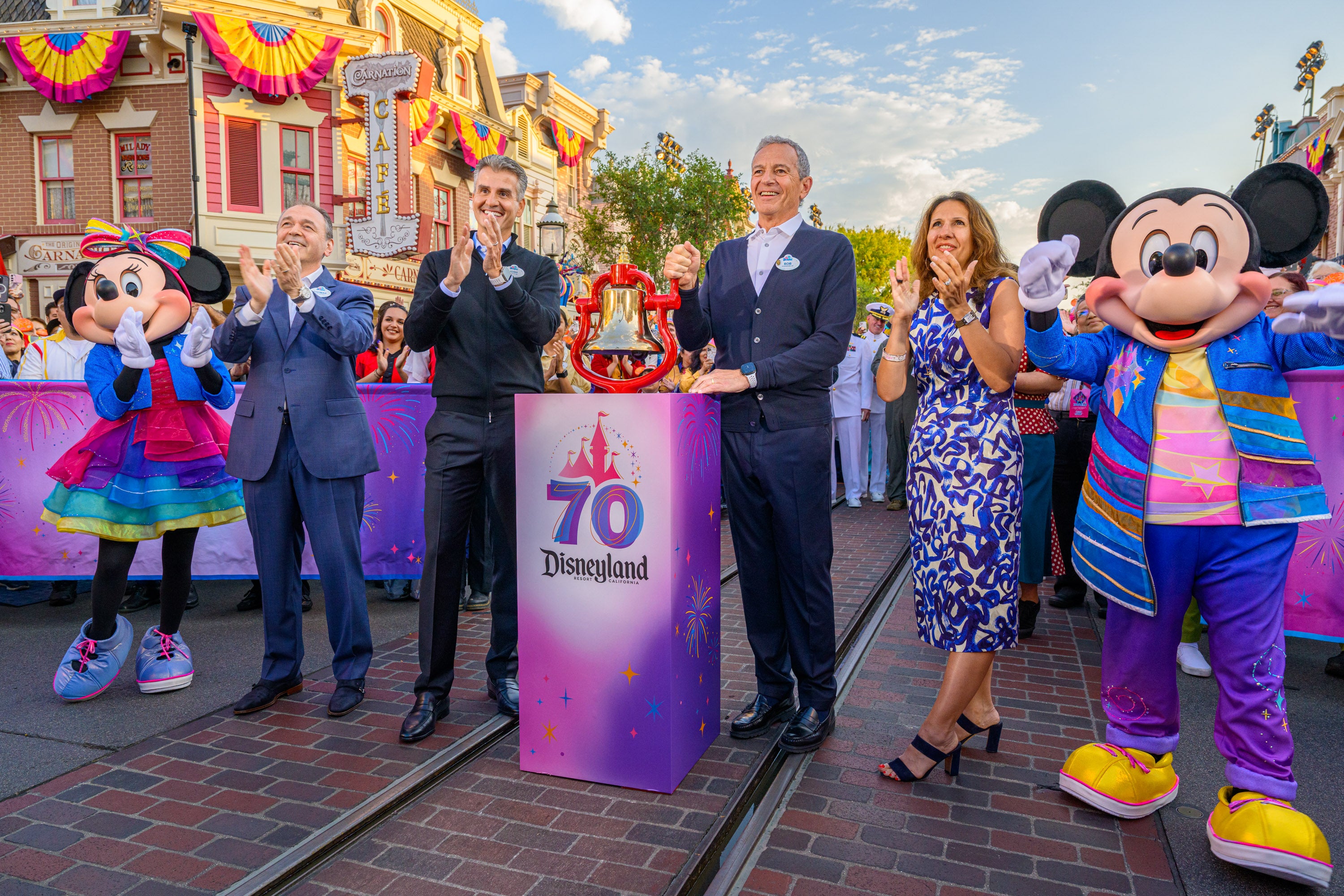
Disney’s new CEO Josh D’Amaro, 55, is also consideredably younger than the outgoing Bob Iger, who is 75. However, like Shoukry, the new man has considerable experience within the company, having led its $36bn theme-park and cruise unit.
While 3 percent of chief executives at top companies are now under 40, according to Spencer Stuart’s data, one is still much more likely to encounter an executive aged 50-59 (64 percent) or over 60 (12 percent).
“Younger makes sense to me, given the changes in the world,” said Cindie Jamison, a longtime turnaround executive, of the latest trend. “Things are shifting and changing very dramatically and permanently and you want people who’ve been in the trenches facing these decisions.”
The situation remains uninspiring for women, however, with just nine percent of new appointees to CEO positions female, down from 15 percent a year earlier.
The WSJ characterizes the recent changes in hiring practices as “a grand experiment in leadership” in response to a dramatically shifting global landscape, facing up to the post-pandemic challenges and headwinds presented by disruptive political forces and the rise of artificial intelligence.
The strains of the present trading atmosphere were perhaps best demonstrated by Michael Fiddelke, the new boss of Target, who took over from 11-year veteran Brian Cornell earlier this month, only to find that one of his first duties was to record a video statement in response to the Trump administration’s federal immigration operations in Minneapolis, the brand’s hometown.
“We’re in a new environment, and someone who’s going to replay the playbooks of the past is not necessarily right,” said James Citrin, head of global CEO practice at Spencer Stuart.
“If the CEO doesn’t get momentum both internally with operating performance and also with investors, then boards are more impatient even than they were.”