




The war in Iran is plainly going to have a significant impact on family finances. How severe, and how long lived, is hard to tell.
Certainly, a fresh dose of inflation seems likely, something that would be tricky for those on the lowest incomes in particular. But experts say there are at least some things you can do to mitigate the worst.
Energy Bills
Customers are largely protected at the moment from any price rises, thanks to the government-imposed £1,641 energy cap, which limits how much an average household pays for each unit of gas or electricity and runs until June.
But, when the rate for the next quarter is announced at the end of May, based on prices from mid-February to mid-May that is likely to be higher. Analysts at Cornwall Insight predict the cap could rise to £1,973 a year from July 1.
One way to avoid the rise is by taking out a 12-month fixed deal, but even the cheapest is more than the cap, which is set by the regulator Ofgem.
The best priced available deal seems to be a 12-month deal for £1,862 from Sainsbury’s Energy. That will seem like a good deal if the cap races past that. But not if the war ends and energy costs drop again.
Just since early March, some 60 fixed-rate energy deals have been pulled or repriced upwards.
Laura Suter, director of personal finance at AJ Bell, said: “The energy price cap from Ofgem helps to protect people from an immediate increase in energy costs, so people won’t see the change on their bills just yet. And anyone who has locked in a fixed-rate tariff will be protected from the impact for the duration of that deal.
“But if higher prices continue, the energy price cap set by Ofgem could increase later in the year.”
As energy prices and mortgage costs bite, some people retreat into analogue living – including hand-washing dishes anjd drying clothes on radiators, convinced they’re cutting costs. But the data tells a different story.
According to a recent report by Beko, more than half of UK households hand-wash dishes believing it saves money, not realising modern dishwashers can use a fraction of the water. Radiator-drying feels free but forces boilers to work harder and raises moisture levels that make rooms more expensive to heat.
Pensions
Pensions have already wobbled but, as a long-term investment, that may not matter much. A key holding for UK funds are the oil giants BP and Shell which are likely to see profits soar – which is good for investors. Pensions are also chock full of government gilts, which are falling in value as confidence in the UK economy takes a hit. That is most likely to correct in time.
Tom Selby, director of public policy at AJ Bell, said: “Lots of pension savers may already be seeing the impact. We’ve seen a lot of volatility in global stock markets. Which means there is a fair chance if you log into your pension you’ll have seen a dip. But a short-term hit shouldn’t be a cause for alarm. History suggests staying invested is better than trying to time the market.
“Instead of reacting to market falls, investors should use this as a prompt to review their portfolio, ensuring it is well diversified across regions and asset classes, and check it still matches their long-term goals. Those approaching retirement should make sure their investments align with how they plan to access their pension, to avoid being exposed to short-term volatility at a crucial moment.”
The view is that, if you are a long way off retiring, just carry on doing what you are doing. If you are not far off, then take another look.
Mr Selby added: “As you approach the point of accessing your retirement pot for the first time, it’s important to check your investment approach matches your plans. Provided this is the case, any short-term instability in global markets shouldn’t force a radical change of strategy.
“However, people could run into problems if their investments and retirement plans are not aligned. For example, if someone is invested 100 per cent in equities but plans to turn their pension into a guaranteed income for life by purchasing an annuity within a year, they would be a hostage to short-term market fortune.”
Travel
Flying looks like it is inevitably going to be more expensive. That could lead to a rise in “staycations”, which means it makes sense to book early if demand does grow.
In terms of holiday money, it is very hard to say whether the pound will be stronger or weaker come the summer. But if you have cash to exchange, the advice is to do half now and the rest nearer the time of the holiday to at least smooth out any shocks.
Both fuel and holidays could become more expensive. Even relatively small increases in oil prices can add several pence per litre, pushing up commuting costs and the costs for airlines to run their fleet.
There are a few ways travellers can offset this, like booking early, locking in exchange rates for their spending money where possible, or considering destinations where sterling goes further. It may mean that staycations become more attractive, with people choosing to stay in the UK for their summer break to avoid high flight prices.
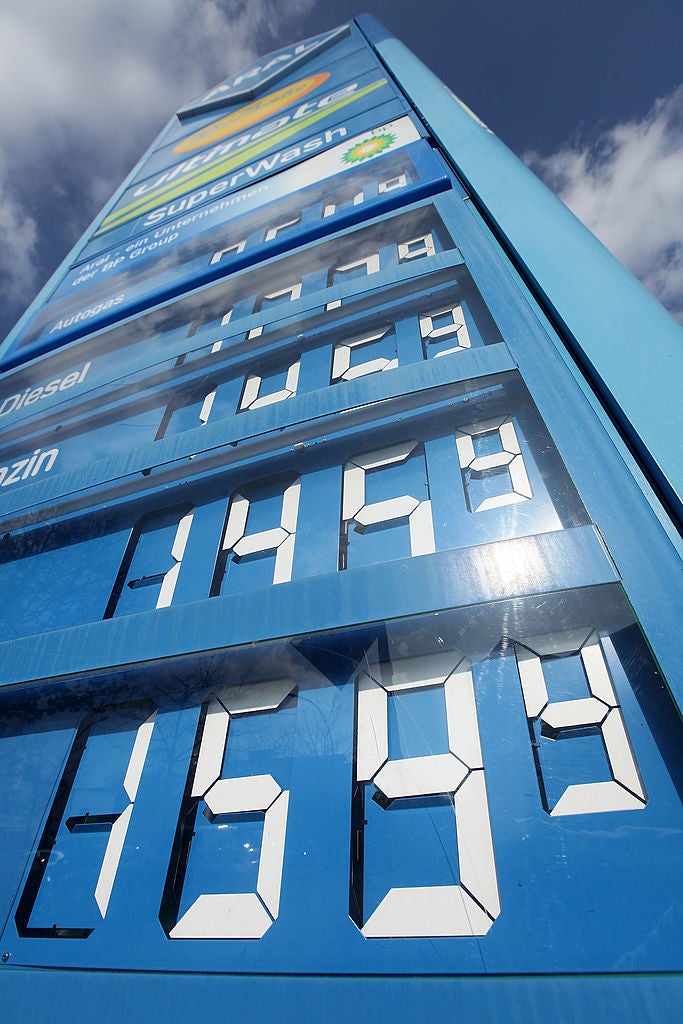
Drivers are also feeling the impact at the pump. Since the Iran conflict began, petrol is up 12p a litre and diesel double that.
Savings
Inflation eats away at savings. So savers need to be sure their savings are working as hard as they can be.
Shopping around for the best savings rates, using tax-efficient wrappers like ISAs, and avoiding leaving large sums in low-interest accounts can help reduce the erosion of spending power.
History shows that, over time, investing is the best way to beat inflation. While investment markets have been rocky in recent weeks, investing for the long-term could be a good option to combat any increase in inflation.
Here is our guide to the latest deals.
Mortgages
Not long ago borrowers were looking at two, perhaps three, cuts to Bank of England interest rates, leading to much better mortgage deals. Now it is more likely they will go up.
No interest rate cuts this year would mean borrowing costs stay higher for longer, although savers may benefit from rates staying elevated. For borrowers, particularly those coming up to remortgage, locking in a deal six months ahead of your fixed rate ending could provide certainty, with the option to switch later if rates fall.
Rachel Springall from Moneyfacts said: “There appears to be no rest in sight for more upheaval to the mortgage market. It will be essential for borrowers to seek independent advice to keep on top of the mortgage mayhem.”
Borrowers who only have a 5 per cent deposit are looking at rates of more than 6 per cent.
Investing
Investors have been reminded repeatedly over the last decade that markets can swing sharply when uncertainty rises, particularly when geopolitical shocks are combined with erratic or fast changing policy decisions.
This was seen during the trade war years, when the introduction of tariffs or aggressive rhetoric was often followed by abrupt extensions, reversals or walk backs, triggering violent sell offs and equally sharp rebounds. Similar patterns played out during Covid, following Russia’s invasion of Ukraine and are now being repeated as markets react to developments around Iran.
Jonathan Raymond, investment manager at Quilter Cheviot, said: “The common thread across all of these episodes is that panic can take hold quickly. That anxiety naturally filters down to ordinary investors worrying about their portfolios, but history shows that reacting emotionally rarely leads to better outcomes.
“Over decades, markets have risen and fallen through crises, and investors who sold after markets had already dropped often locked in losses and missed the recovery once the immediate uncertainty began to fade. Similarly, new investors that sat on their hands waiting for events to blow over also then missed out on recoveries and time for investments to compound.”
Investment experts say it is best to stay invested and live with the volatility than try to get in and out of the market. If you do try to scuttle in and out, you risk missing out the market’s best days.
Dan Moczulski, eToro’s UK managing director, says: “If inflation is your main concern, the best place to be is invested. The real key to avoiding market risk is diversification, not just across stocks, but also in assets like commodities, bonds and even crypto, so you’re not exposed to one single risk factor.”