




Boaters arriving at lakes across California may not notice anything unusual. However, this often overlooked boating habit has been posing a major threat across US lakes. Water managers are focused on a problem that is nearly invisible. Small amounts of water trapped inside boats can carry invasive mussels from one lake to another.To address this risk, the U.S. Bureau of Reclamation has launched a national prize competition. The price tag is huge, but the goal is blunt. The initiative, called the “Halt the Hitchhiker” challenge, offers up to $200,000 to teams that can develop a practical solution. The goal is clear. Stop invasive species before they damage water systems and infrastructure.Why ballast water is the key riskThe challenge focuses on watercraft ballast compartments. These are tanks used by certain boats to control stability in the water. Even when a boat appears dry, small amounts of water can remain trapped in hoses and corners.This leftover water creates the perfect pathway for invasive species. According to the Bureau of Reclamation, even a tiny volume can carry microscopic mussel larvae. These larvae are too small to see but can survive long enough to reach new water bodies.The U.S. Geological Survey explains that early-stage mussels, known as veligers, can drift in the water and later attach to surfaces. This makes detection and prevention especially difficult.What makes these mussels so dangerousZebra, quagga, and golden mussels are some of the worst aquatic invasive species in the United States. They have a tendency to adhere to hard surfaces and reproduce quickly, leading to massive colonies forming that block pipelines, corrode machinery, and cause ecosystem disturbances.In terms of economic implications, the federal government reports that the cost of zebra and quagga mussels to the country totals above one billion dollars annually. This includes expenses related to water treatment plants, energy generation facilities, and agricultural irrigation.According to Dr David Strayer, an ecologist at the Cary Institute of Ecosystem Studies, mussels are capable of altering the composition of freshwater ecosystems fundamentally, thereby decreasing the number of native species while simultaneously affecting water chemistry.
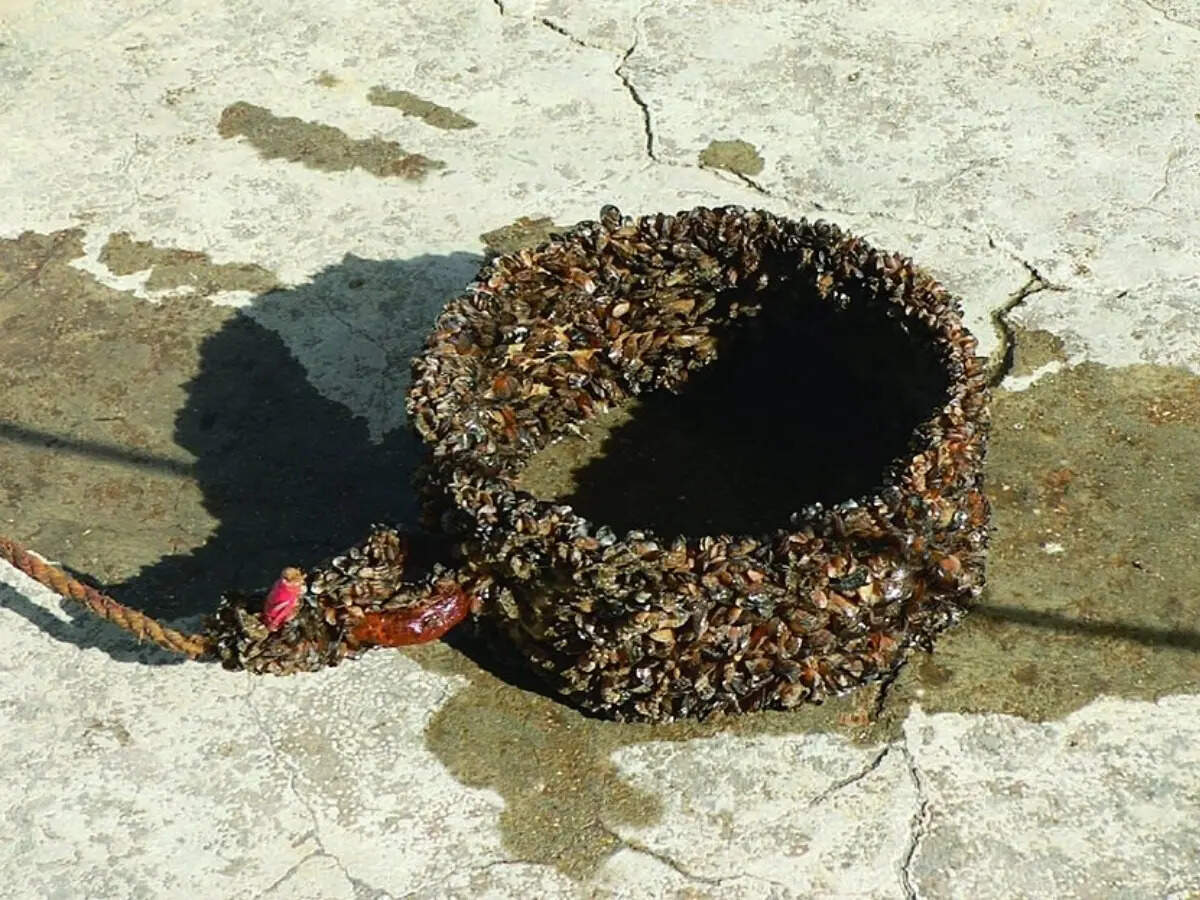
How a few drops of water are spreading a major threat across US lakes. Image credit – Wikimedia
California’s golden mussel discoveryThe gravity of the problem has been further emphasised following the identification of golden mussels within California’s Sacramento-San Joaquin Delta region in October 2024. The California Department of Food and Agriculture, along with the University of California, Davis, has confirmed that the species was identified clinging to infrastructure structures in proximity to the Port of Stockton.Further surveillance revealed new instances of contamination at water-related infrastructure, such as water-pumping stations. Such discoveries have raised concerns about the rapid spread of the species through interconnected water networks.Once these invasive species find their way into large-scale water infrastructures, containing them would become much more difficult. As such, the California Department of Fish and Wildlife recommends early action in order to mitigate future damage.How the $200,000 challenge will workThe “Halt the Hitchhiker” competition consists of three phases. In phase one, there will be awards of up to $25,000 for up to six teams with successful concept proposals. Phase two involves pitching sessions where successful applicants will be rewarded up to $50,000.In the final stage, teams develop prototypes to test their ideas. Successful teams will receive up to $125,000 in rewards, as well as second and third-place prizes. If one team succeeds through all stages of the process, then it could get up to $200,000 overall.According to the Bureau of Reclamation, the solutions must be safe for the user, boat, and environment. Also, such solutions must not produce any hazardous waste products and must successfully eradicate the invasive species.Immediate measures that boaters should takeIn addition to waiting for researchers to find new technologies, there are several precautionary methods boaters should undertake. They include cleaning boats, draining all water sources from them, and allowing boats to dry before moving to a different lake.This is not only because of the huge sum of money offered as an award. The threat posed by the zebra mussel has much to do with water supplies, power plants, and general ecological health.Therefore, the discovery of a viable solution can lower expenses, ensure greater protection of infrastructures, and ease safety procedures for many boaters.