




Polyamory is having a(nother) moment, and it’s not necessarily a great one.
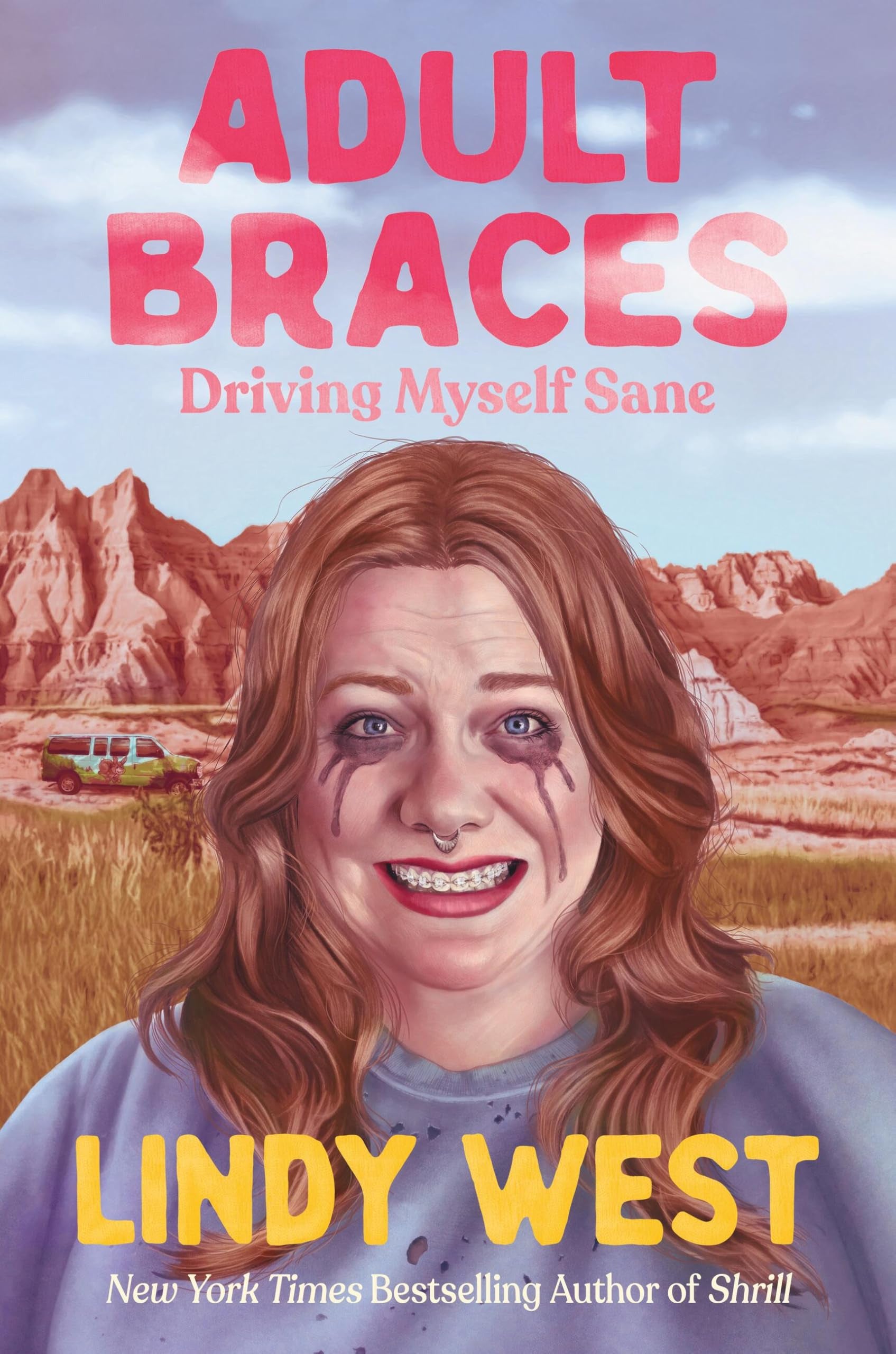
It all started with Adult Braces: Driving Myself Sane, the latest memoir written by Lindy West, ostensibly about driving her van from the Pacific Northwest to Florida and actually about how she was somewhat railroaded into an open marriage with her husband.
West is a veteran of internet pile-ons, a writer who made her name calling bull***t on Hooters, preaching body positivity and fat acceptance, and hating on Love Actually for online, female-forward publications like Jezebel during The Great Online Feministing of the 2010s (full disclosure: I was a small part of this phenomenon, and at the time ran a feminist satire blog with my best friend which was called, naturally, The Vagenda.)
West, then, is used to people calling her names. She’s used to navigating their ire. She’s also well-versed in how confessional journalism works. And before Adult Braces, she wrote about how triggered she knew vast swathes of the angry online population would be by her happy ending: a fat woman, as she put it, ending up in a happy, committed marriage with a conventionally attractive man. She knew it, but she didn’t care, because she had her happy ending.
Months later, a fan of West’s reached out to her after spotting that husband — musician Ahamefule Oluo, known as Aham — getting hot and heavy with another woman in a bar. Thus began a cascade of events that led to Adult Braces, via an awkward video in 2022 when West, Aham and their new girlfriend announced that they were “three sweeties” in a throuple (it probably didn’t help that the video was defensively titled. “Polyamory isn’t too good to be true”.)
People didn’t like the video, to put it lightly. They noted how uncomfortable West looked and how she’d never expressed any interest in polyamory before Oluo had started dating other people. They deconstructed the body language and the uncomfortable pauses. They left comments like: “May this kind of love never find me.” But the fervor died down — and then it started up again two years later, as West went on tour to promote Adult Braces, the tale of how she supposedly became more enlightened and less co-dependent through her triad with Oluo and their girlfriend, Roya Amirsoleymani.
As media coverage followed Adult Braces, the coverage began to generate its own controversies. A New York Times profile that underlined how reluctantly West had agreed to polyamory and how her father had just died when Oluo approached her with an ultimatum led to an uproar.
Days later, after one (very fair and even-handed) profile by culture reporter Scaachi Koul, West’s husband personally emailed the journalist to tell her: “I am a person with a life and a great career and a complicated life, and you boiled me down to a cheater who was on a school project making a diorama or some s**t because you are mad about your life… You are a s***ty f***ing person, you’re a bitter, untalented mean girl, and you should be absolutely ashamed of yourself. You f***ing suck.”
The part that had offended him so much? “West is solo in the cabin this week as she prepares for her 14-city book tour. Oluo and Amirsoleymani are away working in Boston on a shared project.”
Combine this behavior from Oluo with lines in Adult Braces like, “If you think I have been brainwashed and I am secretly miserable, I simply do not know what to tell you,” and you have a powder keg. Those who relied on West to call bulls**t on their behalf throughout the 2010s were not going to go along quietly with her new narrative about cheerfully submitting to her husband’s relationship preferences.

Much ink has been spilled now about this: articles claiming polyamory is a progressive paradise; articles claiming that polyamory is a vehicle for sexist abuse; articles claiming that West has now conclusively proven millennial feminism is dead(!) Many of them make interesting points that are worth reading. But zoom out from the spectacle and a more interesting question emerges: why does polyamory — a private, domestic arrangement — generate so much heat in the first place?
Most people will never be in a throuple, have never seriously considered it, and have no particular stake in whether Lindy West’s marriage is a success. And yet her story has functioned, for weeks now, as a cultural Rorschach test: absorbing anxieties about feminism, about what women owe men, about whether progressive sexual politics were ever really feminist at all, about whether one can be cudgeled into submission by a nefarious leftie partner who demands that you prove your woke credentials by letting them sleep with other people. To understand why all this is, you need to understand how non-monogamy stopped being merely a lifestyle choice and became, for a moment, an ideology.
‘You date whoever you want’
People tend to have one of three reactions when they first become aware of polyamory, says Dr. Elisabeth Sheff: “Some people, for them, it’s like a big nothing. They’re like: ‘Huh, that’s interesting,’ or, ‘That’s weird… It’s like, you could dye your hair green. You could get clothes for your cat. They’re like: ‘Oh, I wouldn’t put clothes on my cat, but OK.” Other people, she says, react by saying something along the lines of: “Oh my God, that’s a thing? I need to do that right now. I’ve been looking for this my whole life. I didn’t even know I was looking for it, and now that I know it’s a thing, come on, honey, let’s go.”
And then there’s the third reaction, which comes from a place of fear. That sounds more like: “Oh, people do that? That’s not good. I don’t want my spouse finding out about that. I don’t want them interested in that. I don’t want them anywhere near that. If one of our friends starts talking about an open relationship, I’m cutting them out of my life, because that sh*t might be catching.”
Sheff is possibly the world’s leading expert on polyamory, and certainly is on polyamorist families: she’s been conducting a longitudinal study following hundreds of families who operate in triads, polycules or other open relationships since 1996. She also counsels couples in “mixed dynamic relationships”: those where one person is more inclined toward exclusivity and the other toward polyamory.
She hasn’t kept up to date on the Lindy West story, but when I fill her in, she tells me that “the way it worked out… where they both fell in love with the same woman, and she wants to be with them in a triad or a throuple, that’s kind of the polyamorous dream experience, the ideal, in a way. And it’s hard to find, it’s really hard to find — which is one of the reasons why people might not be buying it.”
In Sheff’s view, most people are simply naturally inclined toward polyamory or they aren’t. Perhaps surprisingly, she isn’t: instead, she says, “I keep falling in love with polyamorous people. And my life would have been easier, smoother, if I could have made myself polyamorous.
“But I just — when I’m in love with someone, I have an exclusive heart. I am not interested in other people,” she explains. “And I think that is the case for quite a few people, that there’s a reason why monogamy is so popular — serial monogamy. It’s not only simpler and less time-consuming on many levels, but some people just don’t have the capacity or desire to be in love with multiple people. And I think some people really do. I think it’s an orientation on both ends of the spectrum. Some people are wired for exclusivity, and some people are wired for multiplicity. I think the majority of people land somewhere in the middle.”
Sheff has worked with people from across that exclusivity spectrum and she believes that most people can make compromises in relationship structure for the right partner. It just depends on what you’re willing to sacrifice. When a person more inclined toward monogamy agrees to open up their relationship with a partner who wants to try polyamory, there are some things that tend to make it more likely to work.
“The person who wants just one partner, if they have other things happening in their lives that are really engaging to them — maybe they are an Olympic athlete or some kind of serious athlete; maybe they are an artist; or maybe they travel a lot; or maybe they have a child or grandchildren or something that they’re really devoted to,” she says, “…then they’re like: OK, honey, I’ve got my thing. You go do your thing. Your thing is dating other people. My thing is traveling the world. So while I’m gone, you date whoever you want, and then come connect with me in Rio.”
In her own polyamorous marriage, this played out quite conveniently for a while: Sheff was offered a prestigious visiting scholarship at the University of Zurich and she knew that she could take it without question.
“They were like: Come teach here for a semester. And for many monogamous partnerships, you don’t just leave for five months and go to another country. That’s not OK,” she says. “But because we had that level of independence — I gave her the independence to date other people and do other things, she gave me the independence to go on book tours where I would be gone for months at a time, to go teach in Zurich, to go do things without her — it was advantageous for me in that way.”
For 12 years, the arrangement worked great. But then, while Sheff was in Zurich, her wife met somebody else who she really connected with. The dynamic shifted as this girlfriend became a more prominent part of their lives, and Sheff was left unhappy and unfulfilled. After some difficult conversations and realizations, they ended up going through a deeply painful divorce.
I ask Sheff if the problem was that she needed to be the “primary partner” in the polycule, and she demurs. She says that polyamory has moved away from those kinds of distinctions in recent years: these days, it’s all about “non-hierarchical polyamory”. This feels like an effort to bring progressive politics into the bedroom somewhat. After all, won’t most people naturally feel closer to a partner they’ve been married to for a decade, as opposed to someone they met last week in a bar?
“Research shows that even among people who say, ‘Oh, we don’t have any hierarchy, All of my partners are equal,’ when you look at how they spend their limited resources, you know, maybe love is infinite, but there’s only 24 hours in a day,” says Sheff. “You only have so much money to spend on dating or whatever.”
Even among people who staunchly claim no hierarchy, an objective analysis of their behavior (probably helped by the stereotypically polyamorous tendency to keep detailed spreadsheets) shows they do consistently spend most of their time and cash on one person in the polycule. There is a discrepancy between what they potentially want to be like and what they are like in practice.
Is this a damning indictment of polyamory or simply a fact about all relationships, polyamorous or otherwise? We all strive to be better than we are; we all have ideals that we fall short of sometimes. Sheff points out that some kneejerk cynicism about polyamorous relationships needs to be challenged — for instance, is it that unbelievable that Lindy West would fall for her husband’s girlfriend?
“It’s not out of the realm of possibility,” she says. “Maybe they have the same taste in people. You know, like they like each other.” This isn’t just a woman picked at random: it’s someone with a deep connection to West’s own beloved, and that may well increase the likelihood a hundredfold that West would love her, too.
Moreover, Sheff adds, there are some very socially valuable lessons that can be learned by monogamous families from polyamorist ones. Kids who grow up in polyamorous families do remarkably well, Sheff says: through all the scheduling and the checking in and the deliberate over-communication, they often come out with extremely high emotional intelligence. And because there is an expectation of changing dynamics and shifting interests from the outset, polyamorist families tend to talk about the kids’ needs upfront.
“I think the polyamorists have it right, where they say: OK, no matter what happens with us sexually, we are devoted to the children, independently from the adult sexual relationship,” says Sheff.
“And for a lot of folks, expanding their family works great. It provides them more resources, it provides the children with a much bigger social safety net. Especially now that some of these kids [from her longitudinal study] are in their 30s, they’re talking about having learned from their polyamorous families these kind of emotional intelligence skills.
“Regardless of whether they become polyamorous themselves or not, they grew up in a high-discussion context where people talked about their feelings and where people met conflict head-on and said: ‘OK, we should have a family meeting about this.’ And maybe when they were teenagers, at 14, they were like, ‘I do not want to go to another family meeting!’ But then at 35, they’re looking back on that and they’re like: Wow, I learned how to establish and sustain emotionally intimate relationships and brought that forward into my life.”
‘Benefits of divorce without leaving’
Without entirely meaning to be, Kat Rosenfield has become a dominant voice in polyamory skepticism. The novelist and culture reporter wrote for UnHerd in 2024 about how polyamory is “a luxury belief,” something that young and privileged progressive elites like to elevate while scorning those people — often people from poor, dysfunctional, hardscrabble backgrounds — who simply want security in their lives.
In a later review of Adult Braces for The Free Press, headlined, “Say it with me: Open marriages never work,” she refuses to believe that West can be happy in her current arrangement, where “she loves being treated like a child by the man she was supposed to grow old with — and the woman who has taken her place in his bed.”
It’s natural that there’s been so much discussion around Adult Braces, Rosenfield tells me, because the book “was sold to readers as a story of empowerment and fulfillment, but it’s not. It’s incredibly bleak.” Indeed, she adds, it’s been “pretty much universal consensus among those who’ve read it” that the book is “a deeply sad story”. Needless to say, if West had hoped to set out to convince the world — and perhaps herself along the way — that she was happy, the failure is apparent.
What’s most shocking to Rosenfield, however, is not that West seemed to deviate so much from her former beliefs and desires, but that she reacted so badly to the searing criticism of the book. The email sent by Oluo to a reporter who dared to profile her in a neutral manner was reportedly accompanied by emails from West herself and from Roya Amirsoleymani. They were, it seems, unhappy that the description of their lifestyle was falling short of absolutely glowing.
“Any writer of West’s caliber and experience should have understood that there’s no policing the response to your book once it’s out in the wild, and that trying to do this would only make things worse, which it has,” says Rosenfield, speaking from her own book tour for the newly published psychological thriller How to Survive in the Woods.
Rosenfield says one quote from an article she once read about polyamory has always stuck in my mind, and that was the description of the arrangement as “living life on hard mode”. That quote comes from an article in The Cut from 2024 that promised to answer the question: “What does a polycule actually look like?” In the piece, four (anonymized) people describe their complex relationship and how it came to be. In their telling, some people needed more convincing than others to get on board with the polycule; some people want more boundaries than others, and it’s usually the person who wants fewer boundaries who wins.
There’s a lot of therapyspeak, some of which is clearly deployed in order to obscure some painful emotional truths. The writer who has spent time interviewing all four members of the polycule explains their position: that “a perk of polyamory is if one person can’t meet all your needs, you can add someone new who fills in the holes”. It’s a description that makes polyamory seem surprisingly individualist for a group project: all about you-doing-you and dating as a project of self-actualization, rather than making room for other people’s needs or quirks. Logistically, that might be “hard mode,” but perhaps emotionally, it’s easier than having to change. You can be the eye in the storm, a singular point around whom others rotate. You never have to compromise yourself; you never have to evolve.
And if you can simply paper over whatever emotional, sexual or intellectual cracks you’ve found with the person you’re currently dating by adding in another person, then perhaps fewer people get hurt. Why break up if you can just open the relationship instead? This solution means swerving the pain of a separation from someone you love deeply but who, for whatever reason, isn’t fully compatible with you in a monogamous context: perhaps they don’t want kids but they’d be happy to act as a casual stepparent in the future; perhaps they don’t have as high a sex drive as you but the emotional connection is intense and wonderful.
“I feel like I got the benefits of divorce without leaving. I get to stay, have the marriage, and then also be free,” West told Slate in the same profile that Oluo hated so much. It certainly sounds like a cheat code. Others have said, quite loudly and repeatedly, that it also sounds completely unbelievable.
The polyamorists you didn’t expect
Polyamory’s association with progressive politics has further muddied the waters for a lot of people. Adult Braces certainly seems to showcase a process in which West was convinced that this was the correct choice for a left-leaning woman committed to principles of equality and openness. At one point, she writes that Oluo positioned monogamy as tantamount to “ownership”.
It hasn’t escaped Rosenfield how much some people have worked to equate progressivism with open relationships. “Once people convinced themselves that monogamous marriage was a tool of the patriarchy — and that polyamory was not just sexually empowering but maybe even LGBT-adjacent — it became the sexual equivalent of one of those ‘IN THIS HOUSE WE BELIEVE’ signs,” she says.
It’s borne out in the research that polyamory does tend to be statistically more common in LGBTQ relationships. That’s “in part because [queer people] are already stepping outside of conventional expectations,” says Dr. Sheff. “They’re already questioning: What do I want?” Forced to think hard about their relationship prospects and how they intersect with social norms, some will naturally end up at polyamory.
Among heterosexual couples, there are a few interesting dynamics Sheff has noted during her time as a researcher and a relationship coach. First of all, young men are often willing to open up a relationship — but also often surprised by how much interest their female partner gets when they put themselves back on the market, and some even want to close the relationship again after they realize (that does, I suggest to Sheff, seem to be the ultimate manifestation of “f**k around and find out”.)
But what’s perhaps more interesting than any of this, Sheff adds, is that she has found significant gender differences among people in their 70s, 80s — even their 90s. For one thing, there are quite literally fewer men in that demographic: men die earlier. But women of that age tend to have much fuller lives than their male counterparts, with large friendship groups and a diversity of hobbies. And they no longer have to worry about the logistics of raising children, something that is a whole lot more straightforward in a monogamous relationship. They’re not necessarily looking for something that is all-encompassing and life-defining, especially if they’ve been widowed.
“Some of these women who have been staunchly exclusive or monogamous earlier in their lives, they hit 70, 80, and they’re like: Wait a minute. I could have a dude just, like, every Wednesday afternoon,” says Sheff, with a laugh.
“He could come over, we could snuggle, maybe have sex, whatever, have romance. And then he goes away. And I don’t have to manage his medication, I don’t have to do his laundry, I don’t have to write thank-you notes to his family. I don’t have to manage his doctor’s appointments, or whatever.
“He just goes away — and I’m back to playing gin rummy with the girls.”