




When Tara Hastings was attending Whiting High School in Hammond, Indiana, her father Steve – a “Jack of all trades” – used to pick her up and buy her lunch. They would eat together and talk in his truck at a nearby lake.
Hastings, 46, now brings lunch every week to her 70-year-old father, who has Alzheimer’s disease and resides in an assisted living facility in Indianapolis. Last year, he broke his hip and needed surgery. He doesn’t walk anymore.
“He can no longer feed himself, so I feed him lunch,” Hastings, a meteorologist with WISHTV.com, told The Independent. “I don’t remember the last time he said my name.”
Hastings moved from Dayton, Ohio, in 2019 to be closer to her father. She met her husband Brent soon after and in August 2020, her father walked her down the aisle at her wedding. The scientist, who works full time while caring for her teenage stepdaughter and two young children, is often asked how she does it.
“Is it hard? Absolutely. Are there tears? Absolutely. Have I screamed? Have I been an advocate and kind of gotten salty with people? Absolutely,” she said. “But you just do it.”
Hastings is a “sandwich generation” caregiver – one of 16 million Americans in mid-life caring for aging relatives and minor children at the same time. The majority are women from Generation X between 45-60 years old.

Women largely shoulder America’s caregiving needs, making up nearly two-thirds of the 63 million caregivers in the U.S., according to a report from AARP last summer.
More and more people are likely find themselves becoming caregivers, and at younger ages, in the near future. Millennials and Gen Z already make up 29 percent of U.S. caregivers.
Within the next two decades, there will be 20 percent jump in people over 65 years old in the U.S., reaching 80 million people, according to the non-profit Urban Institute.
Yet America is only just beginning to grapple with how this likely increase in need for care and support will affect society at large.
“By 2030, when all Baby Boomers will be 65 or older, a perfect storm is brewing – a severe lack of paid caregivers colliding with millions of employees being forced to quit their careers to become unpaid family caregivers themselves,” San Diego Senior Community Foundation warns.
‘It shouldn’t have to be this hard’
The stresses of caregiving for elderly parents and young children at the same time is a topic of discussion from Hollywood to Capitol Hill.
“In the blink of an eye, I had gone from being a son to being a caregiver,” New Jersey’s Democratic Senator Andy Kim, 43, said in a video last year about his father, Chung Kim, who has Alzheimer’s.
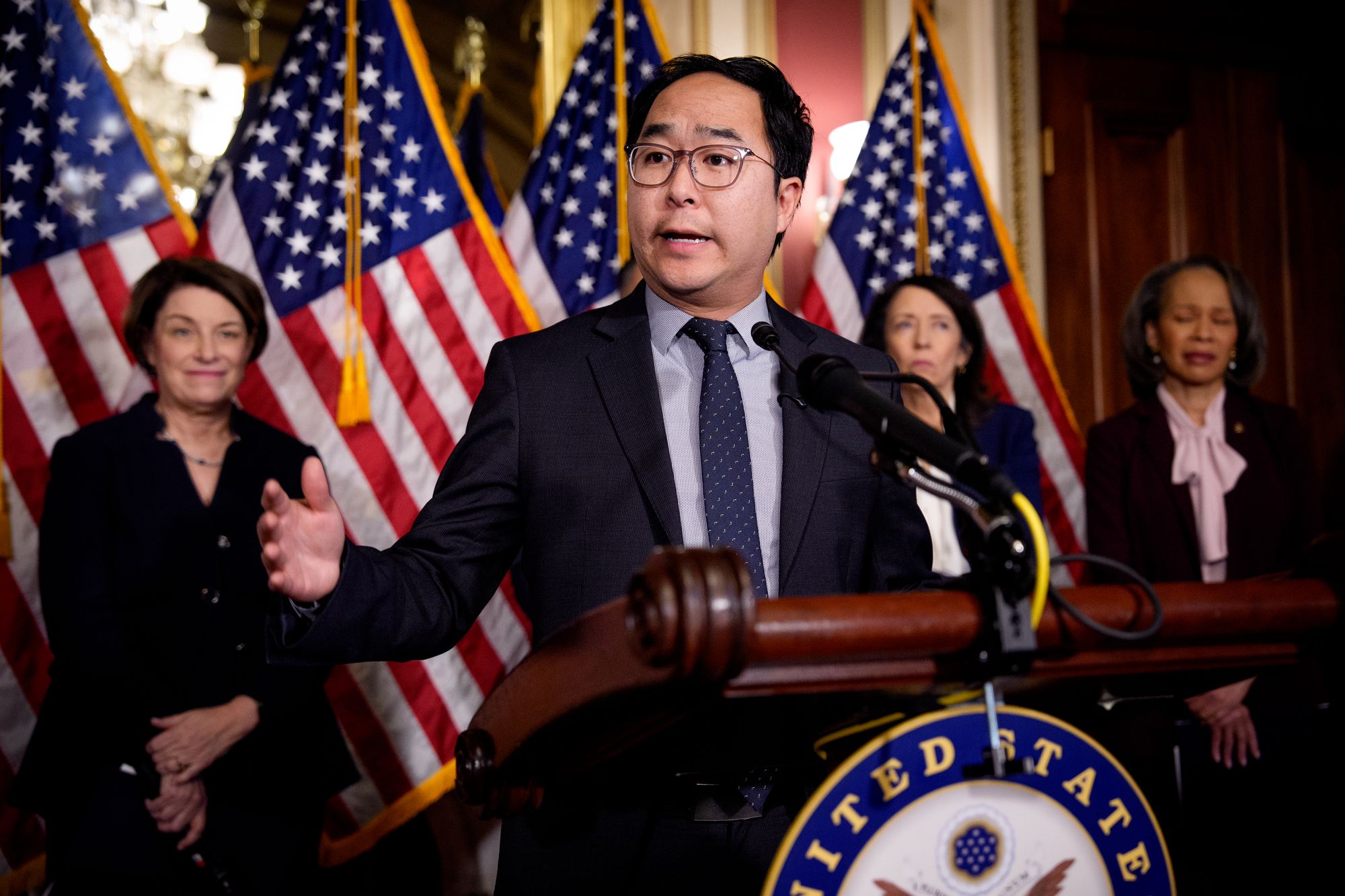

Chung Kim earned a doctorate in genetics and spent his life working as a researcher for cures for Alzheimer’s and cancer after immigrating to the U.S. from South Korea more than 50 years ago.
The senator, who has two young sons, said he has struggled to afford care for his father, telling CBS New York that it can cost up to $17,000-a-month for a room at a long-term care facility in New Jersey.
“We are the richest, most powerful country in the world. It shouldn’t have to be this hard for people to get care when their family needs it,” he said.
Model and actor Emma Heming Willis, 47, has spoken about the challenges of caregiving for her husband, the actor Bruce Willis, after the 71-year-old was diagnosed with frontotemporal dementia. The couple have two young daughters, aged 11 and 13.
“A neurologist said to me, ‘You’re burning your candle at both ends, and you need to understand that sometimes due to the stress of caregiving, the caregiver dies before the person that they are caring for.’ That was such a wake-up call,” she told AARP last year.
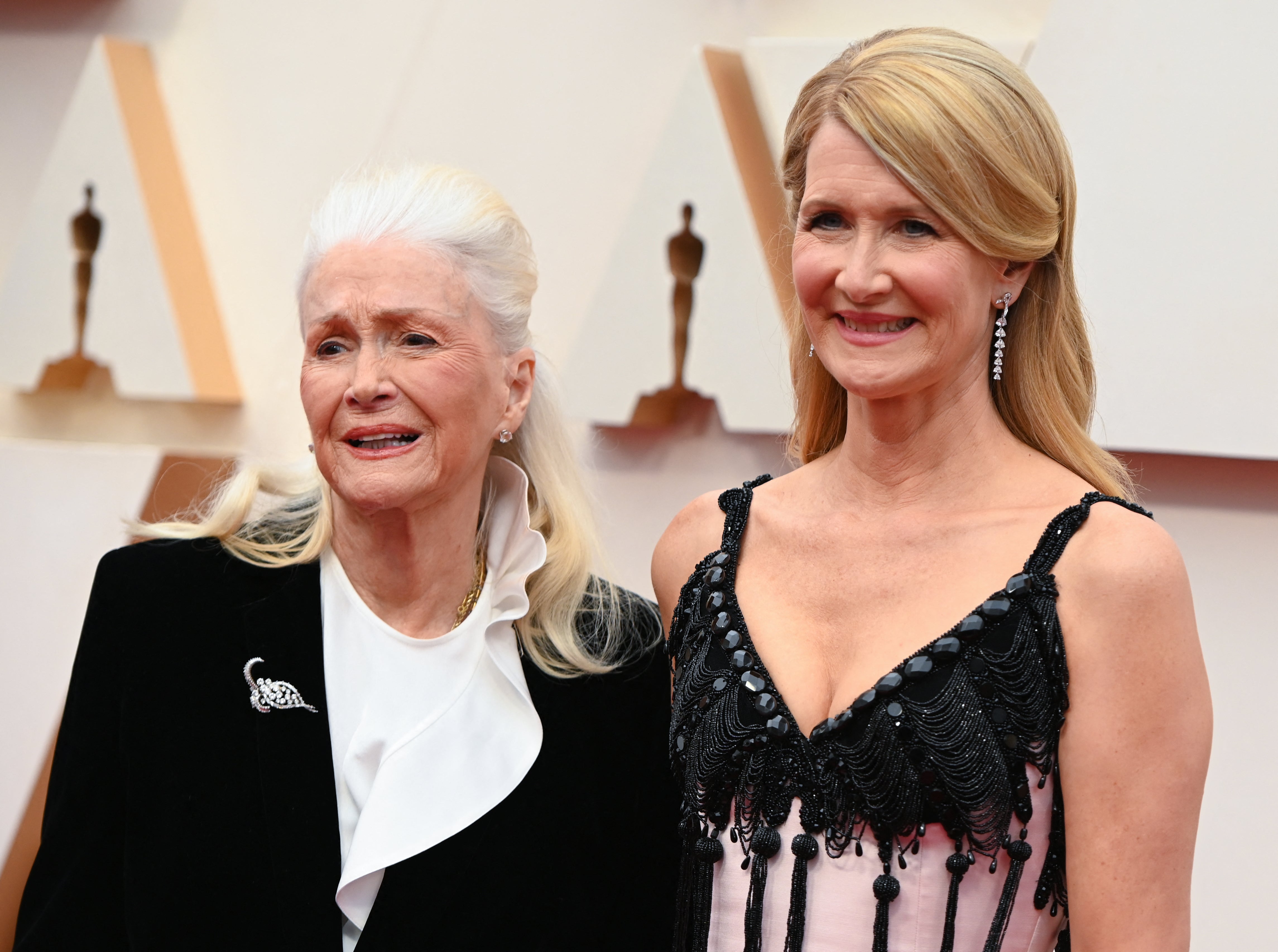
Actress Laura Dern, 59, who has a daughter and a son in their twenties, spoke about caring for her mother, actress Diane Ladd, after she was diagnosed with idiopathic pulmonary fibrosis, a progressive disease that causes permanent scarring in the lungs.
“My mother was so inclusive of me as a caregiver and such a great advocate for herself. She was an incredible patient,” Dern told AARP. Ladd died at age 89 in November.

‘You’re literally buying a new Porsche every year’
With more Americans reaching advanced ages, more costly health conditions are inevitable.
The number of Americans living with Alzheimer’s is expected to nearly double to 13 million by 2060, according to the Alzheimer’s Association. Memory care facilities can cost as much as $200,000 a year, Neal Shah, CEO of senior care platform CareYaya, told The Hill.
“You’re literally buying a new Porsche every year,” he said.
Recent data shows that most Americans just don’t have those kinds of funds. The average worker has under $1,000 saved for retirement, a February report from the National Institute on Retirement Security revealed.
Only 7.5 million Americans have some form of long-term care insurance, which can pay a relative to help with bathing, eating, transportation and other services not covered by regular health insurance plans like Medicare and Medicaid. (It can also help pay for personal aides, adult day care and housing in a nursing home or assisted living facility.)
‘There was a painful repetition of history’
Vanessa Louise Carter, 47, told The Independent that her mental health suffered while she cared for both of her parents and raised her seven-year-old son, Westley, in Tiburon, California.
Her mother, Valda Claire, was diagnosed with Alzheimer’s in 2014, following a battle with breast cancer. Her father, Ted, was diagnosed with Alzheimer’s three years later. Valda Claire, a drama and English teacher, died in 2019 and Ted, an attorney, passed away in 2023, both in their eighties.
Carter and her husband Joe Ording moved back into her childhood bedroom to take care of her parents in 2017. She continued to work as a development consultant at Sacramento’s KXJZ radio station and in environmental literacy at the San Francisco Unified School District.

Living at home and spending evenings changing her mother’s diaper, she fell into what she says was “for sure, undiagnosed clinical depression.”
More than 60 percent of caregivers experience symptoms of burnout, the Cleveland Clinic reports, including getting sick more often, poor sleep quality, changes in weight and appetite, irritability, feelings of hopelessness, and emotional and physical exhaustion.
Growing up, Carter had watched her mother take care of her grandmother, who had Alzheimer’s disease.
“There was sort of a painful repetition of history,” she recalled.
Carter says now that she wished her mother had received hospice care, and she would later pay for that care for her father which cost hundreds of dollars a day. Hospice care can cost more than $1,000 dollars daily, depending on how intensive the support. Not all family caregivers can afford at-home care or an assisted living facility, she noted.
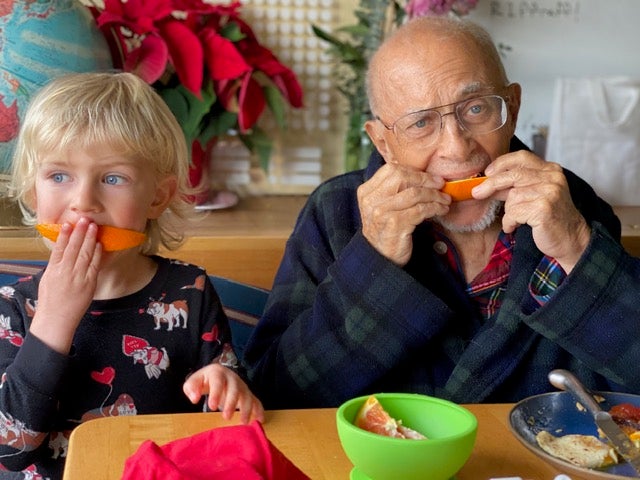
America’s family caregivers provide an estimated $600 billion in unpaid labor, the National Alliance for Caregiving says, doing housework, running errands, accompanying their family members to doctor appointments, and paying bills, among other tasks.
Rising cost-of-living and healthcare, driven by inflation, are expected to make their invisible and critical work even more of a challenge, according to experts. Nearly 40 percent of family caregivers who work more than 20 hours a week say inflation is already making it harder for them to afford any expenses, according to AARP. In-home elder care costs are also outpacing inflation, the Association of Mature American Citizens said.
Debt is also a concern. Some 24 percent of family caregivers have already exhausted their personal savings to cover hospital and long-term care bills, and 23 percent were left in debt by caregiving, AARP reports. Caregivers are skewing younger than they did just 30 years ago, including 6 per cent from Gen Z, who are facing the worst debt in years due to inflation and student debt.
On a national level, there is little relief coming. There are public services but these are often limited and depend on where you live.
If an elderly person receives Medicaid – a joint federal and state program that helps cover medical costs for those with limited income and resources – there’s the possibility for a caregiver to be paid, USA.gov says. But the amount varies widely, with hourly rates $10-$35, and limits on hours. In New York, for example, that’s 40 hours a week.
In 13 states and Washington, D.C., paid family leave programs will cut checks to caregivers for a short amount of time, the National Council on Aging says. There are efforts underway to extend and introduce paid family leave programs in Pennsylvania and Minnesota.
Carter believes that without decisive action to tackle challenges for all caregivers, America is heading toward catastrophe.
“We’re really setting ourselves up for quite a disaster in the coming decades. I think that this country – it will have to change the way that we live and who we live with and how we care for each other and how we think about our elders,” she said.
“We’re not currently set up for this to be a successful transition for the next generation.”