




International pop star Katy Perry uses red light therapy tools. So do the Kardashians and actresses Jessica Alba and Julianne Moore.
Many people now regularly don glowing masks, wave red light wands over their face and sit or lie in rooms with LED panels to help improve their skin and receive other benefits to their health. Treatments and products can cost hundreds of dollars and the global market is projected to surpass $1 billion by 2030, according to Research and Markets.
But how do the purported benefits of red light therapy – also known as photobiomodulation – align with the science? Well, maybe more than you might believe.
“I thought this was just the latest fad to get people to spend their money,” Dr. Rachel Reynolds, interim chair of the Department of Dermatology at Harvard-affiliated Beth Israel Deaconess Medical Center, said in a statement.
“But there’s legitimate medical literature supporting it,” she noted.
The literature is based on science that’s been around for decades. Photobiomodulation research became popular after NASA conducted red light experiments on plants in space in the 1990s, according to Nature.
Smoother skin, thicker hair
So, what have we learned since then and what does red light therapy do?
The non-invasive treatment uses near-infrared light from LED lights or lasers to affect the body’s cells, stimulating mitochondria: the main energy source in cells that support cell growth and function.
It can be used to increase the production of collagen, improve acne and other skin conditions, reduce redness and inflammation from sun damage, promote healing and relieve pain by decreasing inflammation by driving cell production, according to the MD Anderson Cancer Center in Texas.
In a 2005 study, the majority of 90 patients who received eight treatments over the course of a month said they had softer and smoother skin, less redness and lighter dark spots, the American Academy of Dermatology Association noted.
The U.S. Food and Drug Administration has cleared (a less rigorous evaluation process than approval ) several red light devices for at-home use to treat skin. The agency has also cleared red light caps and helmets to treat thinning hair, because the light may stimulate hair follicles.
There’s evidence that the light causes blood vessels to widen, Dr. Zakia Rahman, a clinical professor of dermatology at Stanford Medicine, explained.
“The dilation of blood vessels enables more blood and nutrients to reach the hair follicles. Used over multiple months consistently, red light has been shown to regrow thinning hair. But it should also be noted that when the person stops applying red light, the effects stop,” she pointed out, noting that she suspects the effect on blood vessels is likely what produces other dermatological effects.
In cancer patients, the therapy is used to treat pain and mouth sores, MD Anderson said.
“It can also help release neurotransmitters such as endorphins, which are natural painkillers,” Brown Health says.
The therapy may even be effective at improving cognition in people with dementia.
Near-infrared light from helmets can penetrate the skull, exposing the brain to its effects, UCLA Health notes.
Just six minutes a day for two months was found to improve cognition in dozens of patients with mild-to-moderate dementia, a 2021 study found.
The bottom line
Still, not all purported benefits have the data to back them up.
Rahman and Stanford Medicine say claims about uses for dementia, erectile dysfunction and chronic pain don’t have “any scientifically validated results.”
“While hair regeneration and wrinkle reduction have fairly robust evidence to support the use of red light therapy, other applications, such as improving athletic performance, lack data,” the school says.
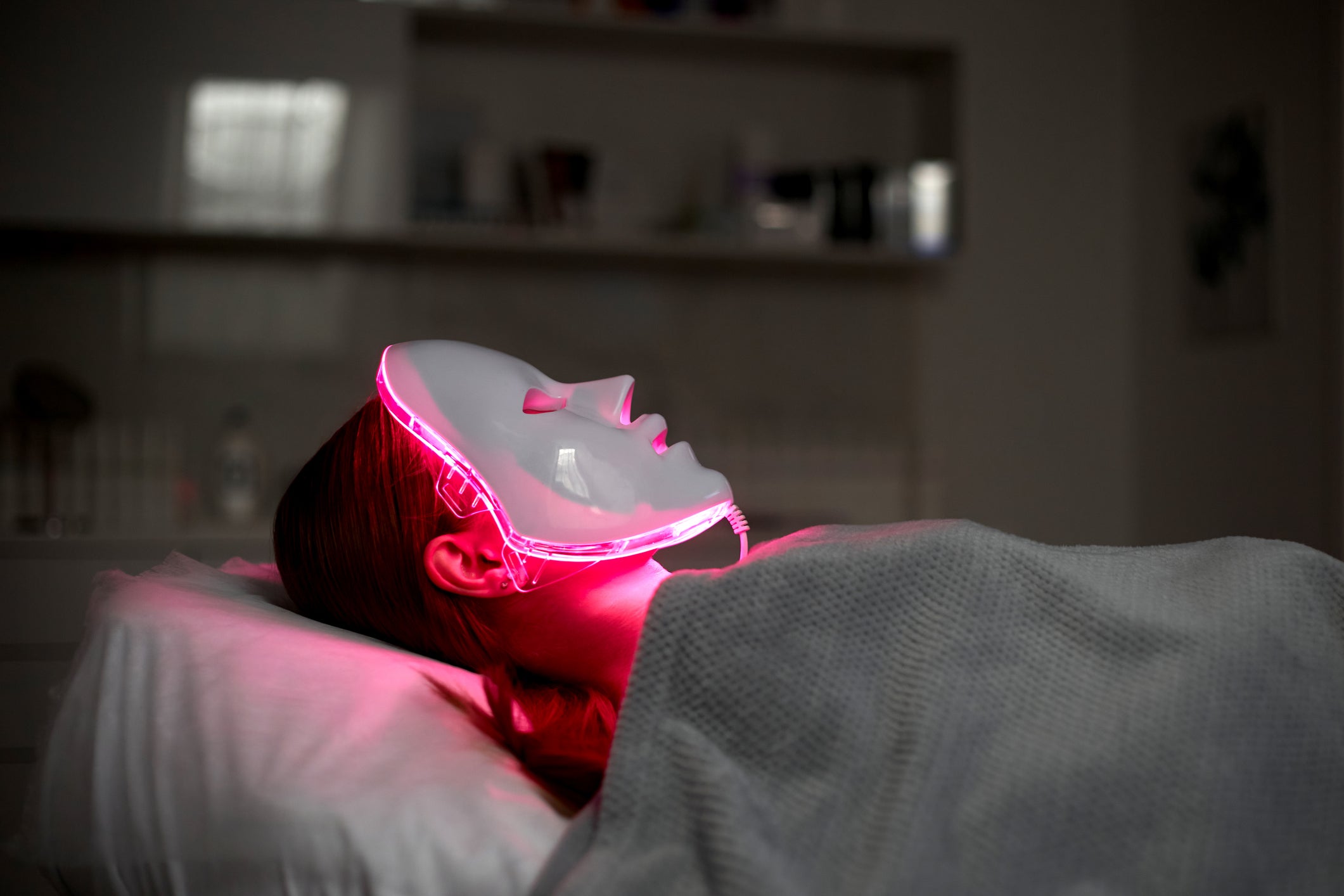
The bottom line is that there may be years’ worth of research on using red light therapy, but it’s still emerging and more research needs to be conducted to support most uses, the Cleveland Clinic says.
“Most researchers say results so far look promising, but that more quality studies with larger numbers of people are needed,” the clinic noted.
Still, red light therapy appears to be safe when used as directed, with some mild side effects. Some people develop temporary mild pain or irritated skin from red light therapy, the association says.
Not using red light therapy products correctly could lead to more serious problems, such as retina damage from lasers shining into the eyes and some skin damage or burns.
People hoping to try this treatment out should seek FDA-cleared devices or a dermatologist, who can typically provide stronger treatments.
To see results, people need to do several sessions over weeks or months, Brown Health says.
“Start with only a few minutes, working your way up to about three times a week,” Dr. Mary Stevenson, a dermatologist and skin cancer surgeon at NYU Langone Health, told TODAY.com.