




Americans spring forward to daylight saving time this weekend, setting the clocks ahead by one hour on Sunday at 2 a.m.
Hundreds of millions of people across 48 states observe daylight saving time each year, which was first signed into law by former President Lyndon Johnson.
But in the decades since the mid-1960s, researchers have uncovered hidden health harms tied to springing forward and falling back, including to brain health.
Now, California scientists have found a link between daylight saving time and developing painful and debilitating migraine headaches and fewer minutes of crucially restorative deep sleep.
The findings may help people understand why they’re experiencing these effects, and take preventative action.
“We know that clock transitions are not good for brain health,” U.C. Davis Health neurologist and sleep expert Sasikanth Gorantla said. “But the exact impact was understudied – especially when it comes to how it affects headaches and migraines.”
More than 35 million Americans live with migraines, which can come with horrible side effects like vomiting or sensitivity to light.
Women are three times more likely to get migraines as men, thanks to fluctuating hormone levels.
Just one hour
Nearly two dozen participants were monitored before and after the clocks sprung forward in March of 2023.
Their sleep was tracked using a sensor under their mattresses and each participant recorded the frequency and severity of their headaches and migraines in a daily diary.
The researchers found that changing the clock by one hour could trigger more migraines, with the number of days a person experienced migraines rising from a week to nearly two weeks.
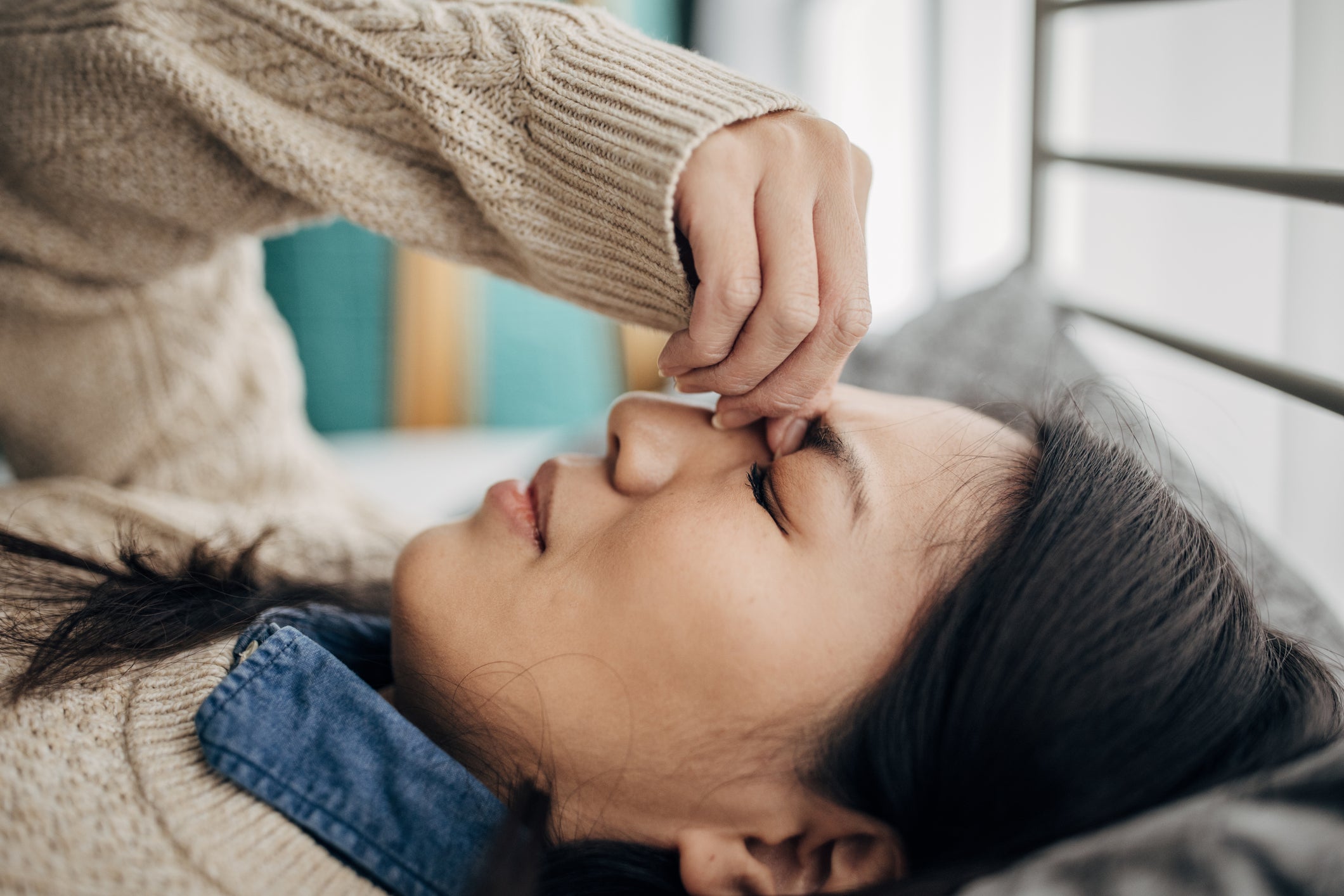
During the month they were studied, participants lost 10 minutes of deep sleep a night.
Getting deep sleep is critical to repair bone, tissue and muscles, as well as strengthen the immune system, according to The Woman’s Hospital of Texas.
The researchers believe that the brain cannot remove metabolic waste as well without those 10 minutes of deep sleep, leading to the migraines.
Although, what happens is not yet fully understood.
Previous research tying migraines to daylight saving time has cited disruptions to the sleep-wake cycle.
“Our findings show that even a small disruption to the body’s internal clock can have an impact on people living with migraines,” Gorantla said. “The increase in migraines and drop in deep sleep after the springtime change suggest that circadian stability is essential for migraine management.”
A 15-minute difference

Gorantla says there are several steps people may take to help reduce these negative effects.
Gradually adjusting to the time change by going to bed 15 minutes earlier each day could lessen impacts on the brain.
To do that, make sure to limit the use of caffeine, avoid napping, work out during the day and reduce exposure to light or technology late at night.
Regulating your sleep cycle by getting morning daylight and walking outside in the afternoon also helps synchronize the body’s internal clock.
Be wary of common migraine triggers, too.
Alcohol, not drinking enough water, stress and diet are all factors patients can control. For now, at least, daylight saving time isn’t.
The U.S. will switch back to standard time on November 1, 2026.
“It is important to note that the American Academy of Sleep Medicine recommends year-round standard time because it better supports circadian alignment and overall health, including brain health,” Gorantla said.