




When it comes to my student debt, I have adopted the same approach as millions of other graduates in my position: out of sight, out of mind.
I knew, when I finally graduated in 2022 after three years as an undergraduate and a one-year Masters course, that the amount I owed was staggeringly vast and, on my meagre first salary in the world of full time work, it was not a problem for now.
But after Rachel Reeves decided to freeze the threshold at which we start paying our loans back, I decided to finally reopen my student finance account and see how bad the damage was.
My debt when I graduated was £84,541.66. I had paid a total of just £310, and yet, thanks to the interest on the debt, I now owe £87,264.76 – £2,700 more than the amount I owed when I left university.
I am one of millions of unlucky people on a Plan 2 loan – widely believed to be the most punishing of the five loan plans.
Plan 2 was introduced in 2012, with loans given an interest rate of retail prices index plus up to three per cent; it increases the more the graduate earns. Graduates repay nine per cent contributions from their earnings above the threshold of £28,470.
This will be frozen at its April 2026 level (£29,385) for three years, instead of increasing with inflation. It is set to increase each year in line with RPI from April 2030.
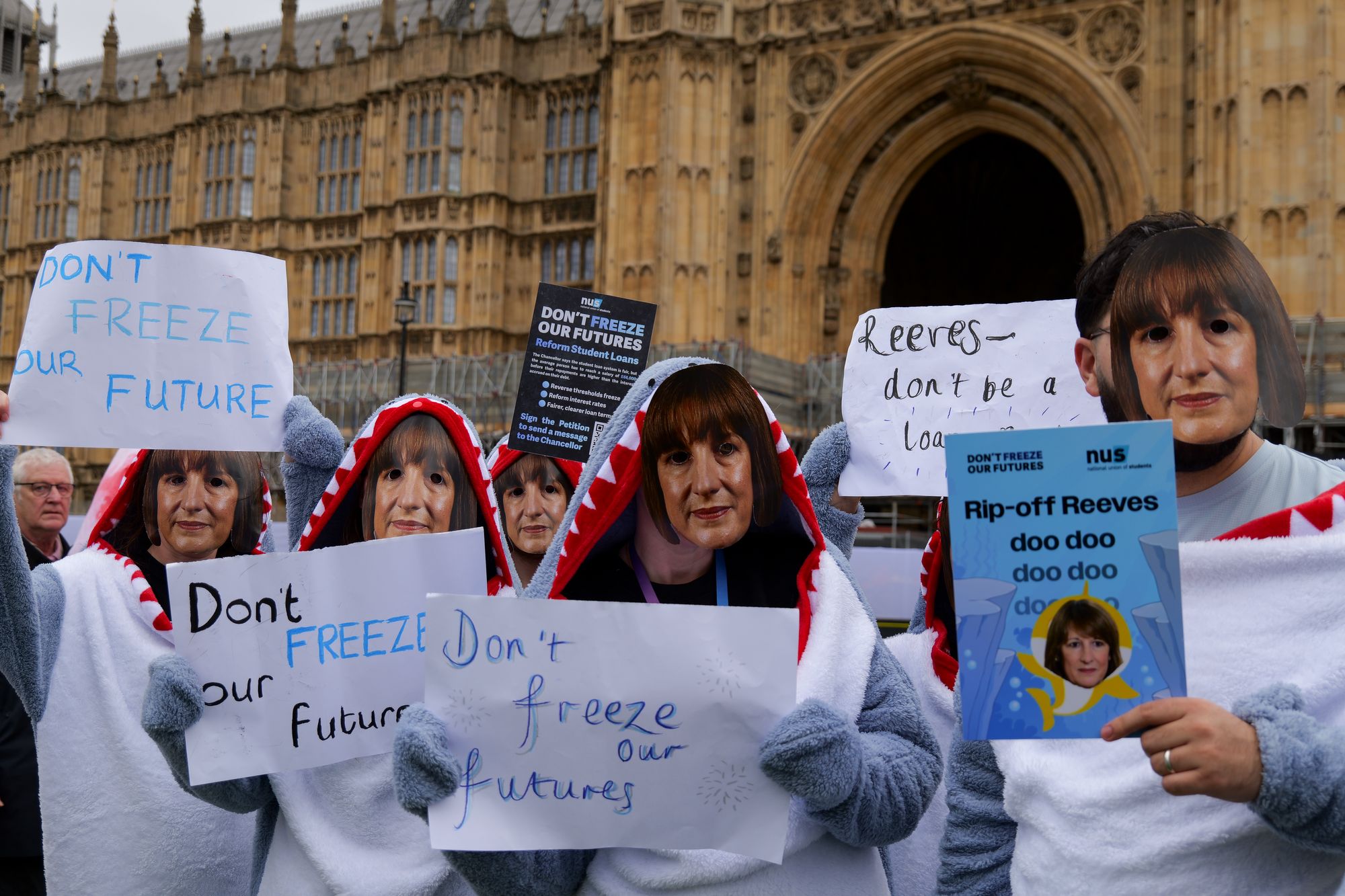
The education secretary has vowed to “look at” Plan B student loans but refused to commit to changing the system amid widespread concerns over costs. The chancellor has been characterised as a loan shark by the NUS.
The level of student debt has risen sharply in recent years, with the average graduate now leaving university owing around £53,600.
Get a free fractional share worth up to £100.
Capital at risk.
Terms and conditions apply.
Go to website
ADVERTISEMENT

Get a free fractional share worth up to £100.
Capital at risk.
Terms and conditions apply.
Go to website
ADVERTISEMENT
But, experts insist graduates concerned they may never pay off their student debt shouldn’t worry. According to IFS economist Kate Ogden, this was taken into consideration when the student loan system was set up.
She said: “I don’t think anybody should open up their student loan statement and panic. These are not like normal loans.
“It was fully expected from the start that a large proportion of people would not fully repay their loans. It was designed so that high-earning graduates would repay more than they borrowed in real terms. And that would fund a kind of subsidy for lower-earning graduates who’ll just never repay this. They were never meant to.”
The government has forecast that around 56 per cent of full-time undergraduates starting in 2024/25 will repay them in full, more than double the forecast for the 2022/23 cohort at 32 per cent, because of reforms to loan repayments for new students.
With the help of the Centre for Social Justice, I decided to work out what I would have to earn in order to pay off my student debt in full.
The results were, frankly, laughable.
According to their calculations, I would need a post-graduation starting salary of £68,346 – almost three times the average starting salary for graduates and significantly higher than the UK average salary at £39,039. And that would mean I would only just pay off my debt before the 30-year wipeout mark.
To pay off my debt in the next five years, I would have to go into a job that pays £207,773 which would put me in the top one per cent of earners in the UK.
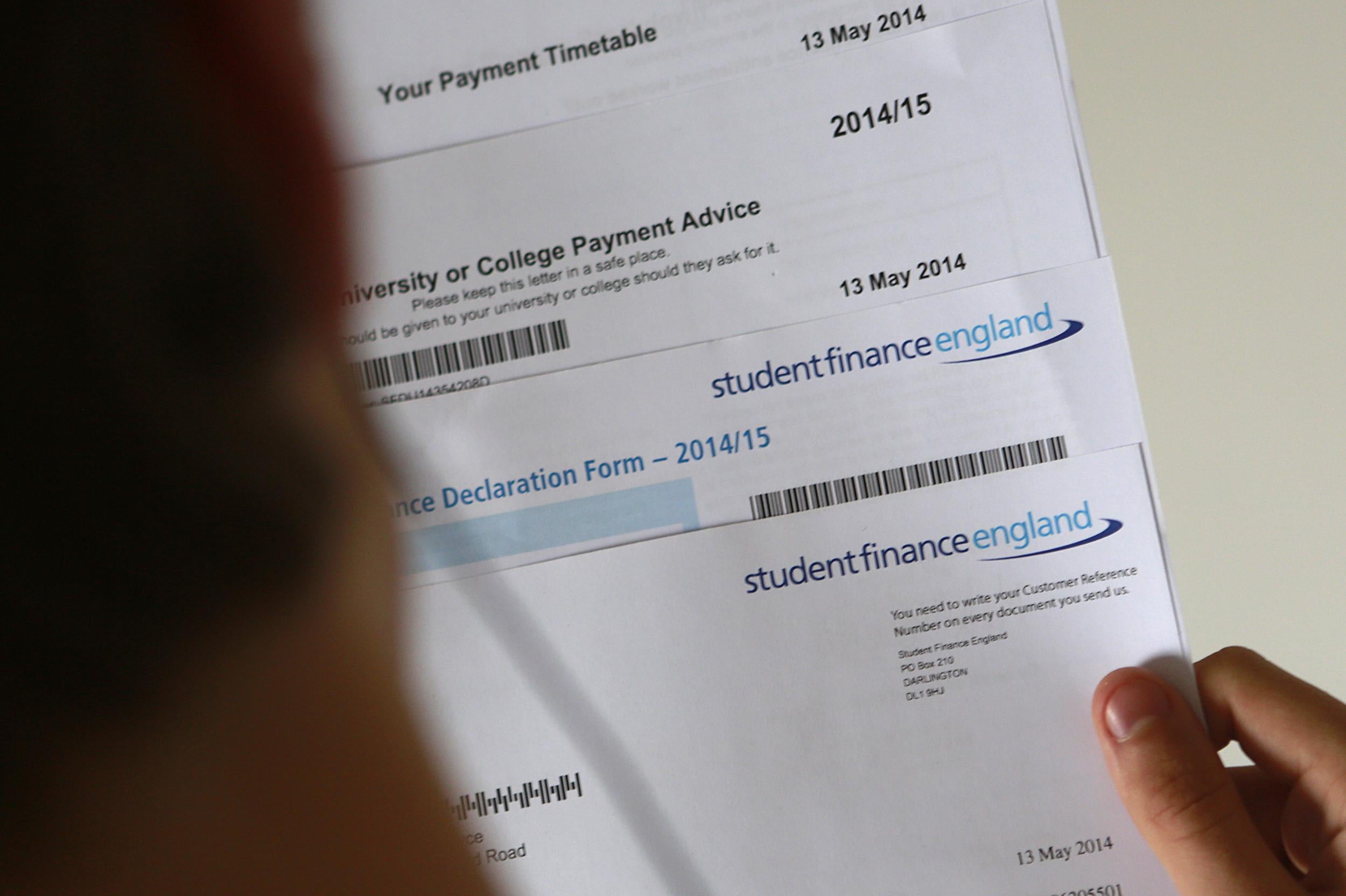
The average graduate, leaving university owing£53,600, fares no better, according to the Centre for Social Justice, which modelled what would happen to their debt in three different financial scenarios*. Based on these simplified scenarios, there was no outcome where the debt was paid off before it was written off after 30 years.
- One person who graduates university to work a minimum wage job would repay just £899.17 while their loan would get written off at £139,056.
- One person who starts on the median graduate salary of £24,800, would repay £3,077.38, while their loan would get written off at £168,545.
- One person moves up through the median salaries for a graduate after one year, then jumps to the median promoted salaries after five and 10 years. They would repay £45,404.41, before the debt would get written off at a total of £177,512.
Ms Ogden added that while many people may never expect to pay back their loans, that doesn’t mean they won’t have an impact on their lives.
“Many people can still expect to repay a substantial amount towards these loans,” she explained. “So even if they don’t fully repay them, they are likely to have paid back thousands of pounds over the next few decades.
“These repayments will have an effect on people’s living standards, on their take-home pay.”
Dan Lilley, head of youth at the Centre for Social Justice, has said that the repayment terms were just one of many indications that the education system needed to change.
He said: “The repayment terms in the bloated student loans system are bonkers, but they are just one of many indications that our education system needs wholesale rewiring.
“For too long we have pushed young people into expensive university degrees whether or not they suit them without being honest about labour-market outcomes or cost, damaging the value of these degrees in the process.”
He suggested that more investment in apprenticeships could go a long way to helping generations get into work: “Apprentices not only earn while they train, but earn on average some £5,000 more than graduates five years after qualifying.”
Martin Lewis is among the many experts who have called for better financial education in schools and universities, so that people who are making decisions about their future understand just what they’re getting themselves into.
He said, in a post on Money Saving Expert last month: “Even after all these years we still, tragically, educate many of our youth into what we call a debt, but never educate them about debt.”
John Webb, head of consumer affairs at Experian, said: “Many young people are committing to complex, long-term student loans at 18 without fully understanding how interest builds, how repayments work or what it means for their financial future.
“We’ve made progress on financial education in schools, but it’s nowhere near enough. Young people should be equipped with a clear, practical understanding of borrowing, budgeting and how to protect their credit score, especially as they head into a tougher jobs market.”
A government spokesperson said: “We inherited the student loans system, including Plan 2, which was devised by the previous government. Threshold freezes have been introduced to protect taxpayers and students now, alongside future generations of learners and workers. The student finance system protects lower-earning graduates, with repayments determined by incomes and outstanding loans, and interest being cancelled at the end of repayment terms.
“Since we were elected, we have been committed to supporting the aspiration of anyone who can and wants to attend higher education.”
*Economic and income-based variables make it nearly impossible for graduates to predict exactly how much they will pay off their student loan. These calculations were based on a simplified scenario where the RPI averaged 2.4 per cent to match the long-run forecast, and wages grew at two per cent per year to reflect the Bank of England’s inflation target.